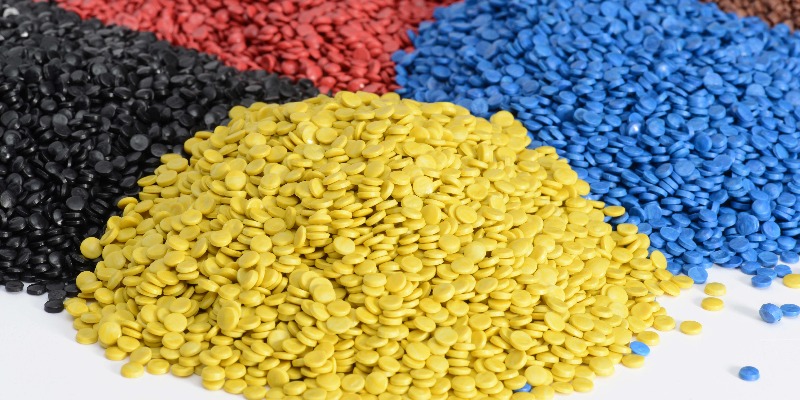
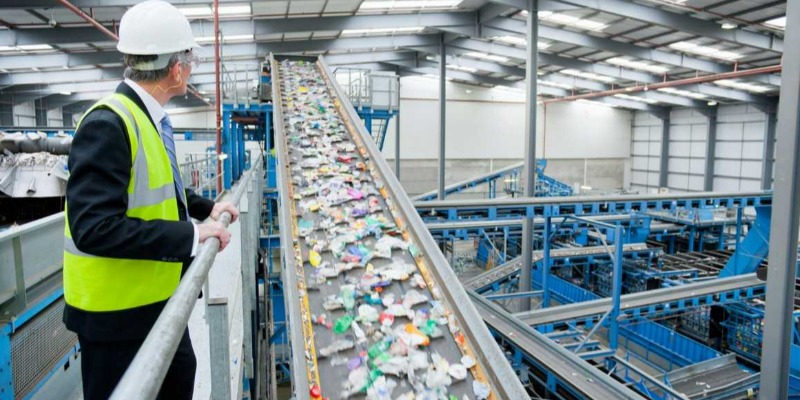
- Technical classifications of plastic regrind in professional markets
- Purity and homogeneity parameters in the commercial specifications of the ground product
- Role of grain size and powder in material quality
- European EN standards and guidelines for ground coffee compliance
- ISO and ASTM certifications in the international trade of ground grain
- Document traceability and ESG requirements in ground grain supplies
- Functional parameters for the industrial transformation of ground material
- Economic value and competitiveness of ground grain in global markets
Certifications, classifications and technical requirements for regrind compliant with European and international markets
Essay. Post-Consumer Plastics Recycling. Chapter 10: Quality Standards for Plastic Regrind. Regulations, Parameters and Industrial Valorization
In the mechanical recycling chain of plastics, regrind represents the first product that takes on a recognizable industrial form. It is no longer a waste, but not yet a transformed material: it is an intermediate product whose characteristics determine the possibility of accessing the subsequent stages of regeneration and, above all, of positioning itself on increasingly demanding markets. In this context, quality standards play a decisive role: they define measurable parameters, create a shared technical language, enable material traceability and provide all actors in the supply chain with a common reference for assessing suitability, compatibility and commercial value.
The need to standardize regrind arises from the intrinsic variability of post-consumer plastics: even when sorting and shredding have been carried out with care, the material still presents differences linked to the type of packaging, its thermal history, the presence of additives, coloration, original viscosity and purity. Standards therefore have the task of transforming this variability into a matrix of controllable technical parameters, reducing uncertainty and enabling a more efficient dialogue between collection, sorting, regeneration and the final market.

The concept of “regrind quality” has become particularly relevant with the growth of applications that require recyclates compliant with increasingly stringent technical specifications.
For many years, the regrind market was based on generic criteria: “clean”, “homogeneous”, “washed”, “non-contaminated” material. Today, however, industry demands measurable parameters such as bulk density, fines content, degree of residual organic contamination, metal content, polymer homogeneity, undesired fractions, particle size distribution and visual characteristics. These parameters are not only indicators of the quality of upstream processing, but real commercial criteria that influence price, end use and the possibility of accessing regulated markets.....© Reproduction Prohibited