- Physical Foundations of Computer Vision: An Introduction
- The role of reflection in automatic visual perception
- Refraction and lens modeling in machine vision systems
- Polarization of light: principles and applications in sensors
- From physics to technology: optical materials and key components
- Automatic detection algorithms based on physical phenomena
- Limitations and challenges in the design of artificial optical systems
- Application cases: robotic vision, automotive and industry 4.0
- The impact of light quality on performance and reliability
- Future trends in physics applied to computer vision
- Applications of physical theories in computer vision for the manufacturing industry
Physical principles, engineering applications, and challenges of visual processing involving reflection, refraction, polarization, and advanced automation techniques
by Marco Arezio
Computer vision represents one of the cutting-edge fields of technological and engineering research, combining the fundamental principles of optical physics with artificial intelligence and automation. Understanding the physical basis of phenomena such as reflection, refraction, and polarization of light is crucial for designing reliable and increasingly sophisticated sensors and automatic detection systems.
In this analysis, we will delve into the physics behind how computer vision works , examining not only the theory but also the practical implications and engineering challenges that characterize this rapidly evolving field.
Physical foundations of computer vision
At the core of any machine vision system is the ability to manipulate and interpret light, leveraging the principles of optical physics. In nature, human vision is made possible by the reflection of light on surfaces and its refraction through the eye's lenses. Similarly, in artificial systems, light interacts with various materials and surfaces, generating visual data that can be acquired, analyzed, and used for automatic sensing. Understanding reflection, refraction, and polarization phenomena is thus essential for the design of advanced optical devices, such as industrial cameras, robotic sensors, and imaging systems for automation.
The role of reflection in automatic visual perception
Reflection represents the first point of contact between light and the physical world. In computer vision, it is essential to understand the difference between specular and diffuse reflection. Specular reflection, typical of smooth surfaces like metal or glass, allows for the formation of sharp images, while diffuse reflection, typical of opaque and irregular materials, distributes light more homogeneously. Automatic detection systems must be designed to distinguish between these types of reflection, adapting algorithms and optical filters to maximize contrast and minimize false positives, especially in applications where precise object identification is crucial (robotics, quality control, automotive).
Refraction and lens modeling in machine vision systems
Refraction is the phenomenon whereby light changes direction when passing through materials with different refractive indices, such as air, glass, or optical plastics. This principle is exploited in the creation of lenses and complex optical systems, essential for focusing images and correcting distortions. In the field of computer vision, lens design goes beyond simply collecting light; it involves detailed modeling of optical paths, the use of innovative materials, and numerical simulation to minimize chromatic and geometric aberrations. These solutions enable the creation of sensors capable of operating in harsh industrial environments, where dust, vibrations, and thermal variations can compromise image quality.
Polarization of light: principles and applications in sensors
Polarization describes the orientation of light's electric field. In many cases, light reflected from non-metallic surfaces is partially polarized, a phenomenon that can be exploited to increase contrast or eliminate unwanted reflections. In advanced machine vision systems, polarizing filters and specialized sensors are integrated to separate polarized light components, improving object identification, the reading of shiny or wet surfaces, and material recognition. In industry, polarization is also used to monitor internal stresses in transparent materials or to distinguish between color-matched composite materials.
From Physics to Technology: Optical Materials and Key Components
Innovation in optical materials has had a decisive impact on the development of machine vision. In addition to traditional optical glasses, engineered polymers, anti-reflective coatings, and nanostructured materials capable of manipulating light at the submicron level are now used. These materials enable the creation of components such as microlenses, interference filters, polarization gratings, and miniaturized optical modules for portable devices or integrated into automated production lines. The choice of material directly impacts transparency, strength, weight, and response to environmental agents, representing a key factor in the reliability and longevity of vision systems.
Automatic detection algorithms based on physical phenomena
Physics doesn't stop at hardware: image interpretation algorithms are also based on physical models of light. For example, computational photometry techniques analyze the intensity and distribution of reflected light to extract three-dimensional information, identify defects, or reconstruct surfaces. Other algorithms exploit polarization to separate useful signals from background noise, while refraction modeling allows for automatic correction of distortions due to lenses or environmental changes. The integration of optical physics and artificial intelligence is leading to the development of systems capable of learning and adapting, improving detection capabilities in unpredictable conditions.
Limitations and challenges in the design of artificial optical systems
Designing machine vision systems poses significant challenges, both physically and computationally. Among the key critical issues are managing parasitic reflections, correcting optical aberrations, resisting extreme conditions, and dynamic sensor calibration. In many cases, solutions require a balance between optical performance, data acquisition speed, and computational complexity. Deployment in industrial environments, often characterized by dust, humidity, and vibration, also imposes stringent requirements for device robustness and maintenance.
Application cases: robotic vision, automotive, and industry 4.0
The applications of computer vision physics span numerous sectors.
In the automotive industry , automatic sensing systems use stereo cameras, lidars, and polarimetric sensors for assisted and autonomous driving, exploiting optical phenomena to improve safety and precision in interpreting the environment. In robotics , computer vision enables object manipulation, defect identification in production processes, and quality monitoring. In Industry 4.0 , the combination of optical physics and artificial intelligence is revolutionizing predictive maintenance, quality control, and material traceability.The impact of light quality on performance and reliability
An often overlooked aspect is the quality of ambient light and its impact on the performance of machine vision systems. Variable light sources, the presence of shadows, unwanted reflections, or light pollution can alter sensor response, resulting in detection errors or loss of efficiency. For this reason, in more advanced industrial settings, controlled lighting environments are designed and dynamic optical solutions are adopted that can compensate for environmental variations, improving the reliability and repeatability of measurements.
Future trends in physics applied to computer vision
The future of computer vision will see an even deeper integration of physics, advanced materials, and machine learning techniques. Research is moving toward hyperspectral sensors, quantum devices, and metamaterial-based solutions capable of manipulating light to levels previously unimaginable. At the same time, the evolution of algorithms will allow increasingly detailed information to be extracted from images, even in extreme conditions, opening up new possibilities in fields such as medicine, precision agriculture, and urban security. A thorough understanding of physical principles remains the foundation upon which this technological revolution will be built.
Applications of physical theories in computer vision for manufacturing
The physics of computer vision finds a privileged field of application in the manufacturing industry, where production processes require continuous monitoring, precision, and rapid intervention. The theories of reflection, refraction, and polarization, combined with increasingly advanced automatic detection systems, now allow the design of automated systems capable of "seeing" and evaluating what happens on production lines with greater precision than human eyes.
Automated quality control
One of the main areas of application is non-contact quality control: by analyzing the reflection and refraction of light on materials and products, it is possible to detect subtle defects such as microcracks, bubbles, scratches, surface contamination, and color variations that would otherwise escape traditional visual inspection. In the glass, polymer, ceramic, metal components, and microelectronics industries, the use of high-resolution cameras combined with light sources and polarizing filters can amplify the difference between compliant and defective materials.
High precision alignment and positioning
The interaction of light with surfaces is also exploited in precision alignment and positioning systems, where refraction through lenses or microprisms allows component positioning to be tracked with errors of less than a tenth of a millimeter. The use of optical sensors capable of distinguishing between specular and diffuse surfaces, or of reading polarized light patterns, finds application in robotic assembly, automatic packaging, industrial printing, and pick-and-place processes, increasing efficiency and reducing waste.
Inspection of transparent and complex materials
In the case of transparent or multilayered materials (laminated glass, films, plastic laminates, solar panels), the ability to manipulate refraction and polarization is crucial for inspecting any inclusions, internal detachments, air bubbles, or micro-delaminations. In these situations, the combination of advanced physics techniques and processing algorithms allows for the analysis not only of the surface, but also of the internal structures of the material, preventing defects that might only appear after months of use.
Reading and recognition of codes, signs and markings
Reflection and polarization are essential for the automatic reading of barcodes, data matrix codes, QR codes, or laser markings on reflective or translucent surfaces. Systems equipped with polarized lighting and appropriate optical filters can distinguish the useful signal even in the presence of stray reflections, dust, or scratches, ensuring product traceability and authenticity throughout all stages of the supply chain.
Process monitoring and security
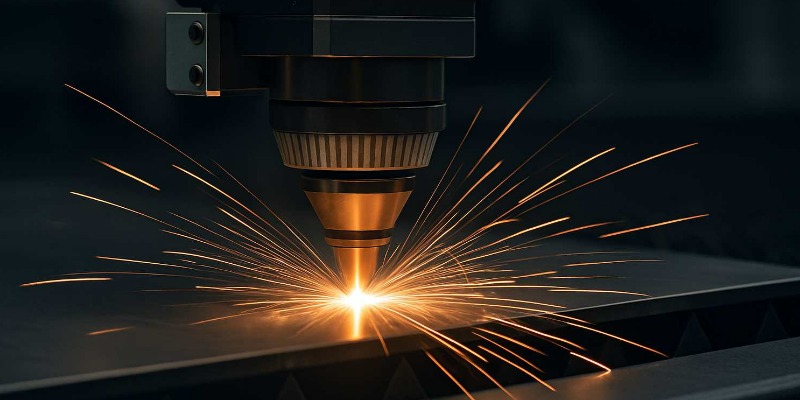
Another critical area is the real-time monitoring of complex industrial processes, such as welding, painting, or laser processing. Here, physics-based machine vision allows us to recognize anomalies in plasma behavior, heat diffusion, or the formation of slag and splashes. The use of multispectral and polarimetric cameras, combined with artificial intelligence software, allows us to initiate corrective actions or shut down the plant in the event of a risk, improving safety and reliability.
Advantages and evolutionary prospects
The integration of optical physics with machine vision in manufacturing offers clear competitive advantages: faster inspection, reduced human errors, reduced waste, end-to-end traceability, and the ability to process huge volumes of data in real time. Future developments will see increasing sensor miniaturization, the adoption of smart materials capable of dynamically changing their optical properties, and the development of increasingly "intelligent" sensing systems, capable of learning from process conditions to adapt to new production needs.
In short, the physical theories of computer vision are now at the heart of the digital factory and advanced manufacturing, enabling scenarios in which quality, safety, and efficiency are brought to previously unimaginable levels.
© Reproduction Prohibited