- The Day the Earth Shook: The 2011 Tohoku Tsunami
- From the destruction of Fukushima to the birth of a new environmental awareness
- Technology and nature: the fragile balance of Japanese progress
- When nature presents the bill: the economics of major natural disasters
- Tohoku and the Ecological Rebirth: How Japan Rebuilt its Future
- The Costliest Disasters in Modern History and Their Lessons for the Planet
- The economic burden of climate change in the world (2024-2025 data)
- The memory of the Earth: living with the planet's limits to avoid repeating its mistakes
With 235 Billion Dollars in Damages, Japan’s Earthquake and Tsunami Remain the Most Expensive Natural Disaster in Modern History
by Marco Arezio
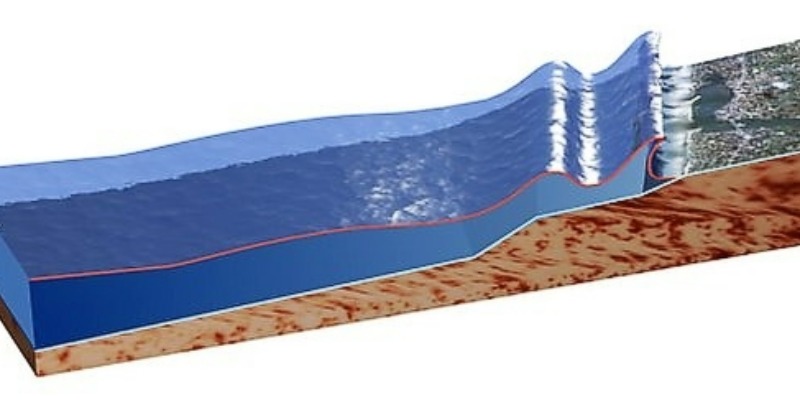
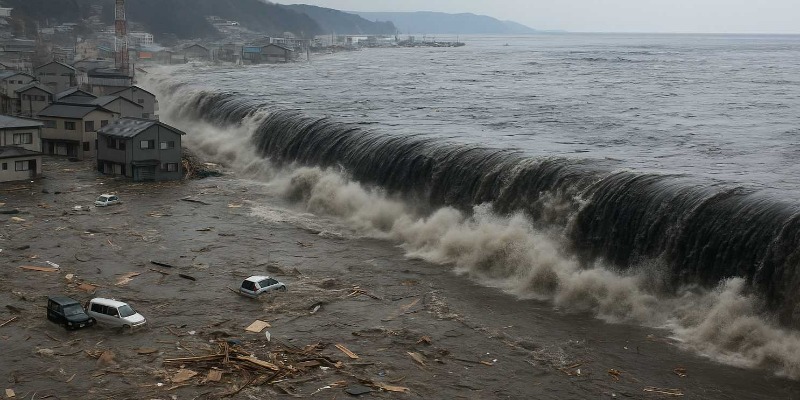
On March 11, 2011, Japan came to a halt. At 2:46 p.m. local time, the ground beneath the Tohoku region began to shake with a violence beyond all prediction. The hands of the clocks froze in the coastal villages, while the sea—only a few kilometers away—silently retreated before unleashing its fury. What followed was a roar of water, more than ten meters high, a wall of liquid that in just a few minutes erased streets, factories, homes, and memories.
The earthquake and subsequent tsunami that struck Tohoku would forever mark the history of the twenty-first century: 235 billion dollars in damages, 20,000 lives lost, and a wound still open in the collective consciousness of Japan and the world.
It was not merely a natural disaster. It was the clear and merciless revelation of human fragility in the face of progress. A nation among the most technologically advanced on Earth—capable of building trains that seem to defy physics and cities suspended between tradition and future—suddenly discovered its own vulnerability.
Coastal barriers proved useless, warning systems failed, and nuclear power plants were built in the wrong places. And when the water reached the Fukushima Daiichi complex, the environmental catastrophe became complete.
Fukushima: Where Nature Meets Technology
The Fukushima disaster was not just a technical accident—it became the symbol of an era. The shutdown of reactors, the melting of cores, and the radioactive release made visible what had been implicit for decades: blind faith in technology had replaced ecological prudence.

The sea that for centuries had sustained Japanese coastal communities turned into a vehicle of death and contamination. Hundreds of square kilometers were evacuated, entire towns became ghost cities, and the ocean that once brought life was now measured by radiation meters and becquerel counts.
Yet amid the wreckage and debris of the coastline, Japan found something unexpected: the capacity to begin again. Tohoku did not simply rebuild what was lost; it transformed itself into a laboratory of sustainable rebirth.
Today Fukushima hosts solar fields stretching to the horizon, offshore wind farms, and experiments in green hydrogen. Where fear once sowed silence, a construction site for the future has emerged—one that unites memory and science, sorrow and resilience.
A Tragedy Foretold by Our Time
Geologists and climatologists agree on one point: the planet is reacting to a century of intensive exploitation. It is not a punishment, but a physical response to accumulated imbalance. Extreme natural phenomena—earthquakes, floods, hurricanes—are not new; what is new is our exposure to them.
We have built cities along coastlines, dug deep into mountains, and erected chemical and energy plants in some of the most unstable places on Earth. Wherever nature moves, humanity has placed itself—along with its oil tanks, ports, power lines, and dreams of permanence.
The Tohoku tsunami was not only a geological event; it was a cultural event, a demonstration that modernity is not synonymous with safety. The Earth does not bend to our calculations, and every time we try to dominate its cycles, it reminds us that we are guests, not masters.
The Economics of Catastrophe
The figures are staggering: 235 billion dollars in losses. No other natural disaster since 1900 has matched it.
Far behind come Hurricane Katrina (2005) and Hurricane Harvey (2017), each causing about 125 billion dollars in damages. Next is the Sichuan earthquake in China (2008), with 122 billion, followed by the 1995 Kobe earthquake with just over 100 billion.
Other catastrophic events—Hurricanes Ian, Maria, Sandy, and Irma—complete this tragic ranking, revealing a clear pattern: the most costly disasters belong to the new millennium, a world increasingly urbanized and dependent on fragile infrastructures.
Every billion in losses represents not only destroyed buildings but also altered ecosystems, lost resources, and displaced people. Behind the statistics lies a human and environmental fabric struggling to heal. This is where economics meets ecology: every natural disaster becomes an invisible tax on our way of life.
After the Storm: Memory as a Resource
The Japanese people, accustomed for centuries to coexist with nature’s power, responded to Tohoku with a dignity that moved the entire world. No looting, no chaos—only silence and discipline.

In that silence, a collective awareness was born: the need to reconcile modernity with natural cycles.
Schools introduced environmental education programs; universities expanded research into clean energy; and the government launched a national resilience strategy that today serves as a model worldwide.What seemed to be the end in 2011 slowly became a new beginning. Japan understood that true strength lies not in technology’s ability to resist the sea, but in a culture that learns from it.
The Rising Cost of Climate Change
In recent years, the numbers tell a story that can no longer be ignored.
According to the Aon Global Catastrophe Recap 2024 and NOAA 2025 reports, global economic damages from natural disasters have exceeded 300 billion dollars annually, an increase of 35% over the previous decade. The World Bank warns that if this pace continues, by 2050 the global cost of disasters could reach 600 billion dollars per year, equivalent to nearly 2% of the world’s GDP.
Behind these numbers lie Europe’s heat waves, the wildfires that consume Canada and Australia, the floods in Pakistan, and the typhoons devastating the Philippines. It is a global panorama in which the boundary between “natural disaster” and “human disaster” grows ever thinner.
Insurance companies—once focused purely on financial risk—now include climatic and environmental variables as structural factors in the global economy. The impact is not only material: inequality deepens, communities are displaced, and the psychological burden of environmental instability continues to grow.
A Lesson for Humanity
The Tohoku tsunami belongs not only to Japan’s memory but to that of all humankind. It marks the moment when the Earth spoke with unmistakable clarity, reminding us that there can be no progress without balance.
Every barrier we build, every city we extend toward the sea, every plant erected near a fault line is a wager with the future. Yet, despite the magnitude of recent events, we continue to treat prevention as a cost rather than an investment.
The true legacy of Tohoku is not the monetary figure of its damages but the realization that the planet is not a machine—it is a living organism. And when we push it beyond its limits, it responds.
Not with anger, but with a force that reminds us of our smallness. Within that wave that wiped away Japan’s shores resided a message that still resonates today: the Earth does not forget, but it knows how to begin again. It is up to us to decide whether to do so with it—or against it.
© All Rights Reserved