- Introduction: The Land of Fires and its impact
- Historical roots and the rise of illicit waste trafficking
- Soil and groundwater contamination
- Air pollution: fires and toxic substances
- Health consequences: diseases and impact on daily life
- The social impact and emotional burden on local communities
- Institutional failure and lack of effective controls
- The condemnation of the European Court of Human Rights
- Remediation strategies and technologies for environmental monitoring
- Towards a sustainable future: circular economy and land regeneration
In-Depth Analysis of Pollution, Illicit Waste Trafficking, and Innovative Solutions for the Remediation and Revitalization of a Region in Crisis
by Marco Arezio
Between the provinces of Naples and Caserta stretches a territory marked by a melancholic appearance and an indelible imprint: the “Land of Fires.” This name—evocative yet ominous—conjures images of perpetual flames and intentional blazes, symbols of decades of environmental pollution and organized crime.
In this article, we will conduct an in-depth examination of how the unlawful management of waste and a chronic lack of oversight have turned an area once known for its fertile land into a zone of health and ecological emergency. We will explore the historical origins of this phenomenon, its impact on public health, and the economic and social implications. Finally, we will propose potential solutions to prevent further disasters and initiate a course of remediation and revitalization.
Historical Roots of a Foretold Disaster
The phenomenon now referred to as the “Land of Fires” has its roots in the 1980s and 1990s. During that time, the waste disposal sector became a fertile ground for illicit trafficking and organized crime. Industrial companies—especially those from Northern Italy and other European countries—sought low-cost solutions for disposing of their toxic byproducts. Fearing the high costs associated with lawful and regulated waste management, these businesses turned to unscrupulous intermediaries offering clandestine “services.”
The chosen solution was to bury tons of hazardous materials in seemingly worthless sites: old quarries, farmland, and even beneath roads. This criminal strategy was twofold: on the one hand, it bypassed high costs and stringent controls; on the other, it exploited a slow-moving and often inefficient bureaucracy. Over the years, the accumulation of toxic waste became a veritable environmental time bomb, poised to unleash catastrophic consequences for public health and the ecosystem.
Pollution: An Unstoppable and Multidimensional Process
Soil and Groundwater Contamination
The contamination that characterizes the Land of Fires is a multifaceted issue. Hazardous waste buried underground has altered the soil composition, making it unsuitable for agriculture and any form of plant life. In the absence of proper remediation, chemical substances have seeped into the water table, compromising the quality of potable water. Various studies have shown that in affected areas, levels of heavy metals, dioxins, and other toxic substances far exceed safety thresholds, making pollution a widespread and pervasive problem.
Air Pollution and Exposure Risks
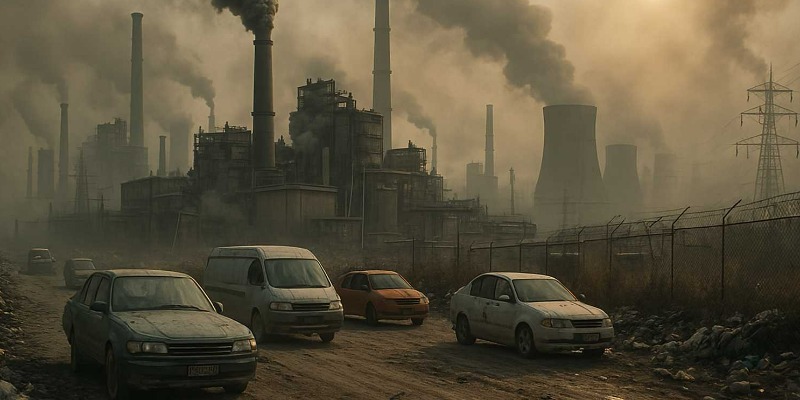
Beyond soil and water, the air is also impacted by clandestine fires, set daily to rapidly dispose of plastic materials and industrial scrap. When these fires are started, they release highly toxic compounds into the atmosphere—such as dioxins and furans—capable of causing severe damage to human health. Prolonged exposure to these substances has been linked to a significant increase in cases of respiratory diseases, allergies, and, most notably, tumors. For local communities, the situation has become untenable and demands urgent, coordinated intervention.

A Health Emergency of Dire Proportions
Effects on Public Health
Numerous epidemiological studies in the Land of Fires have revealed an alarming rise in the incidence of serious diseases. In some areas, cancer mortality rates increased by up to 47% between 2012 and 2021. Besides cancer, local residents exhibit a high incidence of neonatal malformations, chronic respiratory illnesses, and other conditions linked to prolonged exposure to toxic substances. Supported by research from academic institutions and healthcare organizations, the data indicate that the population’s health remains under constant threat, with irreversible risks posed by widespread contamination.
Emotional and Social Toll on Communities
Equally significant is the psychological and social impact of this environmental crisis on local communities. Living daily in a contaminated area—where the air is unbreathable and the land is poisoned—generates feelings of powerlessness and despair. Families are forced to cope with the weight of illness and the anxiety of an uncertain future. In many cases, there is a steady exodus from the affected areas, where the only perceived escape from contamination is to move to a healthier environment.
Institutional Failure and International Condemnation
An Ineffective Institutional System
The response by national and local institutions to the environmental crisis in the Land of Fires has been disconcertingly slow and fragmented. Over the years, countless promises of intervention and remediation have been made, yet the lack of effective coordination and adequate resources has prevented the implementation of concrete projects. The bureaucracy—often characterized by sluggishness and a lack of transparency—has facilitated the perpetuation of this crisis, giving way to further abuses and fresh environmental violations.
Condemnation by the European Court of Human Rights
A turning point in the international view of this disaster came with Italy’s condemnation by the European Court of Human Rights. The ruling, which denounced the failure to protect the citizens of the Land of Fires, emphasized the State’s responsibility for its inability to intervene promptly. This judgment spotlighted the urgent need to overhaul oversight mechanisms and strengthen environmental and health protection measures. More than just symbolic, the condemnation underscores the necessity of a structural rethinking of how environmental crises are managed in Italy.

Toward Concrete Solutions: Proposals and Strategies for the Future
Remediation and Decontamination: An Immediate Priority
Faced with such a disheartening scenario, decontamination of the area must be the top priority.
A series of large-scale, coordinated interventions is required to remove toxic waste and restore both soil and groundwater. These efforts demand significant financial investment and the use of advanced technologies to ensure their effectiveness. Remediation goes beyond the physical removal of harmful substances; it also involves a continuous process of testing and monitoring to confirm the environment’s recovery over time.Strengthening Oversight and Surveillance
Another critical aspect is bolstering oversight systems throughout the region. Employing modern technologies—drones, environmental sensors, and closed-circuit cameras—can play a significant role in preventing new illegal dumping. Real-time monitoring would allow authorities to quickly detect any irregularities, enabling an immediate response. Alongside these measures, revising the regulatory framework and stiffening penalties for environmental violations is crucial, targeting both criminal organizations and businesses that knowingly participate in illegal activities.
Environmental Education and the Promotion of a Circular Economy
The crisis in the Land of Fires highlights that environmental disasters are not merely waste-management issues; they are structural problems that involve society as a whole. Educating citizens and businesses about sustainable development is essential to prevent the recurrence of such tragedies. Embracing a circular economy—which focuses on recycling and minimizing waste—must become the prevailing paradigm for resource management. This requires sustained efforts in awareness campaigns and training programs that transform environmental consciousness into responsible and virtuous behaviors.
Community Involvement and Inter-Institutional Collaboration
The resolution of a crisis on this scale cannot be left solely to state institutions. A participatory approach, actively involving the local community, environmental associations, academia, and private-sector stakeholders, is indispensable. Only through open dialogue and collaboration can we develop a shared, sustainable strategy. Urban regeneration projects and efforts to revitalize affected areas can offer a new perspective on development, transforming the Land of Fires from a region of exclusion into a testing ground for sustainable and resilient economic models.
The Role of Research and Innovation
Technological Innovation for Environmental Monitoring
Technological advancement is essential in the fight against pollution. Cutting-edge detection tools, data analytics, and satellite imaging can yield invaluable information on the progression of contaminating phenomena. Scientific research, in partnership with governmental institutions, should focus on developing more effective monitoring methods capable of anticipating and preventing potential crises. International collaborative projects can also help bring additional expertise and resources to the region, promoting knowledge exchange and the adoption of global best practices.
Advancing Sustainable Remediation Techniques
In tandem with monitoring technologies, innovation in remediation techniques is urgently needed. For instance, biotechnologies offer promising avenues for decontaminating polluted soils and water. Phytoremediation—using plants capable of absorbing and breaking down toxic substances—can be integrated with more conventional methods, reducing the environmental impact of cleanup operations. Investment in research on sustainable remediation methods not only restores ecological balance but also fosters new job opportunities and fuels an economy rooted in sustainability.

Economic and Social Implications of an Environmental Crime
The Cost of Inaction
The economic impact of the Land of Fires phenomenon is immeasurable. Expenses tied to land sanitation, water treatment, and healthcare costs for affected populations represent just the tip of the iceberg. Inaction leads to progressive degradation—not only of the environment, but also of the socioeconomic fabric of local communities. Failure to intervene perpetuates a downward spiral: the loss of agricultural productivity, mounting healthcare expenditures, and subsequent disinvestment, which further isolates these contaminated areas as “abandoned islands” within the national landscape.
A Collective Responsibility
The Land of Fires crisis is the result of irresponsible management and a system that allowed criminal interests and opportunistic behaviors to flourish. Thus, blame cannot be laid exclusively at the feet of government institutions; it is shared by all stakeholders: businesses, citizens, local authorities, and international organizations. Only through a collective commitment and a shared sense of accountability can we tackle and overcome the consequences of an economic and social model that has prioritized profit at the expense of health and the environment.
Conclusions: Redesigning the Future
The Land of Fires stands as an open wound in the heart of Italy, a bitter reminder of the consequences of irresponsible resource and waste management. The accumulation of toxic waste, the contamination of soil, and the polluted air have created a state of emergency that threatens not only human health but also the entire ecological and social balance of the region. The European Court of Human Rights’ condemnation is merely the latest in a series of alarms signaling that institutional inaction can no longer be tolerated.
Escaping this nightmare requires a concerted, multidisciplinary effort. Remediation of the area, stricter oversight measures, and the cultivation of a sustainability culture are essential steps to prevent further environmental catastrophes. Technological innovation and research must accompany urban regeneration policies, while active community engagement is key to transforming collective anguish into an opportunity for rebirth.
Lasting change, however, will be impossible without decisive political will and shared accountability at every level. There must be a fundamental rethinking of the economic development model, adopting a long-term vision in which environmental and public health protection is paramount. Only then, step by step, can dignity be restored to a region that has long stood as a symbol of degradation and injustice.
Ultimately, the Land of Fires compels us to confront a universal question: sustainable coexistence between economic development and environmental protection cannot rest on untenable compromises. The true challenge is to forge a future where progress is no longer measured by the amount of waste generated but by the capacity to transform waste into resources and to guarantee every citizen the right to a healthy, livable environment. The time to act is now, before the damage becomes irreversible. We must seize the chance to turn an all-too-predictable disaster into an opportunity to develop a new model of progress—one that is more equitable and sustainable for everyone.
© Reproduction Prohibited
Sources and articles on the topic
- "Land of Fires: the pollution that continues to claim victims"
An in-depth analysis published in Il Sole 24 Ore, which examines the evolution of the environmental and health crisis in the area.
- "Toxic waste and organized crime: the drama of the Land of Fires"
A report from La Repubblica that links illegal activities related to waste disposal with the criminal system of the region.
- "Environmental emergency in Campania: the reality of the Land of Fires"
An article from Internazionale that addresses the ecological and health consequences of pollution and the difficulties of intervention by institutions.