- Introduction to Thermoplastic Composites: Vegetable and Mineral Fibres
- Thermoplastic Composites: Properties and Advantages of Reinforcement Fibers
- The Injection Molding Process for Composite Materials
- Key Parameters for Optimizing the Injection Molding Process
- Effects of Vegetable and Mineral Fibers on the Mechanical Behavior of Composites
- Case Studies: Use of Vegetable Fibers in Thermoplastic Composites
- Challenges and Solutions in the Integration of Natural Fibers into Thermoplastic Composites
Exposing the Effects of Reinforcing Fibers on the Mechanical Properties of Plastics and Strategies for Improving Production Processes
by Marco Arezio
The composite materials industry is rapidly evolving towards more sustainable and efficient solutions, combining technological innovations with increasing environmental awareness. Among these solutions, thermoplastic composites loaded with plant and mineral fibers are gaining popularity due to their advanced mechanical properties and reduced environmental impact.
The injection molding process is one of the most common production techniques for these materials, thanks to its efficiency and versatility. However, optimizing this process to maximize the benefits of plant and mineral fibers requires a deep understanding of the various factors that influence the mechanical behavior of composites.
Thermoplastic Composites and Reinforcing Fibers
Thermoplastic Composites
Thermoplastic composites are materials composed of a thermoplastic polymer matrix reinforced with fibers. Thermoplastic polymers, such as polypropylene (PP), polyethylene (PE), and nylon, are characterized by their ability to be melted and remolded multiple times, making them ideal for repeated molding processes. These materials offer good mechanical and chemical resistance, as well as being recyclable.
Reinforcing Fibers
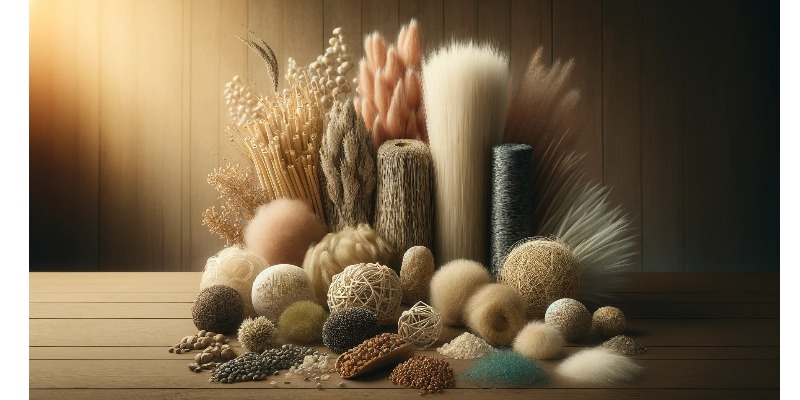
Reinforcing fibers can be of plant or mineral origin. Plant fibers, such as hemp, flax, jute, and kenaf, are sustainable, renewable, and biodegradable. Mineral fibers, such as glass and carbon, offer excellent mechanical properties but are less sustainable than plant fibers. The choice of reinforcing fibers depends on the specific applications and desired properties of the final composite.
Injection Molding Process
Basic Principles
The injection molding process involves heating the thermoplastic material until it becomes fluid, then injecting it into a mold where it solidifies and takes the desired shape. This method is widely used for producing complex components with high precision and repeatability.
Process Optimization
Optimizing the injection molding process for thermoplastic composites loaded with fibers requires adjusting several parameters:
Injection Temperature: The temperature must be high enough to ensure the material's fluidity without degrading the reinforcing fibers.
Injection Pressure: Adequate pressure is necessary to ensure the material completely fills the mold without defects.
Injection Speed: The injection speed affects the distribution of fibers and the quality of the final product.
Cooling Time: Controlled cooling is essential to avoid internal stresses and deformations in the finished part.
Effects of Fibers on Mechanical Behavior
Plant and mineral fibers significantly influence the mechanical properties of thermoplastic composites.
The main effects include:Improved Tensile and Compressive Strength: Reinforcing fibers increase the tensile and compressive strength of the composite, making it suitable for structural applications.
Increased Modulus of Elasticity: The material's stiffness increases with the addition of fibers, improving its ability to resist deformation under load.
Impact Resistance: The presence of fibers can enhance impact resistance, depending on their nature and orientation within the composite.
Thermal Behavior: Fibers can affect the thermal properties of the composite, such as dimensional stability at high temperatures.
Case Studies and Practical Applications
Use of Plant Fibers
Numerous studies have demonstrated the effectiveness of plant fibers in improving the mechanical properties of thermoplastic composites. For example, hemp fiber has been used to reinforce polypropylene, resulting in a material with greater tensile strength and better elastic modulus than unreinforced polypropylene. Practical applications include automotive components, such as door panels and dashboards, where reduced weight and sustainability are crucial.
Use of Mineral Fibers
Glass fibers are widely used to reinforce nylon, creating composites with excellent mechanical and thermal properties. These materials are commonly used in industrial applications and electronics, where mechanical strength and thermal stability are fundamental.
Challenges and Solutions
One of the main challenges in using plant fibers is their compatibility with the polymer matrix. Surface treatments of fibers, such as silanization, can improve adhesion between the fibers and the matrix, further enhancing the composite's mechanical properties. Additionally, optimizing process parameters, such as injection temperature and pressure, is essential to maximize the benefits of reinforcing fibers.
Conclusions
Optimizing the injection molding process for thermoplastic composites loaded with plant and mineral fibers represents a promising path towards more sustainable and high-performance materials. Understanding the effect of fibers on mechanical behavior is crucial for designing composites that meet the demands of modern industrial applications. With the advancement of technologies and production methodologies, the potential of composites reinforced with plant and mineral fibers is set to grow, offering innovative and eco-friendly solutions for a wide range of sectors.