- Introduction to multilayer film extrusion
- Key parameters of the extrusion process
- Material selection and polymer compatibility
- Advanced technologies for thickness control
- Optimization of bubble stability
- Extrusion with PE or PP recycled from post-consumer waste
- Automation and intelligent control systems
- Preventive maintenance to reduce downtime
- Economic benefits of process optimization
Strategies and Parameters to Improve Efficiency and Quality in Film Production, Including Recycled Polymers
by Marco Arezio
The production of multilayer films through blown film extrusion is a key technology in the packaging sector, used to create high-performance materials with unique characteristics such as barrier properties, mechanical strength, and transparency. Optimizing process parameters is essential to improve the quality of the final product, reduce waste, and maximize production efficiency. This article explores the most advanced methods to optimize multilayer film extrusion, based on current research and industrial practices.
Understanding the Dynamics of the Extrusion Process
The extrusion process for multilayer films involves melting various polymers, including recycled ones, which are combined to form distinct layers. Each layer is designed to perform a specific function, such as protection against external agents or enhanced strength. The quality of the final product depends on the correct adjustment of key parameters, including:
Barrel temperature: Influences material melting and homogeneity.
Extrusion speed: Determines the thickness of the various layers.
Blow-Up Ratio (BUR): Affects film stability and mechanical properties.
Precise control of these parameters is essential to avoid defects such as delamination, air bubbles, or uneven thickness.
Selecting Polymeric Materials
Material selection is critical in multilayer film extrusion. Polymers such as polyethylene (PE), polypropylene (PP), and ethylene vinyl alcohol (EVOH) are often combined to achieve an optimal balance of cost, processability, and performance. Compatibility between polymers is crucial to ensure good adhesion between layers. Additives and compatibilizers can be used to improve the interface between incompatible materials.
Optimization of the Extrusion Die
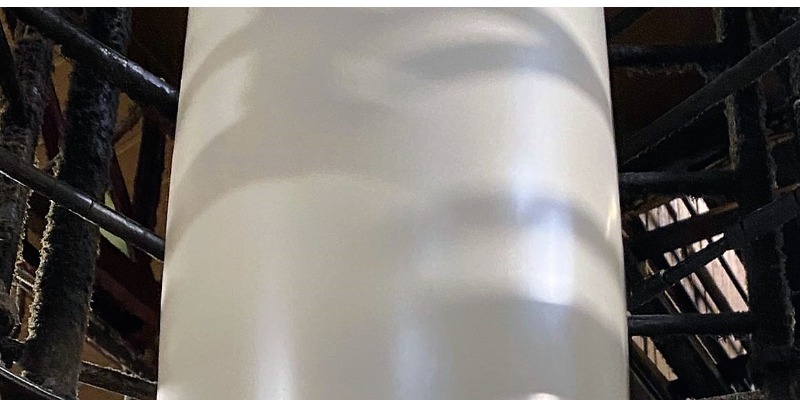
The extrusion die is the heart of the blown film system. Its design directly affects film thickness distribution and layer quality. Modern technologies offer extrusion dies with automatic thickness control, utilizing sensors to continuously monitor the process and make real-time adjustments.
Controlling Film Stability
Maintaining film stability during the cooling process is essential to ensure uniformity and reduce defects. Stability can be improved by optimizing:
Airflow in the cooling system: To ensure even cooling.
Film tensioning: To prevent deformation during winding.
Bubble geometry: To avoid collapse or wrinkles.
Extrusion with Post-Consumer Recycled PE or PP
The use of post-consumer recycled polyethylene (PE) or polypropylene (PP) presents specific technical challenges requiring special attention during blown film extrusion.
Key considerations include:Quality of recycled material: Ensuring the material is adequately cleaned and decontaminated to avoid film defects.
Material properties: Recycled material may exhibit variability in mechanical and thermal properties, which must be carefully monitored and compensated for during processing.
Temperature settings: Melting recycled material requires precise temperature control to prevent thermal degradation or gel formation.
Additives: Adding thermal stabilizers or process modifiers can improve processability and the final film's properties.
Compatibility: In the case of recycled material blends, ensuring good compatibility among components is essential to avoid adhesion or uniformity issues.
Equipment maintenance: Recycled material may contain impurities that increase wear on screws and barrels. Regular cleaning is crucial to maintain extruder efficiency.
Quality testing: Constantly monitor thickness, transparency, and mechanical strength of the film to ensure compliance with required standards.
Monitoring and Automation
Advanced automation and monitoring systems are revolutionizing the extrusion industry. Using sensors and software to control the process enables quick anomaly detection and real-time parameter optimization. These systems improve not only film quality but also overall efficiency, minimizing downtime and waste.
Preventive Maintenance
Regular equipment maintenance is essential to maintain optimal performance. Operators should periodically inspect critical components such as screws, barrels, and the extrusion die to prevent issues related to wear or material buildup. Recommended activities include:
Cleaning screws and barrels: To prevent residue buildup.
Checking heaters: To ensure even heat distribution.
Lubrication: To reduce wear on moving parts.
Inspecting the extrusion die: To check for blockages or damage.
Replacing filters: To ensure a consistent material flow.
Conclusion
Optimizing multilayer film extrusion requires a combination of technical knowledge, advanced technology, and precise management of materials and processes. Companies that invest in modern equipment and personnel training can benefit from increased production efficiency, higher product quality, and reduced operational costs.
© Reproduction Prohibited
photo: wikimedia