- How Hurricanes Form: The Meteorological Factors That Fuel Storms
- The Saffir-Simpson Scale: How Hurricanes Are Ranked Based on Their Intensity
- The Most Devastating Hurricanes in History: From Katrina to Haiyan
- The Wind Howls: The Hurricanes With The Most Powerful Gusts Ever Recorded
- Hurricanes and Extreme Rainfall: When Floods Become More Dangerous Than Wind
- Climate Change and Hurricanes: Why Storms Are Becoming More Destructive
- From Science to Prediction: How Technology Helps Track Hurricanes
- The Future of Hurricanes: What to Expect in the Next Decades
How Hurricanes Form, the Most Devastating Storms in Recent History, and How Climate Change is Making These Atmospheric Phenomena More Powerful
By Marco Arezio
Over the past seventy years, hurricanes have profoundly shaped the history of our planet, causing unimaginable devastation and leaving indelible scars on the regions they have struck. From Katrina to Haiyan, passing through Harvey and Patricia, these atmospheric giants have redefined the boundaries of meteorological science, leading to a better understanding of the mechanisms governing their formation and intensity.
But what makes a hurricane so destructive? And how has their intensity changed over the decades? Exploring their characteristics and the scientific advancements that have enabled their study helps us not only understand their nature but also the future of a planet where extreme weather events are becoming increasingly frequent.
The Birth of an Atmospheric Giant
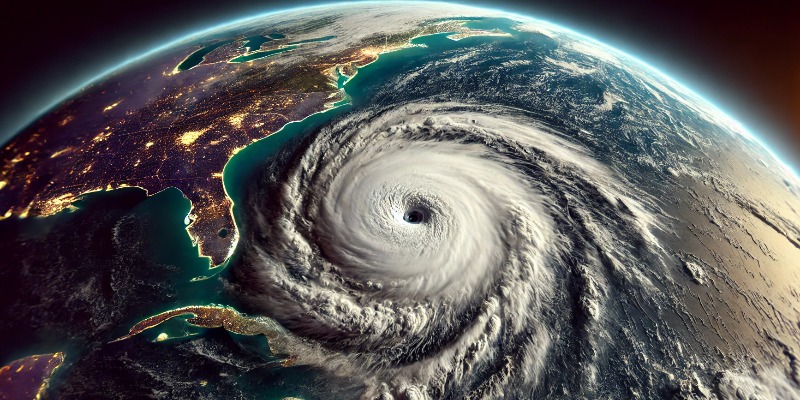
Hurricanes, also known as tropical cyclones or typhoons depending on where they develop, are meteorological phenomena that form over warm oceans where surface water temperatures exceed 26.5°C (80°F). This warm expanse of water provides the energy needed to develop a low-pressure system which, fueled by water vapor and wind currents, can evolve into a storm of gigantic proportions.
What makes hurricanes so impressive is their ability to sustain themselves: the warmer the ocean, the more intense the storm becomes. When atmospheric conditions are favorable, the system can evolve rapidly, reaching wind speeds of over 250 km/h (155 mph) in the most extreme cases.
The Saffir-Simpson Scale, introduced in the 1970s, classifies hurricanes into five categories based on wind speed and potential destructiveness. A Category 1 hurricane is already dangerous, but when it reaches Category 5, it can flatten entire cities, wipe out infrastructure, and cause storm surges of biblical proportions.
Hurricanes That Made History
Over the past seventy years, numerous hurricanes have left an indelible mark on collective memory, not only due to their intensity but also because of their human and economic impact.
The costliest hurricane in history is undoubtedly Katrina (2005), which devastated New Orleans and other areas along the U.S. Gulf Coast. Torrential rains and levee failures led to catastrophic flooding, resulting in over 1,800 deaths and an estimated $125 billion in damages. This event marked a turning point in climate emergency management, highlighting the urgent need to invest in more resilient infrastructure.
In 2013, Typhoon Haiyan struck the Philippines with sustained winds exceeding 315 km/h (195 mph), making it one of the most powerful cyclones ever recorded. The storm not only caused thousands of fatalities but also demonstrated how rising sea levels and climate change were amplifying the destructive effects of such events.
Hurricane Harvey (2017), on the other hand, highlighted another devastating characteristic of modern storms: rainfall accumulation. Harvey moved very slowly over Texas, dumping record-breaking amounts of rain—some areas recorded over 1,500 mm (60 inches)—causing extreme flooding and enormous economic losses.
Some hurricanes, while not causing major human catastrophes, have still set remarkable meteorological records. Hurricane Tip (1979) holds the record for the largest hurricane ever recorded, with a diameter exceeding 2,000 km (1,240 miles), while Hurricane Patricia (2015) generated winds of 345 km/h (215 mph), the highest wind speed ever recorded in a hurricane.
The Impact of Climate Change on Hurricanes
In recent decades, meteorological science has identified a worrying trend: hurricanes are becoming more intense.
This is directly linked to global warming. As ocean temperatures rise, they provide more energy for tropical cyclones, allowing them to intensify more rapidly and reach higher categories in increasingly shorter timeframes. Additionally, global warming is slowing down hurricane movement, making them more dangerous as they linger longer over affected areas, releasing greater amounts of rainfall.
Another aggravating factor is the rising sea level, which makes storm surges more destructive. Even moderate-intensity hurricanes can cause catastrophic damage if coastal waters are already higher than in the past.
Climate models suggest that if greenhouse gas emissions continue to rise, hurricanes will become stronger and more frequent in tropical and subtropical regions. Once-rare extreme events may become the norm, with devastating impacts on coastal economies and vulnerable communities.
Science and Technology: Predicting Hurricanes
If there is a positive aspect to hurricane research, it is the continuous improvement in forecasting and monitoring capabilities. Compared to seventy years ago, today we have advanced tools that allow us to track storm evolution in real time.
Since the 1960s, meteorological satellites have revolutionized how we observe tropical cyclones, providing detailed images of their size and trajectory. Computer models use atmospheric and oceanic data to predict their behavior days in advance, allowing for timely evacuations and reducing casualties.
Another crucial tool is the hurricane hunter aircraft, which fly directly into storms to collect vital data on pressure, wind speed, and humidity. These measurements significantly improve forecasting accuracy and emergency management.
Conclusion
Hurricanes are among the most destructive and fascinating natural phenomena on Earth. Over the past seventy years, scientific advancements have deepened our understanding of their mechanisms and improved forecasting technologies.
However, with climate change in full effect, their impact could become even more devastating. The challenge for the future will be to strengthen infrastructure, enhance early warning systems, and reduce global emissions to mitigate the intensity of these atmospheric giants.
Hurricanes will continue to shape our history, but science and technology will provide us with the tools to face them with greater awareness and preparedness.
© All Rights Reserved