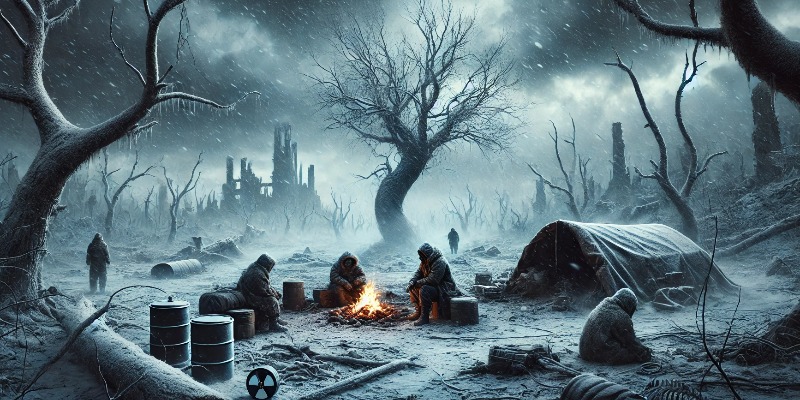
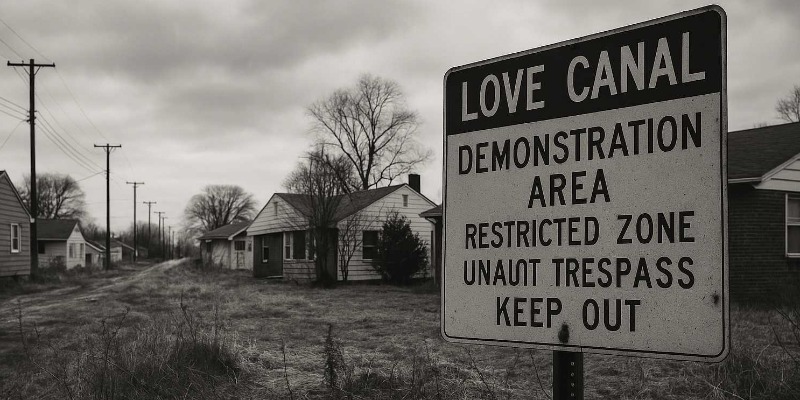
- Because today it is no longer enough to talk about an environmental emergency
- We have not completely lost our ecological awareness
- From 2021 to 2026 the climate situation has worsened
- The repetition of the disaster produces habituation and impotence
- Eco-anxiety, moral fatigue and media saturation
- Poverty makes environmental participation more difficult
- Green marketing, trust, and the risk of greenwashing
- The real role of politics and institutions
- How to rebuild an adult environmental awareness
- Because the problem is not only environmental but human
From the climate crisis to air pollution, from energy poverty to greenwashing, an updated analysis of how fear, information overload, and inequality are changing our relationship with the environmental emergency
Author: Marco Arezio. Expert in the circular economy, polymer recycling, and industrial processes for plastics. Founder of the rMIX platform, dedicated to the enhancement of recycled materials and the development of sustainable supply chains.
Updated on: April 13, 2026
Original article: December 15, 2021
Reading time: 14 minutes
In December 2021, the question was already harsh and uncomfortable: have we lost our environmental awareness? Today, in 2026, the question needs to be reformulated more precisely. We are not simply facing an absence of awareness, as though society had suddenly gone blind. We are facing something more insidious: a combination of habituation, emotional fatigue, perceived powerlessness, and material inequality. The ecological crisis has not disappeared from the radar; on the contrary, it has entered everyday life so deeply that it risks becoming background noise.
The point, then, is not to establish whether environmental disaster exists or not. On this, the scientific literature and the main international organizations leave no room for comforting interpretations: global warming, extreme events, ecosystem erosion, air pollution, and pressure on natural resources continue to produce widespread and measurable impacts. The real problem is understanding why, even though we know more, we often react less than would be necessary.
We Have Not Entirely Lost Ecological Awareness
Saying that environmental awareness has disappeared would, today, be too simplistic a conclusion and also one that is poorly aligned with the data. In the European Union, 85% of citizens consider climate change a serious problem, 81% support the goal of climate neutrality by 2050, and 88% call for greater investment in renewables and energy efficiency. At the global level, a 2024 UNDP survey found that 80% of people want stronger climate action from governments. In Italy, Istat reports that in 2024, 58.1% of the population expressed concern about climate change, while among young people aged 14 to 19, the share of those concerned reached 67.9%.
These figures tell us something important: we are not facing a society that is entirely indifferent. Sensitivity exists, and in many cases it is even high. But this sensitivity does not automatically translate into structural change. This is where the paradox of our time arises: alarm is growing, knowledge is increasing, information circulates better than it once did, yet collective action often appears fragmented, intermittent, slowed down by economic interests, geopolitical conflicts, distrust, and more pressing daily priorities.
From 2021 to 2026, the Climate Picture Has Worsened
If we look at the real world, the context of 2026 is harsher than the one in which the original article was written. The WMO confirms that the period 2015–2025 was the warmest 11-year period ever recorded and that 2025 was the second or third warmest year in the historical record, about 1.43 °C above the 1850–1900 average. Copernicus has also highlighted that the three-year period 2023–2025 exceeded the 1.5 °C threshold on average compared with the pre-industrial era, while sea level rise, ocean heat content, and glacial melting continue to point to a trajectory of severe climate stress.
The UNEP Emissions Gap Report 2025 adds another crucial piece: even with the full implementation of the climate commitments currently on the table, the planet would still be heading toward a temperature increase of about 2.3–2.5 °C over the century; under current policies, the trajectory remains around 2.8 °C. In other words, the world is not standing still, but it is moving far too slowly in relation to the scale of the problem.
This is not only about an abstract climate. Air pollution continues to produce enormous health damage: according to the WHO, 99% of the world’s population breathes air that exceeds guideline quality limits, and the combined effect of outdoor and household air pollution is associated with about 7 million premature deaths per year. In Europe, the European Environment Agency estimates that more than 180,000 deaths in the EU are attributable to exposure to PM2.5 above WHO guidelines. This means that the environment is not a chapter separate from everyday life: it is health, work, income, the cost of care, and quality of living.
The Repetition of Disaster Produces Habituation and Powerlessness
And this is precisely where the feeling of habituation arises. When an emergency becomes permanent, it stops being perceived as an emergency and risks turning into a habitual scenario. Floods, fires, heatwaves, droughts, water crises, scientific warnings, temperature records, new estimates of future costs: all of this, repeated day after day, can produce not only mobilization but also saturation. Not because people have become morally worse, but because the human psyche struggles to remain for long in a state of alarm without visible outcomes.
Environmental awareness, therefore, does not vanish overnight. More often, it wears down. It protects itself, numbs itself, reduces its emotional intensity in order not to collapse under the weight of continuous information. It is an understandable reaction, but a dangerous one. Because habituation does not deny the problem: it normalizes it. And when damage becomes normalized, the threshold of collective tolerance widens little by little. This is the real illness of our ecological age: not total ignorance, but the gradual domestication of disaster. This inference is consistent with the stability of public concern observed in several surveys, alongside an increasingly severe evolution of climate risks.
Eco-Anxiety, Moral Fatigue, and Media Saturation
In recent years, the psychological dimension of the environmental crisis has also entered the debate. The WHO has emphasized that climate change aggravates numerous social, environmental, and economic risk factors for mental health. A growing scientific literature speaks of eco-anxiety, climate grief, and climate stress, especially among young people. An in-depth analysis by the European Youth Portal cites data according to which 85% of the young people surveyed report at least moderate concern about climate change, and 45% say it has a negative impact on their daily functioning.
But it would be a mistake to read eco-anxiety only as an individual fragility. In many cases, it is a rational response to a real threat, aggravated by the fact that citizens perceive a disproportion between the severity of the problem and the slowness of political and economic responses. It is not hysteria: it is often lucidity without power. And it is precisely this combination that produces moral fatigue. When people think that everything depends on individual behavior, yet see that the major systems continue to function almost in the same way as before, then the sense of responsibility can turn into frustration, and frustration into withdrawal.
Poverty Makes Environmental Participation More Difficult
The 2021 article captured an essential point that today needs to be reinforced: we cannot ask everyone to experience the environmental issue with the same intensity, because not everyone has the same material margin of choice. The World Bank stresses that climate change represents a fundamental risk for reducing poverty and inequality, and that one person in five is exposed, over the course of their lifetime, to an extreme weather event with serious effects on livelihoods. The OECD adds that climate impacts could push another 132 million people into poverty by 2030, deepening already existing economic divides.
This means that sustainability risks appearing, to many people, not as a civic choice but as a class luxury. Those who struggle to pay rent, energy, transport, or food costs inevitably tend to prioritize the short term. Not out of cynicism, but out of necessity. This is why a serious environmental policy cannot be limited to producing guilt in consumers: it must lower the costs of the transition, redistribute opportunities, and make the sustainable option accessible, affordable, and reliable.
Without social justice, ecological awareness remains fragile and selective.Green Marketing, Trust, and the Risk of Greenwashing
Another aspect that in 2026 can no longer be treated naively is corporate communication. It is true that many companies today talk about sustainability, the circular economy, emissions reduction, recyclability, energy efficiency, and supply chain responsibility. But it is equally true that green language can be used both as a lever for transformation and as a reputational tool. The difference lies in the data, verifiability, and transparency. This is why the European Commission has already strengthened the framework against greenwashing with Directive 2024/825, which requires better information on durability, repairability, and unfair commercial practices; Member States had to transpose it by March 27, 2026, and the rules will apply from September 27, 2026.
This tightening of the regulatory framework is the sign of a necessary maturation: it is no longer enough to say “green,” it must be proven. Environmental trust cannot be based on slogans. If the market wants to play a positive role, it will have to move from promise to proof, from storytelling to technical evidence, from generic claims to traceability. Otherwise, collective fatigue will increase, because every communicative abuse further weakens the credibility of the entire ecological discourse.
The Real Role of Politics and Institutions
It therefore remains true, perhaps even more than it was in 2021, that the decisive burden cannot be placed solely on individuals or companies. We need institutions capable of setting standards, correcting relative prices, incentivizing useful innovation, punishing harmful practices, and supporting the social groups most exposed to the costs of the transition. European citizens say this clearly: they see national governments, the EU, and the productive system as the actors best suited to address climate change. They are not asking for moralizing lectures: they are asking for infrastructure, investment, rules, and coherence.
The greatest mistake would be to keep talking about the environment as though it were an ethical niche, separate from the real economy. Today, the environment is already the real economy. It is agricultural productivity, the insurability of territories, energy security, urban health, supply chain stability, industrial competitiveness, and public budgets. The IPCC, WMO, UNEP, World Bank, and OECD converge on one point: the costs of delay are not theoretical and will not be paid equally by everyone. Fragile territories, low-income groups, young people, and those who live where adaptation is more expensive or less financed will pay more.
How to Rebuild a Mature Environmental Awareness
If this is the picture, the answer can be neither paralyzing catastrophism nor advertising-style optimism. What is needed is a mature environmental awareness. An awareness capable of holding together scientific truth, political balance, and social justice. Telling the truth about risks without softening them. Showing viable solutions without selling them as simple. Avoiding both the infantilization of the citizen and the rhetoric of individual heroism. The transition will not stand on perfect people, but on less destructive systems.
Rebuilding environmental awareness also means restoring the relationship between action and result. People are more willing to participate when they see tangible effects: less energy waste, better transport, cleaner air, greener neighborhoods, more transparent supply chains, repairable products, more stable utility bills, safer work. When, instead, sustainability is perceived as an abstract sacrifice, an additional cost, or punitive language, consensus weakens. For environmental responsibility to endure, it must enter everyday life without appearing to be a privilege for the few.
Why the Problem Is Not Only Environmental but Human
In the end, the issue remains deeply moral. We have not merely lost part of our environmental awareness; more broadly, we risk losing the ability to connect our immediate well-being with its consequences spread across time and space. This is the real impoverishment: considering today’s profit, tomorrow’s damage, private convenience, and collective cost as separate things. The ecological crisis makes visible a wider crisis in the way we inhabit the world.
For this reason, the initial question deserves a clear answer. No, environmental awareness has not disappeared. The data show that concern exists, is often high, and in many contexts has even grown. But this awareness is threatened by three converging forces: habituation to damage, inequality that reduces freedom of choice, and distrust toward green messages that are not supported by facts. If we do not address these three nodes together, we will continue to know a great deal and change very little.
Recommended Book
To accompany this article with a coherent and broader reading on the subject, you can recommend at the end the book “When the Earth Presents the Bill”, presented as an investigation into major environmental disasters and their industrial causes. It is a perfect editorial bridge because it broadens the article’s line of reasoning: it does not merely speak about ecological sensitivity, but takes the reader inside the relationship between production responsibilities, environmental damage, and the hidden cost of progress. The link can be inserted using the Amazon URL you provided.
FAQ
Have we really lost our environmental awareness?
Not entirely. The most recent data show that climate and environmental concern remains high in Europe, in Italy, and globally. The problem is that awareness does not always translate into effective action, especially when it collides with economic hardship, media saturation, and distrust.
Why do people speak of habituation to ecological disaster?
Because constant exposure to news about fires, floods, heatwaves, pollution, and climate records can produce emotional saturation. In this way, the damage is not denied, but normalized, and the sense of urgency weakens.
What is the link between poverty and the environment?
Climate change affects those with fewer resources and less adaptive capacity in a disproportionate way. This is why an effective ecological transition must also be a social one: without economic accessibility, sustainability risks remaining a privilege.
Can companies really be allies of the environment?
Yes, but only if their environmental claims are verifiable and supported by data. European regulation is moving precisely in that direction, in order to limit greenwashing and strengthen transparency for consumers.
Why do young people experience the environmental issue more intensely?
Because they know that the impacts of the climate crisis will weigh most heavily on their future. For many of them, the issue is not theoretical: it affects expectations, mental health, trust in institutions, and their imagination of tomorrow.
Sources
IPCC, Climate Change 2023 – AR6 Synthesis Report.
WMO, State of the Global Climate 2025.
UNEP, Emissions Gap Report 2025.
European Commission, Citizen support for climate action and Empowering the consumer for the green transition.
UNDP, Peoples’ Climate Vote 2024.
Istat, Environmental concerns and SDGs Report 2025 – Goal 13.
WHO, Air pollution and Mental health and Climate Change: Policy Brief.
World Bank, Poverty, Prosperity, and Planet Report 2024.
OECD, Development Co-operation Report 2024 and The Climate Action Monitor 2024.
European Youth Portal, Impact of climate change on young people’s mental health.
Licensed image
© Reproduction prohibited