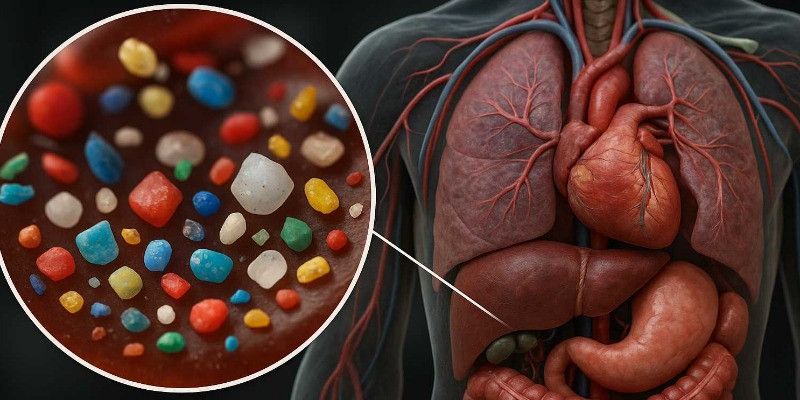
- Microplastics: An Invisible Threat in Our Drinks
- From Water to Beer: The Pervasive Presence of Microplastics
- The 3 Rs in Action: Reduce, Reuse and Recycle to Fight Microplastics
- The Impact of Plastic on Human Health: Recent Data and Research
- Towards a Plastic Free Future: Initiatives and Solutions to Combat Pollution
Do you think water and soft drinks in general are immune to microplastics?
It sounds amazing but we ingest an average of 50,000 plastic particles every year. From bottles to crockery, from multipurpose containers to children's toys, from bags to shoes and more, we live in a world of plastic.
Accustomed as we are to the culture of disposable it seems difficult to gather the messages that come to us in order to be able to change our habits and the culture of waste that has taken root in this time frame.
The 3 R rules shrinks, reuses, recycles apparently isn't applied enough, but a little by bit something moves and fattive answers begin to arrive.
There are several municipalities, beaches, schools and canteens that are becoming plastic free,thus converting to the use of recycled materials. It is never too late to start to set a good example, as long as you start and reverse course.
We have reached a point of no return and we need to take action to give certain answers at just as certain times. Since 1950, in fact, plastic production in the world has increased by 200 times and in the next ten years there could be an even more significant increase in production, up to 40 times greater.
This is what emerges from a study published by the University of Newcastle that the policies adopted so far for the recovery, reuse and recycling of plastics would not be sufficient to contain the environmentalimpact of this product and its effects on our health.
The invasion of microplastics
Plastic is now found everywhere, even in the drinking water we drink,from the tap or bottle, as well as in the most popular beer and beverages.
From water, however, microplastic fibers filter to derivatives, thus arriving in beer or other the most popular beverages (non-alcoholic, fruit juices, probably also in wine), fish (especially crustaceans) and salt.According to research data from the University of Newcastle, microplastic fibers are present in 72.2 of the drinking water we drink and cook with all of Europe, unlike in the United States where the presence of plastic rises to 95.
The English university also highlights how Since 2000 plastic production has been steadily increasing with a percentage of 4 per year,it tells us how every week, through food and drink, each of us ingests about 1,769 micro-plastic particles (about 50,000 plastic particles in a year). I mean, we're inundated with plastic!
Plastic would be present in groundwater, as in surface water, and inbottled water.
For every 500 ml of drinking water, the research in question detects plastic fibres in 72.2 in Europe, finding in other international countries also higher in percentage terms (in the Middle East specifically Lebanon there is a contamination of 98 of the cases, in the United States equal to 95, in India equal to 82.4, in Uganda at 81, in Ecuador at 79 Indonesia at 76).
It is essential that water is the main constituent of the human body and represents a substantial percentage of the body weight of every human being, who must necessarily drink water to avoid dehydration.
In light of the data that emerged from the study and the dangers that come with the health of each one, it is essential to take action to create that virtuous circle of reducing, re-recycling, recycling with the goal and hope of helping to save our planet.
Plastic is not biodegradable, but it is recyclable so the invitation is to activate us all as soon as possible even in advance wasting less.
Automatic translation. We apologize for any inaccuracies.