- Polluted Air and Bone Fragility: A Worrying Link
- PM 2.5 and Black Carbon: The New Enemies of Our Bones
- Air Pollution: A Risk Factor for Osteoporosis
- How Pollution Increases the Risk of Bone Fractures
- Osteoblasts and Osteoclasts: The Balance Undermined by Polluted Air
- The Effect of Pollution on Bones: A Silent Threat
- Air Quality and Bone Health: A Global Comparison
- The Impact of Pollution on the Skeletal System: What the Studies Say
Polluted Air Threatens Skeletal Health, Disrupting the Balance Between Osteoblasts and Osteoclasts and Promoting the Development of Osteoporosis
by Marco Arezio
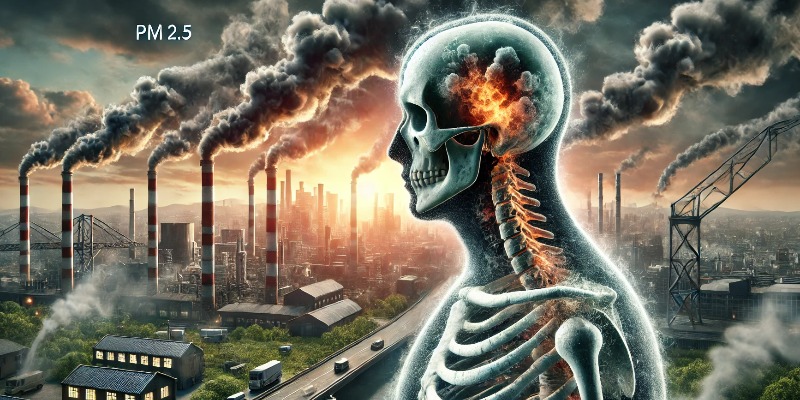
Air pollution is a problem that goes far beyond respiratory difficulties and cardiovascular health issues. Recent studies highlight how fine particles, such as PM 2.5 and soot, or “black carbon,” have a direct impact on bone health, contributing to a significant increase in fractures and greater skeletal fragility.
This phenomenon raises crucial questions about how the air we breathe affects our skeletal system, already threatened by conditions like osteoporosis.
Bone Balance: Osteoblasts and Osteoclasts
Bones are not static structures; rather, they are living and dynamic tissues, continuously remodeled through the activity of two types of cells: osteoblasts and osteoclasts.
Osteoblasts are responsible for forming the bone matrix by depositing minerals like calcium, which provide strength and resilience to the bone.
Osteoclasts, on the other hand, are in charge of bone resorption, a process essential for bone remodeling and repair.
The delicate balance between these two types of cells ensures the robustness of our skeleton and its ability to adapt to the body's needs.
However, exposure to pollutants in the air can disturb this balance, favoring osteoclast activity at the expense of osteoblasts.
This imbalance leads to bone thinning and a reduction in bone mineral density, which increases the risk of fractures. The phenomenon becomes particularly concerning in chronic pollution contexts, where the population is exposed to high levels of particulate matter and other harmful substances for extended periods.
Pollution and Osteoporosis
Osteoporosis is a condition characterized by decreased bone mass and deterioration of the bone tissue microarchitecture, making bones more fragile and susceptible to fractures. This disease predominantly affects women after menopause, but men are not immune.
Globally, about one-third of women and one-fifth of men over the age of fifty are at risk of developing osteoporosis.
Studies began to highlight a direct link between air pollution and osteoporosis as early as 2007, when Norwegian research showed that exposure to high levels of pollution could reduce the number of osteoblasts, thus decreasing bone density.
Subsequently, research published in The Lancet Planetary Health in 2017 solidified this correlation by analyzing a large population sample and finding an increase in fractures in areas with high concentrations of PM 2.5 and black carbon.
Molecular Mechanisms: Free Radicals and Oxidative Stress
Air pollution not only disrupts the balance between osteoblasts and osteoclasts but also acts at the molecular level.
Pollutants can generate free radicals, highly reactive molecules that cause oxidative stress and damage bone cells. This cellular damage accelerates the bone aging process and reduces the body's ability to regenerate bone tissue, further contributing to skeletal fragility.
Moreover, pollution can induce chronic inflammation, inappropriately activating the immune system and interfering with the normal function of osteoblast precursor cells. This inflammatory process, if prolonged, can contribute to the onset and worsening of osteoporosis, further complicating the situation for those living in highly polluted environments.
The Case of China and India: A Global Alarm
Developing nations, where air pollution is often out of control, are particularly exposed to these risks.
In China, a recent study highlighted how even brief periods of exposure to urban traffic can significantly increase the risk of bone fractures.
Similarly, in India, the increase in atmospheric particulate matter by 68% from 1998 to 2021 represents a serious threat to public health, with millions of people potentially at risk of osteoporosis.
These countries also face practical difficulties in diagnosing and treating osteoporosis. For example, Dexa machines, used to measure bone mineral density, are extremely rare and expensive, making it difficult to access early diagnoses and timely interventions. This further exacerbates the problem, highlighting how environmental issues are closely intertwined with social ones.
The Need for Global Action
With the approach of the World Clean Air Day on September 7, it becomes increasingly urgent for governments and international organizations to address the problem of air pollution not only as a respiratory health issue but also as a serious threat to bone health.
The adoption of stricter policies to reduce particulate emissions and other harmful substances, along with awareness campaigns about the risks associated with pollution, is essential to protect future generations from the consequences of an increasingly deteriorating air quality.
Conclusions
Air pollution is emerging as a key factor in bone fragility, contributing to the onset of osteoporosis and increasing the risk of fractures, especially in populations exposed to high levels of PM 2.5 and black carbon.
The fight against this type of pollution requires an integrated approach that considers not only respiratory health but also the protection of the skeletal system. Only through a global and multidisciplinary commitment can we hope to mitigate these effects and ensure a better quality of life for future generations.