- Coal stoves in Ulaanbaatar and household pollution
- Fine particulate matter and risks to children's health
- Low birth weight and prenatal exposure
- Childhood asthma and domestic coal burning
- Acute respiratory infections in Mongolian children
- Emission reduction policies in Ulaanbaatar
- Economic barriers to the energy transition
- Public health perspectives for the new generations
Epidemiological evidence on the effects of household particulate matter on low birth weight, asthma, and respiratory infections
by Marco Arezio
Air pollution represents one of the most serious health emergencies of the 21st century, but in some urban contexts its origins lie not so much in large-scale industrial emissions, but in the daily habits of families.
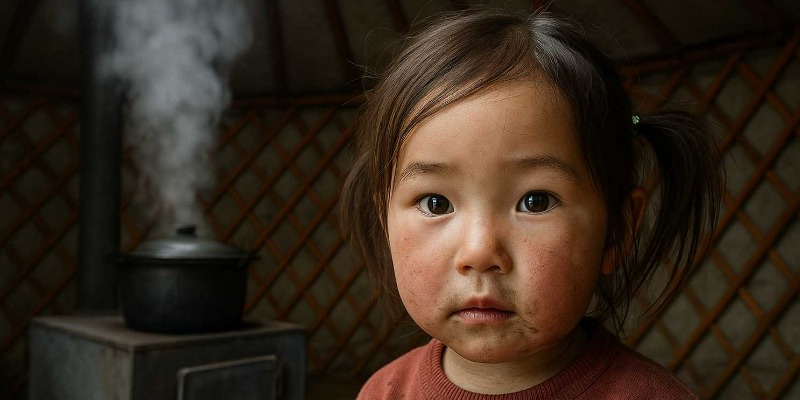
Ulaanbaatar, the capital of Mongolia, is one of the most emblematic examples of this phenomenon: a city located on a plateau over 1,300 meters above sea level, where long, harsh winters force families to use coal-fired stoves to heat their homes. This practice, seemingly necessary for survival, has profound and dramatic consequences for health, especially that of children.
Scientific literature over the past twenty years has in fact highlighted a significant link between exposure to particulate matter from domestic coal combustion and a series of serious childhood health problems, including low birth weight, an increased incidence of asthma, and a high frequency of acute respiratory infections.
Analyzing these data means not only documenting a local crisis, but also reflecting on how basic energy choices can significantly impact the health of vulnerable populations.
Coal stoves and domestic particulate matter
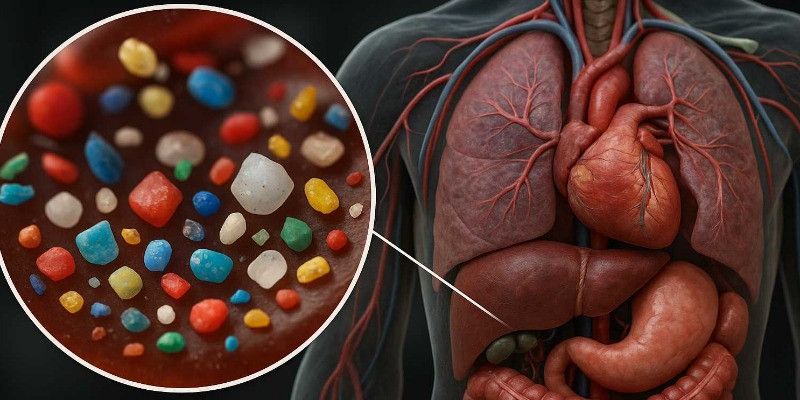
The traditional stoves used in Ulaanbaatar's outlying neighborhoods, known as "ger districts," are rudimentarily designed, lack effective filtration systems, and are poorly ventilated. The burned coal, often low-quality and rich in impurities, produces high concentrations of fine particulate matter (PM₂.₅ and PM₁₀) , which spreads not only inside homes but also into the city's atmosphere, already characterized by temperature inversions that trap pollutants in the soil.
Average PM₂.₅ concentrations during the winter months in Ulaanbaatar can exceed the limits recommended by the World Health Organization by 20–30 times. Added to this are the problems of sulfur oxides, carbon monoxide, and volatile organic compounds, all products of incomplete combustion. Children, spending much of their time indoors and having a faster respiratory metabolism than adults, are particularly vulnerable.
Low birth weight and developmental risks
One of the most consistent epidemiological findings concerns the correlation between prenatal exposure to household particulate matter and low birth weight. Pregnant women living in environments saturated with smoke from domestic combustion exhibit an increased risk of giving birth to infants weighing less than 2,500 grams. Fine particulate matter, penetrating the placental barrier, can interfere with fetal development, reducing the delivery of oxygen and nutrients.
Scientific literature has shown that low birth weight not only represents an immediate problem for neonatal survival, but is a predictor of long-term complications, including growth retardation, a greater likelihood of developing chronic respiratory diseases, and an increased risk of cardiovascular disease in adulthood.
Childhood asthma and chronic exposure
Asthma is one of the most common respiratory diseases among children in Ulaanbaatar, and its incidence is directly related to chronic exposure to fine particulate matter and sulfur dioxide. Persistent inflammation of the airways, promoted by inhaling ultrafine particles, leads to bronchial hyperreactivity, chronic cough, and reduced lung capacity.
Studies conducted in Mongolian pediatric populations have shown that children raised in households that use coal-burning stoves have a significantly higher risk of developing asthma symptoms than their peers who live in homes with central heating systems or that use less polluting energy sources.
The problem becomes even more significant when considering seasonality: asthma peaks occur in the coldest months, when the concentration of particulate matter in domestic environments reaches its highest values.
Acute respiratory infections in the first years of life
Early exposure to toxic fumes is also a key factor in the spread of acute respiratory infections in children under five. Bronchitis, bronchiolitis, and pneumonia occur at a higher rate than the global average and are a major cause of childhood hospitalization in Ulaanbaatar.
Carbon dioxide, deposited on the respiratory mucosa, reduces the effectiveness of local immune defenses and promotes colonization by pathogens such as respiratory viruses and opportunistic bacteria. The crowded conditions typical of ger districts further increase the risk of transmission.
Numerous studies have shown that respiratory infections in Mongolian children are more severe and tend to recur more frequently than in settings where home air quality is better.
Mitigation policies and perspectives
In recent years, Mongolian authorities have launched programs to replace traditional stoves with more efficient models, equipped with cleaner combustion systems and lower particulate emissions. Incentives have also been introduced to encourage the switch from coal to less polluting fuels, such as pellets or gas, and awareness initiatives have been promoted to improve home ventilation.
However, change faces significant socioeconomic obstacles: coal remains the cheapest and most accessible fuel, and many families lack the resources to adopt more expensive alternatives. This highlights the need for integrated policies that combine technological interventions, economic support, and community training to break a vicious cycle that threatens younger generations.
Conclusions
The Ulaanbaatar experience represents a key case study for understanding the direct impact that household pollution can have on child health. Epidemiological evidence is now solid: particulate matter from coal combustion in homes is associated with low birth weight, increased incidence of asthma, and a high frequency of acute respiratory infections.
These data demonstrate that the problem of air pollution is not limited to traffic or industrial emissions, but also to household practices, especially in urban areas characterized by extreme weather conditions and energy poverty. Addressing these issues not only reduces urban pollution but also ensures thousands of children can grow up in a healthy and safe environment.
© Reproduction Prohibited
Sources
- Enkhjargal, B., et al. (2020). Household coal combustion and birth outcomes in Ulaanbaatar, Mongolia. Environmental Health Perspectives.
- World Health Organization (2019). Air pollution and child health: prescribing clean air. Geneva: WHO.
- Ganbat, G., et al. (2017). Severe winter air pollution in Ulaanbaatar: Determinants and health impacts. Atmospheric Environment.
- Barn, P., et al. (2018). Household air pollution and respiratory outcomes in children: Evidence from Ulaanbaatar, Mongolia. International Journal of Environmental Research and Public Health.
- Allen, R.W., et al. (2013). The impact of coal stove interventions on indoor air quality and child health in Ulaanbaatar. Science of the Total Environment.