- Natural fibres and sustainability: a critical assessment
- What Really Happens When Natural Fibers Decompose
- Biodegradability of natural fibres: between theory and environmental reality
- Chemical treatments and their impact on tissue decomposition
- Natural fiber recycling: methods, limits and future perspectives
- Contamination and obstacles in the recovery of natural textile materials
- The ecological footprint of natural fibre production
- Strategies for a circular and sustainable management of natural fibres
Biodegradability, Recycling and the Real Environmental Impacts of Natural Fibers in the Circular Economy: What Is Often Left Unsaid
by Marco Arezio
In the wide-ranging debate on sustainability, natural fibers have earned a prominent role. Labeled as “green” alternatives to synthetic materials, they are often seen as environmentally harmless and easy to manage at end-of-life. But is that truly the case?
How sustainable are cotton, linen, hemp or wool really, once their life cycle ends?
Behind the “natural” label lies a complex reality made up of industrial processes, chemical treatments, logistical challenges and impacts that are not always evident.
This article aims to delve into these aspects, focusing on the decomposition and recycling of natural fibers, and highlighting the ecological consequences of their end-of-life management.
Natural Fibers: Between Biological Origins and an Uncertain Fate
When we speak of natural fibers, we refer to materials of plant or animal origin: cotton, linen, hemp, jute, wool. These materials have accompanied humanity for millennia and today are experiencing a resurgence due to their biodegradable nature and perceived lower impact compared to synthetic fibers.
However, the mere fact of being “natural” does not make them automatically sustainable. The industrial processes to which they are subjected — from cultivation to treatment, spinning to dyeing — deeply alter their composition.
Many cotton fabrics, for example, are treated with chemicals that significantly affect their end-of-life behavior. And their biodegradability, often taken for granted, depends on a number of specific conditions that are rarely met in current waste management systems.
Decomposition: What (Doesn’t) Happen After Use
The collective imagination links natural fibers to quick and clean decomposition, but the reality is more complicated. For a fabric to truly break down, it requires oxygen, moisture, active microorganisms and suitable temperatures.
Such conditions are rarely found in landfills or unsorted waste bins, where materials are compressed, sealed and layered. In anaerobic environments, natural fibers degrade very slowly and may even release methane — a greenhouse gas far more potent than CO₂.
Furthermore, industrial treatments make things worse. A linen or cotton fabric treated with stain-resistant coatings or synthetic dyes may take decades to break down, and the process can release pollutants into the soil and groundwater. So being of “organic” origin is not enough: everything added to a fiber during its production cycle must be considered.
Recycling Natural Fibers: Untapped Potential
The recycling of natural fibers represents a major opportunity, yet today it remains vastly underused. There are two main recovery methods: mechanical and chemical (or biological).
The former involves shredding and reprocessing textiles into fibers that can be reused in lower-grade products (such as insulation or padding). The latter — still experimental for many materials — breaks fibers down into their basic components through enzymatic or selective chemical processes.
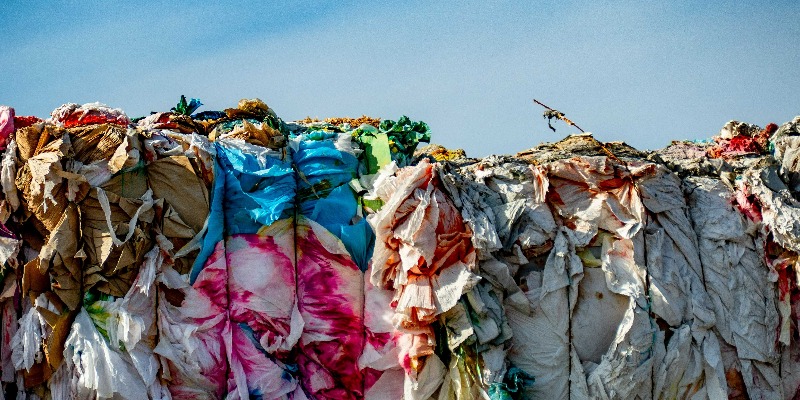
But there are significant challenges. Natural fiber fabrics are often blended with synthetics, complicating treatment. Moreover, mechanical recycling severely degrades fiber quality, rarely allowing reuse in the textile sector. Collection chains are fragmented, dedicated logistics are lacking, and most post-consumer natural textiles end up in landfills or incinerators.
Environmental Impacts: Beyond Biodegradability
Another often overlooked issue is the production phase of natural fibers. Cotton, for instance, is among the thirstiest crops in the world: producing one kilogram of cotton can require between 7,000 and 10,000 liters of water. When we factor in the heavy use of pesticides and fertilizers in intensive farming, the ecological footprint can even exceed that of certain synthetic fibers.
Where sustainable farming practices are applied, such as in organic cotton cultivation, environmental benefits increase. However, even then, the end-of-life phase remains critical: if not properly disposed of, or if released into natural environments (such as rivers or oceans), these fabrics can release microfibers, transport contaminants or disrupt ecosystems.
Toward a More Sustainable Management of Natural Fibers
To truly reduce the environmental impact of natural fibers, it is not enough to replace synthetic materials with natural ones. The entire textile life cycle must be rethought using systemic strategies. Some possible directions include:
- Eco-design: Create mono-material products, free from persistent chemical treatments, that are easy to disassemble and reuse.
- Transparent labeling: Provide detailed information on textile composition and end-of-life management.
- Dedicated infrastructure: Develop collection and processing systems specifically for natural textiles.
- Consumer education: Encourage conscious purchasing, long-term maintenance and repair of garments.
- Support for research: Invest in chemical and enzymatic recycling technologies, as well as advanced industrial composting systems.
Conclusion
Natural fibers alone do not guarantee sustainability. It is how we use them — how we produce, treat and dispose of them — that determines their environmental impact. In a truly circular economy, even “natural” must be strategically planned: from cultivation to treatment, from consumption to recycling. Only a holistic and critical vision will allow us to turn the potential of natural fibers into a real environmental advantage.
© All Rights Reserved – Reproduction Prohibited