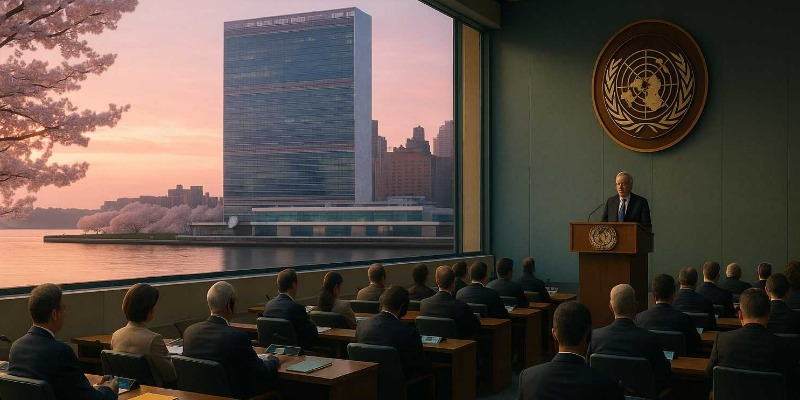
In a New York suspended between cherry blossoms and diplomatic electricity, the Glass Palace transforms for a day into the epicenter of a global dilemma: a pill capable of sedating human anger, with side effects on the sense of justice and emotional freedom.
Delegates, scientists, activists, investors and religious figures discuss three future scenarios: individual choice, universal imposition or collective suspension. Voices intertwine like instruments in an orchestra without a score: from the cynicism of finance to the trembling voice of survivors, from scientific pragmatism to the ethical tension of philosophers.
In the heart of the assembly, rationality clashes with fear, hope with suspicion. And as hands touch crucial buttons, the entire world holds its breath.
It is not a turning point, but a powerful snapshot: the moment when humanity, faced with unprecedented power, chooses not to choose. A collective pause, perhaps cowardly, perhaps wise. As if the future, for a moment, had remained in the balance – looking the present in the eye.
A team of Japanese scientists announces the LYL-8 molecule, capable of inhibiting the amygdala’s negative impulses; financial markets, governments, and bioethicists question the impact of a society without anger
Stories. Osaka unveils LYL-8: the first ‘anti-rage pill’. Chapter 7 – The Day the Planet Chose Not to Choose
At dawn on April 4, 2025, a rosy veil stretched across the East River, and the UN Headquarters, usually gleaming like a smartphone, looked like an ice cathedral ready to melt. Outside, cherry blossoms trembled in the breeze; inside, the air was as dense as a courier stuck in customs. At exactly half past eight, a metallic voice invited delegates to take their seats. On each chair lay the same rigid folder: three color-coded reports summarizing three futures.
A – “Opt-In”: the serenity pill only for those who wanted it, no obligation.
B – “Global Serenity”: mandatory worldwide, with rare medical exceptions.
C – “Moratorium”: a seven-year pause, time to better study costs and miracles.
There were no other agenda items; none were needed. From Osaka to Buenos Aires, from the Vatican to Delhi’s alleys, the entire global debate had boiled down to three letters: A, B, or C.
Even before the Secretary-General began his welcome, the corridors buzzed.
It felt like watching a beehive after a knock on the trunk: diplomatic bees, lobbyists with temporary badges, doctors with data charts. In the stale scent of coffee and carpet, whispers, promises, and threats wrapped in smiles intertwined.At the cappuccino machine, Japanese Minister Misako Tanabe waved her phone like a fan:
— “Prime Minister, if they block Opt-In, Nippon Neuropharma crashes on the market! Yes, I know karma isn’t measured in yen, but retirees are…”
A few steps away, Ana Torres from Médecins Sans Frontières replaced numbers with faces: photos of refugee women, digitally blurred bruises. “If a husband’s beatings become emotional caresses only because she can’t feel anger anymore,” she told a Canadian diplomat, “what kind of progress is that?”
Across the lounge, Shinichi Kuroda – the big data wizard – showed graphs to a trio of investors: blue bar “GDP +2.8%”, red bar “defense industry –1.9%”. The men in dark suits nodded, trying to determine whether the minus sign meant tragedy or opportunity.
Buy the English PDF of the book for €7.90
© Reproduction prohibited