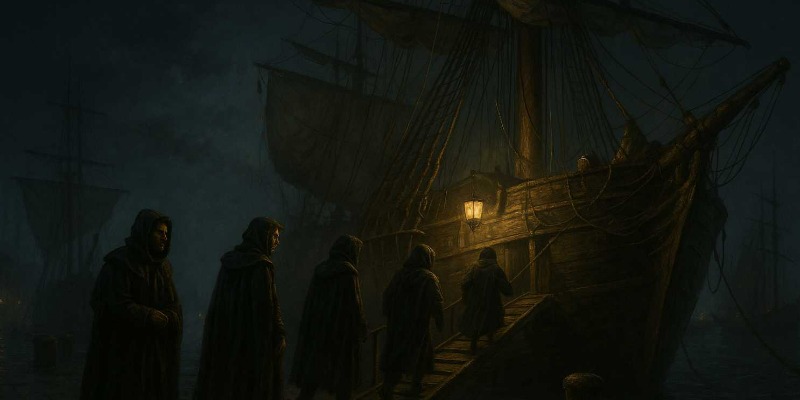
Night envelops the lagoon as the sailing ship Speranza rocks at the dock: four powerful, indebted men board faceless, bringing with them ancient fears and unresolved accounts. In the belly of the ship, amidst ropes and sealed crates, a meeting ignites, one of confession and conspiracy: words are no longer measure, but bullets. Tommaso Barbarigo speaks up and breaks down all hesitation: it's no longer a matter of negotiating, but of freeing themselves from the noose of debts that Morosini is holding tight.
Each of the guests sees the image of ruin flash before them—hunger, shame, homes sold—and that idea transforms fear into organized rage. They discuss, weigh the risks; proposals intertwine with calculations of road and sea, like threads on a map: Antwerp, Amsterdam, the spring journey, the autumn crossing. The proposal is terrifying in its coldness: set an ambush, stop the journey before the debt becomes an eternal chain.
Details become an obsession: the horseback ride, the stops, Morosini's escort, the isolated location chosen for the robbery, and the brutal alternative at sea. The tension is palpable; everyone knows the price of silence and the risk of betrayal where the night is complicit and the wind carries secrets. No heroes emerge: what emerges are men who trade their safety for the promise of a new beginning, or for the desperation of having no other way. The chapter ends on a fragile agreement, full of promise and shadows: the city continues to sleep, but something restless has begun to stir. It's a plot redolent of ship dust and fear, leaving the reader suspended between inevitability and threat, ready to follow in the footsteps of those who chose violence as their last resort.
Conspiracies in the Night: The Secret Pact of the Indebted Nobles Against Morosini on Board the Sailing Ship Speranza
Stories. 1572 Carnival of Blood. Chapter 8: The Conspiracy on the Speranza
The ship Speranza floated dark and solitary, clinging to its mooring like a chained beast, in the harbor that smelled of salt, tar, and rotting seaweed. The wind had stopped blowing, and the lagoon, black and still, seemed to hold its breath. No moonlight illuminated the scene: only a few flickering torches on the docks, casting distorted shadows on the masts and furled sails. The ship's hull, imposing and weathered by years of travel, barely reflected the light, as if it wished to remain invisible. The shrouds creaked softly, moved by the slow movement of the water, and every sound seemed louder than it should be, as if the darkness amplified suspicion.

The port, at that hour, wasn't deserted: a few boatmen asleep on their gondolas, a couple of porters finishing unloading smelly crates of fish, and two prostitutes sitting on a bench under a dim lantern, laughing softly to chase away the fear of the night.
But everyone kept their heads down: the shadow of the sailing ship Speranza instilled a silence that needed no words. It was a ship that belonged to no one, and for this very reason it belonged to all those who knew they had to watch their backs.....