- The Complex Structure of Submarine Telecommunications Cables
- Polymers in Submarine Cables: Properties and Applications
- The Submarine Cable Manufacturing Process
- Technologies and Methodologies for Laying Cables in the Ocean
- Durability and Resistance: How Long Do Submarine Cables Live
- Maintenance of Submarine Cables: Challenges and Solutions
- Recycling of Submarine Cables: Opportunities and Techniques
- Submarine Cables and a Sustainable Future: Towards a Circular Economy
From High-Density Polyethylene to Polyurethane: How Submarine Cables Are Made, Laid, and How Long They Last
by Marco Arezio
Submarine telecommunication cables are the backbone of global data traffic, enabling the Internet and telephone networks to connect distant continents.
Despite their often invisible image, submarine cables are essential for keeping the world connected.
But how are they made? What materials are used, and how do they manage to last so long in the harsh ocean environments?
Let’s explore these aspects with a particular focus on the polymers used and their functions.
Structure of a Submarine Telecommunications Cable
The structure of a submarine cable may seem simple, but it is a technological marvel designed to withstand enormous pressures and harsh environmental conditions.
At the core of the cable are the optical fibers, which carry signals in the form of light, allowing for the transmission of vast amounts of data. These fibers are incredibly thin and fragile, so they must be protected by several layers of materials.
The fiber core is surrounded by a protective polymer coating, usually made of an acrylic polymer. This layer is crucial for maintaining the integrity of the fibers, preventing them from being physically damaged or coming into contact with moisture.
Between the optical fibers and the cable’s subsequent layers, a waterproof gel is often used as an additional barrier against water ingress.
As protective layers are added, we find a metal sheath, generally made of steel or aluminum, to protect the cable core. This metal layer is corrosion-resistant and prevents the cable from being damaged by external pressures, impacts, or even bites from marine creatures.
The final coating of the cable is made of polymeric materials, which offer the outermost protection and determine its longevity in deep-sea conditions.
Polymers Used in Cable Construction
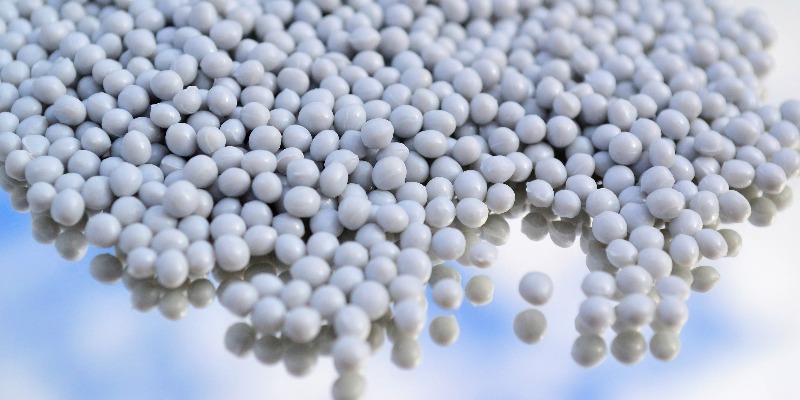
One of the main materials used in the construction of submarine cables is high-density polyethylene (HDPE). This polymer is widely used because of its properties: it is water-resistant, chemically stable, durable, and relatively cost-effective to produce.
As a thermoplastic polymer, HDPE is also easy to shape and work into thin or thicker layers, depending on the structural needs of the cable. In addition to its insulating function, HDPE is crucial for protecting the cable from wear caused by ocean currents, sand, and underwater debris.
Another key polymer is polyurethane, mainly used as an external coating in cables destined for particularly extreme conditions, such as volcanic zones or areas of high seismic activity. Polyurethane is elastic and has high abrasion resistance, two characteristics that make it ideal for protecting the cable from potential physical damage.
Besides the main polymers like HDPE and polyurethane, other polymeric materials, such as acrylic resins, are used in the inner coatings that wrap around the individual optical fibers, protecting them from moisture and minor shocks that could compromise their functionality.
Finally, in certain specific applications, materials like polypropylene may be used, offering superior chemical resistance and sometimes preferred in cables laid in particularly chemically aggressive waters.
Submarine Cable Production
The production of a submarine cable is an extremely complex process, divided into several stages. First, the optical fibers, the true stars of data transmission, are produced. These fibers are created through a process known as drawing, in which a preform of glass is heated and stretched into a thin thread.
Once ready, the fibers are wrapped in acrylic polymers to protect them from physical damage. Next, layers of steel or aluminum are added for protection.
These metallic materials are essential for shielding the cable from external forces and corrosion. The entire core is then covered with multiple layers of HDPE or polyurethane, depending on the cable’s requirements and the conditions it will face.
Before being shipped for underwater installation, the cables undergo rigorous testing to ensure they can withstand the enormous underwater pressures and mechanical stresses they will encounter throughout their long operational life.
Laying of Submarine Telecommunications Cables
Laying a submarine cable is an operation that requires meticulous planning and highly specialized equipment. The first step is mapping the seabed, an operation that involves the use of sonar and other detection tools to find the optimal path.
Cable-laying ships, large vessels equipped with advanced technology, are tasked with slowly releasing the cable onto the seabed, avoiding any damage during the process.
In some areas, where the seabed is particularly rugged or where there is a risk of collisions with other infrastructure or human activities, underwater plows are used to dig a trench in which the cable is laid. This operation allows the cable to remain protected from potential impacts or accidents.
Once the cable reaches the shore, it is connected to terrestrial infrastructure and tested to ensure everything functions properly.
Cable Lifespan and Maintenance
Submarine cables are designed to last between 25 and 30 years, although their lifespan may vary depending on environmental conditions. Some cables may require maintenance before the end of their operational life, especially in areas with intense human activity, such as fishing or maritime traffic.
Maintaining a submarine cable is a delicate operation. If a fault occurs, specialized ships are sent to locate the damaged point, raise the cable from the ocean depths, and repair it on the surface. This process can be very costly and time-consuming, but it is essential to ensure the continuity of global communications.
Recycling Submarine Telecommunications Cables
Once a submarine cable has reached the end of its useful life, the question of recycling arises. Traditionally, many cables were left on the ocean floor, but today, with growing attention to sustainability, there is an increasing effort to recover and recycle these infrastructures.
The recycling process begins with recovering the cable from the seabed, an operation similar to laying it. Once brought to shore, the cable is transported to specialized facilities where it is separated into its components.
Metals such as copper and steel are recovered and reused in new production processes, while polymers can be recycled or, in some cases, used for energy recovery.
Recycling submarine cables is an important step towards creating a circular and sustainable economy, minimizing the environmental impact of telecommunication infrastructure.
Conclusions
Submarine telecommunication cables are technological marvels. Constructed with advanced materials like HDPE and polyurethane, these cables are designed to last for decades in the ocean's depths, transmitting vital data and communications for the global economy.
Despite their complexity, the future of submarine cables is increasingly looking towards a sustainable approach, focusing on recycling and the use of materials that can be recovered and reused effectively.