- The Discovery of Aerogel: Samuel Kistler and the Origin of a Revolutionary Material
- Aerogel: what it is and what are its main characteristics
- The aerogel production process: from synthesis to final material
- The microscopic structure of aerogel and its technical implications
- The advantages of aerogel over traditional insulators
- Innovative applications of aerogel in industry and construction
- Aerogel and sustainability: environmental impact and future prospects
- The future of insulation: challenges and potential of aerogel
From Samuel Kistler's invention to the challenges of sustainability: history, properties and future of an amazing material
by Marco Arezio
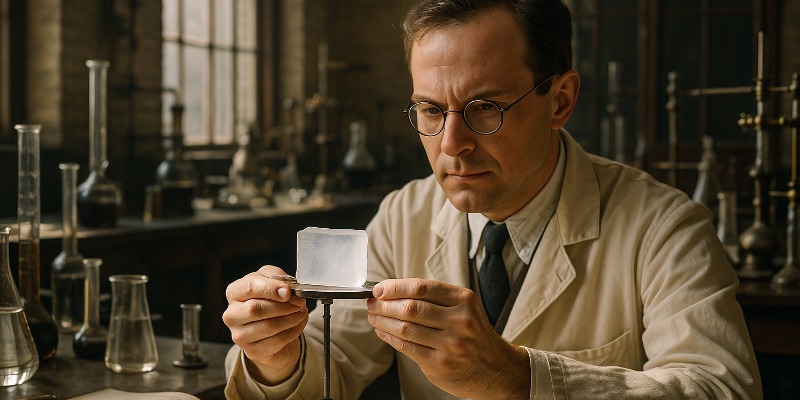
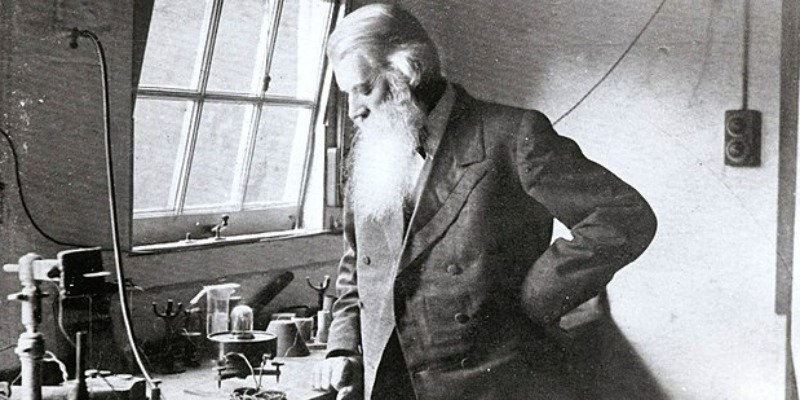
When Samuel Stephens Kistler, in the 1930s, walked through the door of his laboratory in California, he probably didn't know that he would leave an indelible mark on the history of materials. And yet, among test tubes and substances with curious behavior, an invention was born that even today seems to belong more to the world of science fiction than to that of applied science: aerogel.
The Origins of Aerogel: A Challenge of Friendship and Science
The birth of aerogel was anything but planned . It is said that it all began with a friendly challenge between chemists: “Can you remove the liquid from a gel while leaving the solid structure intact?” A seemingly simple question, which hid an enormous technical complexity. Gels were well known: soft materials, consisting of a solid structure that retains large quantities of liquid. But how could that liquid be replaced with air, without the fragile network collapsing on itself?
Samuel Kistler was not afraid of the difficulty. He experimented for a long time, with successes and setbacks, until he managed to find the solution: the liquid had to be brought to the supercritical state , that is, to a temperature and pressure condition where there is no longer a distinction between the liquid and gaseous phases. Thus, by removing the liquid in a “gentle” way, the gel structure could survive intact, leaving room for air. Aerogel was born. The result was so surprising that Kistler immediately published the discovery in Nature, in 1931, giving rise to a new era in materials science.
What is aerogel: a structure between solid and void
When you first see aerogel, you are struck by its lightness and almost unreal appearance. Nicknamed “solid smoke,” aerogel appears to be a seemingly fragile, translucent, and very light material. Yet its strength lies in its microstructure: a three-dimensional network of silica (or other material) filaments, interspersed with empty spaces that hold air.
This combination gives aerogel an extreme porosity – over 90%, sometimes up to 99.8% – which makes it one of the most effective insulators known. The density is so low that it almost feels like holding a piece of cloud in your hands. And thanks to this extraordinary structure, aerogel is able to block the passage of heat like few other materials.
How Aerogel Is Made: The Magic of Supercritical Drying
Aerogel production is not an immediate process, but a chemical art that requires precision and control. It starts with a gel, usually silica, formed by mixing substances that react with each other until they form a solid matrix immersed in a solvent. At this point the liquid must be removed without collapsing the structure: this is where supercritical drying comes into play.
By bringing the system to high temperature and pressure, a particular state is reached in which the liquid behaves both as a gas and as a liquid. Only in these conditions can the solvent be extracted without creating surface forces that would destroy the structure.
At the end of this process, what remains is the very delicate scaffolding of the aerogel, composed almost entirely of air, but solid and stable to the touch.Over time, the process has been perfected. From the first laborious laboratory productions, we have moved on to more reliable industrial methods, with the possibility of producing panels, reinforced felts and inserts that can be used in many sectors, from construction to aerospace.
Technical advantages of aerogel compared to traditional insulators
The real secret of aerogel lies in its unique properties. The first, and most obvious, is its incredible thermal insulation: no other material allows you to block the passage of heat with such reduced thicknesses. This translates into applications where every centimeter counts, such as in window insulation, pipe coatings, or astronaut suits.
But the benefits don’t stop there. Aerogel is also very light—some types are said to be able to sit on a blade of grass without bending it—and fire-resistant, since silica is nonflammable. It is also chemically stable and long-lasting, without undergoing significant degradation like some polymer or mineral insulators.
Of course, aerogel also has some limitations: it is fragile if not reinforced, and even today its cost is higher than traditional insulators. However, the continuous improvement of production processes and the possibility of producing reinforced versions are expanding the market.
Sustainability of Aerogel: A Material for the “Green” Future
If today there is so much talk about sustainable construction, energy saving and green materials, aerogel can only represent a point of reference. Its duration is extremely high: a building insulated with aerogel maintains its performance for decades, without the need for frequent interventions. In addition, its inorganic nature makes it safe: it does not release harmful microfibers or toxic substances, unlike other mineral insulators.
From an environmental point of view, the most significant impact is in the production phase, which requires energy and solvents. However, the energy savings guaranteed in the operating phase (think of heating or cooling buildings) more than offset the initial investment, contributing to the reduction of CO₂ emissions. In addition, many new researches focus on increasingly ecological production methods and the possibility of recycling waste.
Conclusions
The invention of aerogel, born from the curiosity and genius of Samuel Kistler, demonstrated how a simple question can open the way to unexpected revolutions. Today, almost a century later, aerogel remains one of the most fascinating and promising materials, capable of combining lightness, transparency and insulation in a single solution. And while science continues to explore new ways to produce it, strengthen it and integrate it into everyday life, aerogel remains a protagonist of the research towards a more efficient and sustainable future.
© Reproduction prohibited