- End-of-Line Automation: Logistics Efficiency
- Robotic Palletizing: Innovation and Advantages
- Intelligent Winding: Optimization and Savings
- Smart Labeling: Advanced Traceability
- Integrated Systems: The Key to Automation
- End-of-Line Digitalization: Beyond Automation
- Logistics Technologies: The Future of the Supply Chain
- Maximize ROI: Logistics Automation
Optimize end-of-line processes with integrated smart palletizing, wrapping, and labeling solutions for logistics efficiency and cost reduction
By Marco Arezio
In today's manufacturing and logistics landscape, operational efficiency is no longer just a goal, but a categorical imperative to sustain competitiveness and ensure profitability. While automation has now permeated much of the production chain, end-of-line phases – which include palletizing, wrapping, and labeling – still represent an area with significant optimization potential. Here, the implementation of integrated and intelligent solutions can make all the difference. This article aims to explore the latest innovations in this field, providing technical insights and concrete suggestions for experienced industry operators, offering a deep dive into how to transform these critical phases into true value-added centers.
The Transformative Value of Advanced End-of-Line Automation
Traditionally, end-of-line operations have been characterized by high labor intensity, making them intrinsically subject to human error and, too often, bottlenecks that negatively impact throughput speed and product integrity. Advanced automation in these phases isn't just about replacing manual labor; it introduces an unparalleled level of precision, repeatability, and traceability.
Integrated solutions, in particular, ensure a continuous and harmonized flow from the moment the product leaves the production line until it's ready for shipment, minimizing idle times and maximizing overall process efficiency. This synergy between the various phases is not merely an incremental improvement, but a true reorganization of the operational paradigm.
Robotic Palletizing: Beyond Simple Movement
The evolution of robotic palletizing has far surpassed the simple movement of loads. Modern palletizing systems are true centers of operational intelligence, equipped with 2D and 3D artificial vision systems that enable real-time recognition of heterogeneous shapes and sizes. This capability allows for the dynamic creation of optimized palletizing patterns, not only for load stability but also for maximizing loading space on pallets and transport vehicles.
Integration with the MES (Manufacturing Execution System) or ERP (Enterprise Resource Planning) system is now crucial, as it enables dynamic SKU (Stock Keeping Unit) management and flexible adaptation to diverse production needs and changing market demands.
For an experienced operator, key technical considerations in adopting such systems include:
Advanced Optimization Algorithms: It's not just about stacking; it's about using sophisticated algorithms for pattern generation that account for complex variables such as the load's center of gravity, the compression resistance of packaging materials, and specific transport requirements (whether trucks, containers, or intermodal shipments). This approach ensures maximum stability and volumetric efficiency.
Human-Robot Collaboration (Co-bot): Where flexibility is paramount or human interaction is still necessary, the use of collaborative robots (co-bots) is becoming a consolidated practice. These systems work side-by-side with operators, while ensuring safety and maintaining high standards of efficiency and productivity.
Intelligent and Adaptive Gripping Systems: Research and development focus on the selection and implementation of multi-purpose or easily reconfigurable grippers. Their ability to handle a wide variety of products, from bags to boxes of different sizes and weights, with extreme precision and gentleness, is fundamental to prevent damage and ensure product integrity.
Smart Wrapping: Optimized Protection and Sustainable Consumption
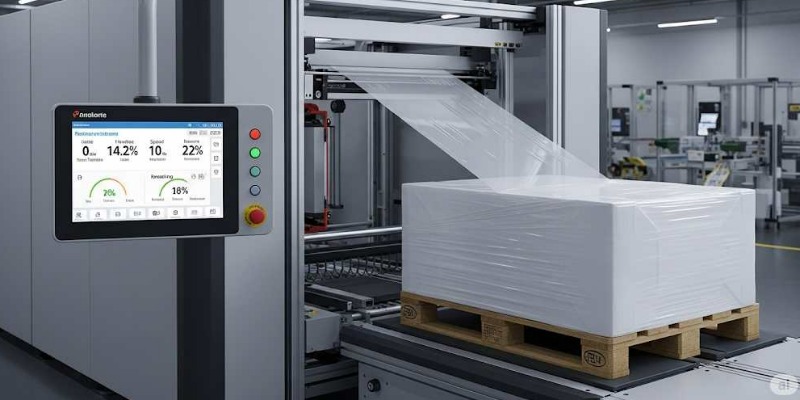
Pallet wrapping with stretch film is a critical phase for product protection during transport and storage – an insurance against damage and shifting. New-generation smart wrapping machines go far beyond simple mechanical wrapping. They are equipped with advanced sensors and sophisticated PLC (Programmable Logic Controller) controls that allow them to:
Dynamically adjust pre-stretch and wrapping force: This adaptability is revolutionary. The machine can calibrate the wrapping based on the type of load, its specific weight, and its dimensions, significantly optimizing film consumption while ensuring optimal pallet stability. The direct result is a drastic reduction in material costs and a lower environmental impact, also addressing growing sustainability demands.
Real-time monitoring of film consumption: Integration with SCADA (Supervisory Control and Data Acquisition) systems allows for detailed and granular analysis of film consumption, helping to prevent waste and identify areas for further optimization.
Selective wrapping functionalities: These systems can apply extra layers of film only at critical points of the load for greater protection, or leave strategic windows for post-wrap barcode scanning, maintaining information accessibility.
For industry professionals, it is now essential to consider adopting systems that support predictive diagnostics for wrapping machine maintenance. This proactive approach helps minimize unplanned downtime, a critical factor for maintaining operational efficiency.
Smart Labeling: The Key to Advanced and Flawless Traceability
Labeling is the backbone of product traceability and identification throughout the entire supply chain. Smart labeling solutions integrated into the end-of-line process are not limited to simple printing and application; they offer functionalities that exponentially amplify management and control capabilities.
We're talking about:"Print & Apply" on-demand systems: The ability to generate and apply labels with variable data (such as lot numbers, expiration dates, unique serial codes) in real-time is a game-changer. This functionality eliminates the need for pre-printing, drastically reducing errors and label stock management, while ensuring the most current information.
Deep integration with WMS (Warehouse Management System): The automatic synchronization of label data with warehouse information is fundamental for accurate inventory management, efficient picking, and error-free shipments. This level of integration makes the warehouse a dynamic and reactive entity.
RFID (Radio-Frequency Identification) labels and 2D codes (QR, Data Matrix): The implementation of these advanced technologies allows for greater information density and faster, more reliable scanning. This enables granular traceability, from the individual item to the complete pallet, providing an end-to-end view of the supply chain.
Automatic label verification: Sophisticated vision systems read and validate newly applied labels, ensuring readability and data correctness before the product leaves the line. This proactively eliminates potential non-compliance issues or incorrect shipments.
Adopting these technologies can dramatically improve regulatory compliance, reduce costs associated with product recalls, and significantly optimize inventory processes.
The Imperative of Integration and Connectivity
The true strength of advanced automation solutions in end-of-line phases lies in their systemic integration. Palletizers, wrappers, and labelers must communicate and operate as a single, coherent system, not as separate islands of automation. This requires a robust and well-planned technological architecture:
Standardized and Open Communication Protocols: The use of industrial standards such as Profinet, EtherNet/IP, or OPC UA is essential to ensure fluid and uninterrupted communication between different machines and higher-level systems (MES, ERP, WMS). These protocols are the common language that allows various components to work in harmony.
Centralized Orchestration and Control Software: Advanced software platforms that manage and monitor the entire end-of-line process are crucial. These platforms not only provide real-time data on performance and diagnostics but also on material consumption, enabling proactive and informed management.
Data Analytics (Big Data Analytics) and Artificial Intelligence: The collection and analysis of data generated by these intelligent machines are a goldmine. They enable the identification of trends, prediction of failures before they occur (predictive maintenance), optimization of work cycles, and continuous improvement of operational efficiency through data-driven insights.
Strategic Considerations for Successful Implementation
For managers and experienced operators, implementing these solutions is not just about purchasing machinery, but a true strategic project that extends far beyond the initial investment. It is fundamental to adopt a holistic approach and carefully consider the following aspects:
Detailed and Multifactorial ROI (Return On Investment) Analysis: Evaluate the benefits not only in terms of labor savings but, more importantly, the advantages derived from waste reduction, increased finished product quality, decreased damage during transit, and overall acceleration of cycle times. ROI should be calculated over a broad time horizon, also including intangible benefits related to reputation and customer satisfaction.
Investment in Staff Training: The introduction of advanced technologies requires an equal investment in the development of staff skills. Training operators for daily management, preventive and predictive maintenance, and programming of new automated systems is a critical success factor.
Scalability and Architectural Flexibility: The choice of solutions must be forward-looking. It is crucial to opt for systems that can adapt to future increases in production volume or changes in product types, ensuring a future-proof investment and protecting invested capital.
Safety as an Absolute Priority: Ensure that all automated systems are designed and implemented in strict compliance with the most rigorous applicable safety regulations (e.g., machine directives and relevant ISO standards). The protection of personnel and equipment is a non-negotiable prerequisite.
Conclusion
Advanced automation in end-of-line phases is no longer a debatable option, but an urgent necessity for companies striving for logistics excellence and aiming to maintain a competitive advantage in the global market. The intelligent integration of advanced robotic palletizing systems, optimized wrapping, and smart labeling represents a fundamental step towards intrinsically more efficient, safer, and significantly more sustainable production.
By adopting a proactive approach and strategically investing in these cutting-edge technologies, industry operators can not only radically optimize their operations but also strategically position themselves to face and overcome the future challenges of an ever-evolving market.
What are the next challenges your organization intends to address in optimizing and automating end-of-line phases to further elevate logistics efficiency?
© Reproduction prohibited