- The historical context of 1816: Europe after the Napoleonic Wars
- The Mount Tambora Eruption and Its Global Impact
- The consequences of the Year Without Summer in Europe: hunger and riots
- The effects of climate cooling in North America
- Asia and the collapse of the monsoons: famines and epidemics
- The Year Without a Summer in Culture and Art: Mary Shelley and Turner
- Lessons from the Year Without a Summer: A Warning for the Present and the Future
Discover How the 1815 Eruption of Mount Tambora Triggered a Volcanic Winter, Devastating Famines, and Social Changes That Shaped the World
By Marco Arezio
The year 1816 has gone down in history as the infamous “year without a summer”, a time of climatic devastation that upended the lives of millions across Europe, North America, and Asia. Marked by unseasonably cold temperatures, crop failures, and widespread famine, it was a year of profound suffering etched into collective memory as a period of both despair and resilience. To truly grasp the magnitude of what happened, we must dive into the historical context of the time and see the world through the eyes of those who lived it.
Europe in the Early 19th Century: Fragility and Reconstruction
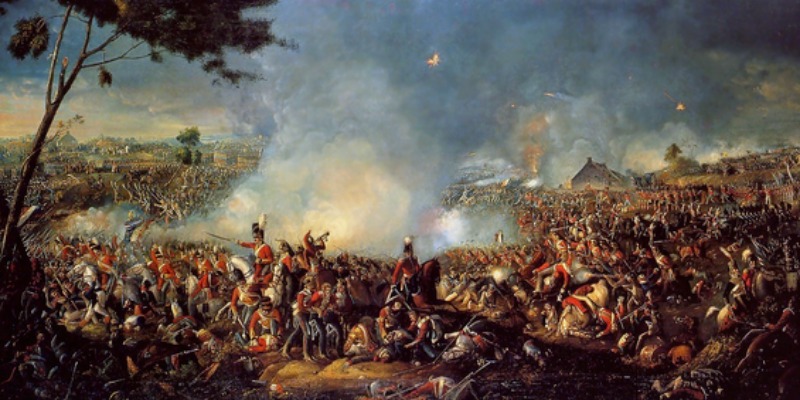
In 1816, Europe was slowly emerging from the chaos of the Napoleonic Wars. For over a decade, the continent had been a battlefield, ravaged by famine, destruction, and loss. The Battle of Waterloo, fought just the year before, had ended Napoleon Bonaparte's ambitions but left behind a trail of economic and social ruin. Nations were exhausted, fields abandoned, and starving populations struggled to rebuild their lives amid the wreckage.
Agriculture, the backbone of the economy, relied entirely on the predictable rhythm of the seasons. There were no greenhouses, chemical fertilizers, or modern technologies to counteract unexpected climatic anomalies. A late spring or excessively rainy summer could mean the difference between abundance and starvation.
It was in this already fragile environment that the year without a summer descended upon Europe like a scourge, bringing with it cold, hunger, and despair.
The Eruption of Mount Tambora: The Storm’s Origin
The catalyst for this tragedy occurred far from Europe. In April 1815, Mount Tambora, a volcano on the island of Sumbawa in present-day Indonesia, erupted with unprecedented force. The explosion, rated a 7 on the Volcanic Explosivity Index (VEI), was one of the most powerful in the last 2,000 years.
The eruption was so destructive that it nearly obliterated the island, killing tens of thousands within days. But the true extent of the disaster unfolded in the months that followed, as a massive plume of volcanic ash and sulfate aerosols reached the stratosphere and spread across the globe. This “solar veil” reflected sunlight, reducing the Earth’s average temperature by 1–2°C. While this may seem minor, the consequences were catastrophic.
The Summer That Never Came: Cold and Hunger in Europe
When spring arrived in 1816, nature seemed to have forgotten the calendar. Endless rains, gray skies, and frigid temperatures replaced the warm afternoons typical of the season. By May, when farmers should have been sowing their fields, unexpected snowfalls and frosts killed the first shoots. Summer, which for centuries had brought sunshine and bountiful harvests, never arrived.
In the Swiss Alps, snow fell even in June, blanketing pastures and making it impossible to feed livestock. Desperate farmers ground grass and tree bark to make bread, but it wasn’t enough.
Isolated communities faced starvation, and there were reports of cannibalism in some remote areas. Cities were wracked by riots and uprisings as the desperate masses sought food.In France, the price of bread, already unaffordable for the poorest, soared even higher. Hungry crowds looted bakeries and granaries, and famine became a driving force behind social unrest that tested local authorities’ ability to maintain order.
In England and Ireland, relentless summer rains destroyed crops of grains and potatoes, leading to famine. Ireland, already deeply impoverished, was hit particularly hard; many families were forced to emigrate or survive on charity.
In Germany, the harvest failed entirely. Without wheat or rye, ovens were empty, and cities became the stage for riots. Malnutrition paved the way for typhus epidemics, which struck the most vulnerable and drove mortality rates even higher.
The Tragedy in North America: Summer Snow and Migration
Across the Atlantic, the year without a summer spared no one. In the United States, especially in New England, the summer of 1816 was remembered as the cold summer. In June, 30 cm of snow fell on Vermont and New Hampshire, completely wiping out corn and potato crops. Farmers, unable to feed their families, were forced to migrate westward to the fertile lands of Ohio and Indiana, where the climate promised greater stability.
In Canada, summer frosts destroyed wheat and barley crops. The population, already accustomed to harsh conditions, turned to fishing and hunting to survive, but many perished.
Asia: Monsoon Cycles Disrupted and Famine
In Asia, the effects of the cooling were different but no less devastating. In China, torrential rains destroyed rice paddies, causing famines that killed thousands. Hunger, combined with poor sanitation, fueled outbreaks of cholera, which turned into a deadly epidemic.
In India, the monsoons, essential for agriculture, were completely disrupted. Some regions experienced extreme drought, while others were inundated with floods. Rice and legume crops failed, leaving millions without food.
A Lesson from History: Fragility and Resilience
The year without a summer was an epochal event that underscored how crucial climate stability is for human survival. Societies in 1816, already weakened by war and poverty, were severely tested by nature, forcing them to endure unimaginable suffering.
Yet, the year also became a moment of resilience and creativity. In Switzerland, confined to a villa on Lake Geneva due to relentless bad weather, author Mary Shelley began work on her masterpiece, Frankenstein. The ash-filled skies of Tambora inspired English painter J.M.W. Turner, whose misty, surreal landscapes remain among the era’s most iconic works.
The story of 1816 serves as a profound reminder of humanity’s dependence on nature’s balance and the importance of protecting our planet from the growing risks of extreme events.
© All Rights Reserved