








 Gallio, Germanio e Oro. La Guerra delle Materie Prime per i Semiconduttori
Da quando l’elettronica sia civile che militare è diventata irrinunciabile, chi detiene le materie prime detta leggedi Marco ArezioLa nostra vita è dominata dall’elettronica, anche per le operazioni più banali che facciamo attraverso un telefonino, come inviare e ricevere documenti, pagare, mostrare titoli come biglietti o ricevute, prenotare vacanze, beni.Puoi accendere o spegnere il riscaldamento, l’aria condizionata, l’irrigazione del giardino, rinfrescare o scaldare la macchina, controllare dove l’hai parcheggiata, vedere il tempo ecc.. Ma tutta questa tecnologia, quella che possiamo vedere e quella che non conosciamo nel dettaglio, essendo parte di un prodotto, ha bisogno di materiali per poter vivere e, alcuni di questi, sono decisamente rari, costosi e non disponibili a tutti. Ci siamo accorti ancora di più, dallo scoppio della guerra Russo-Ucraina, che molta, se non tutta, della tecnologia militare fa largo uso dei semiconduttori, sia per la guerra attiva che per quella di controllo ed intercettazione. Missili e droni che colpiscono i bersagli, bombe teleguidate, guerra di disturbo elettronico, sono solo una parte dell’uso che gli eserciti fanno nel campo militare. Come si costruiscono i microchips La costruzione di un microchip, anche chiamato circuito integrato, è un processo complesso che coinvolge diverse fasi di fabbricazione. La prima fase, quella di progettazione, parte dall'ideazione e dalla progettazione del microchip. Gli ingegneri definiscono la funzionalità e la disposizione dei componenti all'interno del chip utilizzando software specializzati. Si passa poi alla fabbricazione dei wafer, realizzati utilizzando il silicio come materiale di base. Un wafer di silicio viene prodotto mediante un processo chiamato "crescita del cristallo". In questo processo, il silicio fuso viene fatto crescere su un seme di silicio fino a formare un grande cilindro di cristallo. Successivamente, il cilindro viene tagliato in sottili fette chiamate wafer. Successivamente i wafer di silicio vengono sottoposti a un processo di pulizia per rimuovere eventuali impurità superficiali e garantire la massima purezza del materiale. A questo punto avviene la creazione del circuito, attraverso l'utilizzo di una serie di maschere fotolitografiche per "stampare" il modello del circuito sul wafer. Le maschere sono realizzate con un materiale fotosensibile e vengono esposte a una luce ultravioletta attraverso il wafer. Questo processo trasferisce il modello del circuito sullo strato fotosensibile del wafer. Dopo la fotolitografia, il wafer viene sottoposto a un processo di incisione chimica o al plasma per rimuovere lo strato fotosensibile e i materiali non desiderati, lasciando solo le regioni desiderate del circuito. Vengono quindi aggiunti strati sottili di materiali, come metalli (solitamente alluminio o rame), ossidi e nitriti, mediante tecniche di deposizione chimica in fase di vapore (CVD) o sputtering. Questi strati servono a formare i contatti e isolare le varie parti del circuito. Un altro processo di fotolitografia viene eseguito per definire e incidere i dettagli delle strutture dei componenti sul chip, come transistor, condensatori e linee di interconnessione. Dopo la seconda fotolitografia, si depositano degli strati di metalli conduttivi e successivamente incisi per creare le linee di interconnessione che collegano i vari componenti sul chip. Dopo la fabbricazione del wafer, i chips vengono testati per assicurarsi che funzionino correttamente. Quindi, i chip funzionanti vengono tagliati dal wafer e vengono confezionati in involucri protettivi, spesso in plastica o ceramica, con piedini di contatto per collegarli ai circuiti esterni. Quali sono le principali materie prime utilizzate per produrre i semiconduttori I microchips contengono diversi materiali, inclusi alcuni che possono essere considerati "materie prime rare". I maggiori componenti utilizzati sono i seguenti: Il silicio è il materiale di base predominante utilizzato per la fabbricazione dei microchip. È abbondante nella crosta terrestre ed è ampiamente disponibile. L'oro viene utilizzato per i contatti e le interconnessioni all'interno dei microchip a causa della sua eccellente conducibilità e resistenza alla corrosione. Il rame viene impiegato nelle interconnessioni e nei circuiti stampati all'interno del microchip per la sua elevata conducibilità elettrica. Il rame è un materiale abbondante e ampiamente utilizzato in molti settori. L'alluminio viene spesso utilizzato per i contatti e gli strati di conduttori all'interno dei microchip. Ha una buona conducibilità elettrica ed è ampiamente disponibile. Il germanio è meno comune rispetto al silicio ma può essere utilizzato in alcune applicazioni specializzate come i transistor ad alta velocità. L'indio viene utilizzato per la produzione di transistor ad alta frequenza e display a cristalli liquidi (LCD). È un materiale relativamente raro e costoso. Il gallio viene utilizzato in alcuni dispositivi a semiconduttore ad alte prestazioni. È un materiale raro e costoso. Cosa sono il Gallio e il Germanio Il gallio è un elemento chimico che ha il simbolo Ga nella tavola periodica. È un metallo tenero, di colore argento chiaro e viene utilizzato in diverse applicazioni tecnologiche, inclusi i semiconduttori. Viene spesso impiegato per la produzione di dispositivi a semiconduttore ad alte prestazioni come transistor ad alta frequenza, LED, laser e celle solari a film sottile. Il gallio è relativamente abbondante nella crosta terrestre, ma di solito viene estratto come sottoprodotto dalla lavorazione del minerale di alluminio. Il germanio è un elemento chimico con il simbolo Ge nella tavola periodica. È un semimetallo grigio-argento ed è ampiamente utilizzato nella produzione di semiconduttori. Il germanio è stato uno dei primi materiali utilizzati per produrre transistor e diodi, ed è ancora utilizzato in dispositivi a semiconduttore ad alte prestazioni. È anche impiegato in fibre ottiche e lenti per la spettroscopia infrarossa. Il germanio si trova principalmente nel minerale di zinco, nella sfalerite e nell'argirodite, ed è estratto principalmente da miniere di zinco, rame e carbone. Produzione Mondiale di Gallio e Germanio Per quanto tutti conosciamo il valore dell’oro e la sua provenienza geografica, è bene ricordare da dove vengono estratti il gallio e il germanio e chi ne detiene il mercato. Vediamo chi sono i maggiori produttori di gallio aggiornati al 2021: La Cina è il principale produttore mondiale di gallio, con una quota significativa della produzione globale. Il Giappone è un altro importante produttore di gallio, con diverse aziende che si occupano della produzione di questo elemento. Gli Stati Uniti hanno anche una produzione significativa di gallio, con diverse società impegnate nella sua estrazione e produzione. La Russia è un produttore notevole di gallio, con diverse miniere e impianti di produzione. La Germania ha una produzione modesta di gallio. Maggiori produttori di Germanio aggiornati al 2021: La Cina è il principale produttore mondiale di germanio, con una quota significativa della produzione globale. La Russia è un importante produttore di germanio, con diverse miniere e impianti di lavorazione. Gli Stati Uniti hanno anche una produzione significativa di germanio, con miniere attive e aziende che si occupano della sua estrazione. Il Canada è un altro paese che contribuisce alla produzione mondiale di germanio. Il Belgio ospita alcune aziende che si occupano della lavorazione e produzione di germanio. Nell’ottica di uno spostamento degli assi politici-militari mondiali e la nascita di nuove coalizioni internazionali, la disponibilità delle materie prime e delle terre rare per le necessità civili ed industriali, diventa un’arma politica, un ricatto economico, un vantaggio strategico. Traduzione automatica. Ci scusiamo per eventuali inesattezze. Articolo originale in Italiano.
SCOPRI DI PIU'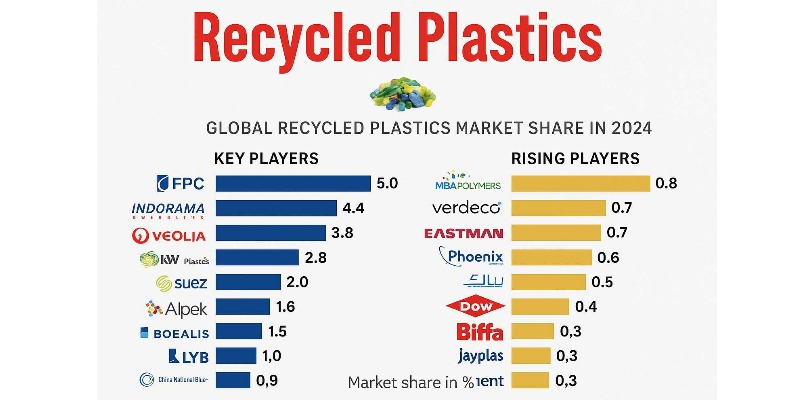 Plastica Riciclata: la nuova mappa mondiale del riciclo al 2030
I protagonisti globali del 2024 e la corsa verso una chimica più sostenibile di Marco ArezioNel 2024 il mercato mondiale delle plastiche riciclate ha raggiunto un punto di svolta storico. Non è più un settore di nicchia, ma un pilastro strategico dell’industria globale dei materiali. Il grafico elaborato fotografa una realtà in pieno movimento, in cui i colossi della chimica tradizionale convivono con startup innovative e nuovi protagonisti della transizione verde. Le percentuali di mercato non raccontano solo quote di fatturato: disegnano una geografia industriale che sta cambiando, spostando investimenti, tecnologie e responsabilità ambientali da un continente all’altro. La leadership asiatica: Far Eastern e Indorama, due volti di un impero Il primo nome della lista è Far Eastern New Century, con una quota del 5%. È la punta di diamante dell’Asia nel riciclo del PET, un gigante taiwanese che negli ultimi dieci anni ha integrato la raccolta, la depolimerizzazione e la produzione di fibre riciclate per il tessile e l’imballaggio. La sua forza non risiede solo nella capacità produttiva, ma nella visione industriale: convertire miliardi di bottiglie in risorse, mantenendo un bilancio ambientale trasparente. Subito dietro, con il 4,4%, c’è Indorama Ventures, colosso thailandese presente in più di trenta paesi. L’azienda ha saputo trasformare il concetto stesso di riciclo del PET: non più un’attività marginale, ma parte integrante di una catena del valore globale. Le sue fabbriche in Europa e Nord America testimoniano come la plastica post-consumo possa diventare materia prima per nuovi cicli industriali certificati. Il successo di queste due realtà asiatiche mostra come l’innovazione non nasca soltanto nei laboratori occidentali. L’Asia, oggi, è il vero motore del riciclo industriale, con impianti automatizzati, tracciabilità digitale dei rifiuti e processi di selezione ottica capaci di separare materiali con una precisione superiore al 99%. L’Europa dell’ambiente: Veolia e SUEZ, l’infrastruttura della circolarità Con il 3,8%, Veolia Environnement rimane il simbolo dell’Europa che unisce industria e politica ambientale. Le sue piattaforme di selezione e rigenerazione delle plastiche rappresentano un modello di cooperazione tra pubblico e privato, capace di alimentare la domanda di materiali riciclati nel packaging, nell’edilizia e nell’automotive. Dietro Veolia, SUEZ (2%) mantiene un ruolo cruciale come fornitore di servizi ambientali integrati. La sua forza non sta nella quantità di materiale trattato, ma nella qualità della gestione e nel monitoraggio costante delle filiere. Insieme, Veolia e SUEZ incarnano la filosofia europea della circular economy: ogni rifiuto deve trovare una nuova funzione, e ogni impianto deve essere parte di un sistema chiuso. Le eccellenze americane: KW Plastics e PolyQuest Dall’altra parte dell’Atlantico, KW Plastics (2,4%) e PolyQuest (1,5%) rappresentano il pragmatismo americano applicato al riciclo. KW Plastics, con sede in Alabama, è la più grande ricicleria di HDPE e PP degli Stati Uniti, specializzata nel recupero dei contenitori industriali e dei flaconi domestici. È un’azienda che cresce nel silenzio, ma che fornisce materia prima a marchi globali dell’imballaggio sostenibile. PolyQuest, invece, lavora sulla valorizzazione del PET, con un approccio ingegneristico orientato alla costanza delle prestazioni. Non a caso, il suo slogan interno è “same performance, less impact”: stessa qualità, minore impatto. In questo segmento del mercato, la sfida principale resta quella della standardizzazione: garantire che i materiali riciclati abbiano proprietà tecniche affidabili e possano essere impiegati in produzioni industriali su larga scala senza compromessi di qualità. I nuovi attori: tra chimica e visione Accanto ai grandi nomi, il grafico evidenzia una generazione emergente di imprese: MBA Polymers (0,8%), Verdeco (0,7%), Eastman (0,7%), Phoenix Technologies (0,6%), SABIC, Dow, Biffa, Covestro, Jayplas e Altium. Sono realtà diverse per origine e dimensione, ma accomunate da un obiettivo: trasformare il rifiuto in materia di valore, non per obbligo, ma per visione industriale. MBA Polymers è un esempio emblematico. Nata con la missione di recuperare le plastiche dai rifiuti elettronici e automobilistici, ha sviluppato tecniche di separazione e purificazione capaci di ottenere materiali rigenerati dalle prestazioni elevatissime. Verdeco, con impianti in Italia e negli Stati Uniti, si distingue invece per la produzione di PET riciclato per il settore alimentare, frutto di un’evoluzione continua verso la purezza molecolare. Eastman, nome storico della chimica americana, ha scelto la via del riciclo molecolare: un processo che scinde le catene polimeriche per ottenere nuovi monomeri indistinguibili da quelli di origine fossile. È la frontiera del riciclo chimico, dove la plastica viene letteralmente ricreata. La chimica del futuro: oltre il riciclo meccanico Oggi, parlare di plastica riciclata non significa più descrivere un processo di macinazione e fusione. La nuova frontiera è la chimica del recupero molecolare, in cui la plastica viene decomposta fino ai suoi costituenti elementari per essere rigenerata senza perdita di qualità. Questo approccio, che unisce scienza dei materiali e ingegneria di processo, è già una realtà industriale. Aziende come Eastman, Borealis e LyondellBasell stanno investendo miliardi di dollari in impianti dedicati alla depolimerizzazione e alla pirolisi controllata, puntando a ridurre del 60% l’impronta di carbonio rispetto alla produzione convenzionale. La differenza rispetto al passato è la scala industriale: ciò che prima era sperimentale è ora economicamente sostenibile grazie a incentivi normativi, politiche di responsabilità estesa del produttore e domanda crescente da parte dei marchi del largo consumo. Norme, incentivi e geopolitica del riciclo L’Europa guida la transizione normativa, imponendo soglie minime di materiale riciclato negli imballaggi e nella produzione di bottiglie. Le nuove direttive europee (come il PPWR, Packaging and Packaging Waste Regulation) prevedono che entro il 2030 ogni confezione dovrà contenere almeno il 30% di plastica rigenerata certificata. L’Asia, invece, risponde con investimenti infrastrutturali: la Cina, pur avendo ridotto le importazioni di rifiuti, sta costruendo un sistema interno di raccolta e riciclo sempre più efficiente; l’India e la Tailandia emergono come poli manifatturieri per la rigenerazione delle resine termoplastiche. Negli Stati Uniti, la spinta proviene dal mercato stesso: grandi aziende del beverage, dell’automotive e della cosmetica hanno introdotto obiettivi volontari di sostenibilità, trasformando il riciclo in una leva reputazionale oltre che economica. Investimenti ESG e il linguaggio della finanza verde Il 2024 è stato anche l’anno in cui la finanza ha riconosciuto il valore del riciclo. I fondi ESG considerano oggi il settore delle plastiche rigenerate come una frontiera di crescita pulita e misurabile. Le grandi società chimiche, che fino a pochi anni fa producevano esclusivamente resine vergini, stanno riconvertendo i propri impianti in bio-raffinerie urbane, capaci di trattare rifiuti e produrre materia prima seconda. Questo fenomeno non è più marginale: sta riscrivendo il linguaggio industriale stesso. La sostenibilità non è più un’etichetta di marketing, ma una voce di bilancio. Verso il 2030: la sfida della qualità e dell’equilibrio globale Le proiezioni indicano una crescita annua del 7–8% per il mercato delle plastiche riciclate fino al 2030. Tuttavia, la vera sfida sarà qualitativa: produrre materiali riciclati che possano sostituire del tutto quelli vergini senza limiti applicativi. A ciò si aggiunge un problema geopolitico non trascurabile: la concentrazione delle infrastrutture di riciclo in poche aree del mondo, con grandi squilibri di capacità tra Europa, Asia e Africa. Perché l’economia circolare diventi davvero globale, serviranno accordi internazionali che armonizzino regole, certificazioni e sistemi di tracciamento. Conclusione: dal rifiuto alla risorsa, un cambio di paradigma Il quadro del 2024 mostra un mondo industriale che, pur con differenze di velocità, ha imboccato la via della rigenerazione. Le plastiche non sono più il simbolo dell’inquinamento, ma un banco di prova della responsabilità collettiva: trasformare ciò che era scarto in un bene durevole, con valore economico e ambientale. Dietro ogni percentuale del grafico c’è una visione: quella di un futuro in cui la materia non finisce, ma ricomincia.© Riproduzione VietataGrafico elaborato da Pristine Market Insights
SCOPRI DI PIU'
