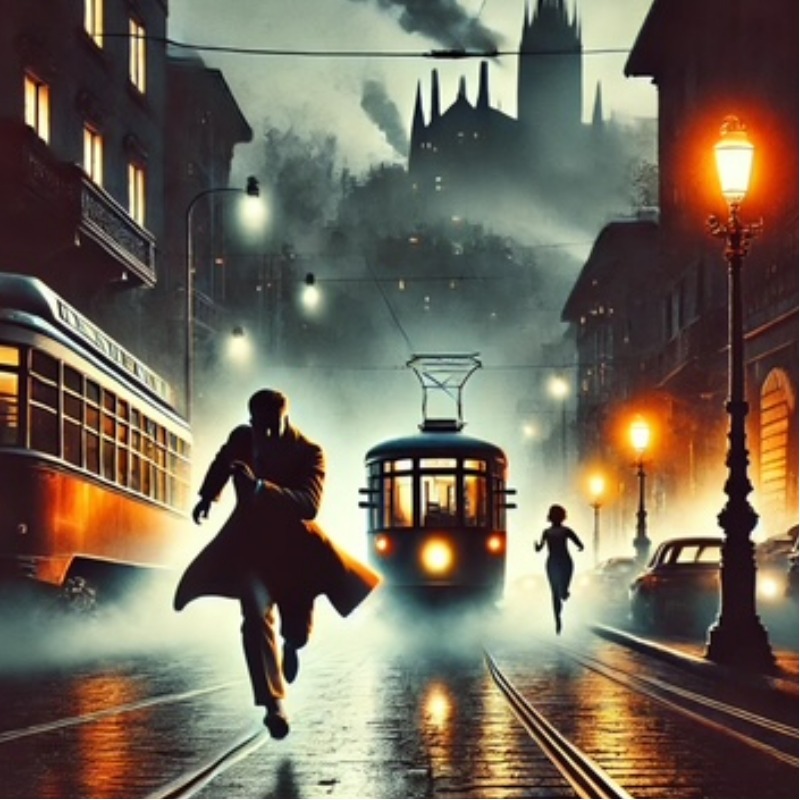
Marco Arezio: A Journey Through Novels of Crime, Secrets, and Eerie Atmospheres
Discover Marco Arezio 's novels: thrillers, crime novels, historical novels, and psychological thrillers set in Italian villages, cities of art, restless landscapes, and contemporary settings.
Page author: Editorial staff
Profile updated: April 9, 2026
Marco Arezio and the allure of novels suspended between mystery and anxiety
Entering Marco Arezio's novels means traversing places where nothing truly stands still, even when everything seems shrouded in silence. His stories unfold amidst crimes, secrets, uncomfortable memories, inner tensions, and truths that aren't immediately revealed. These novels aren't designed simply to surprise with a twist, but to lead the reader into an atmosphere, a doubt, a shadowy place where landscape, history, and people end up blurring together.
There are mountains that hold enigmas, abbeys where silence weighs more than words, abandoned houses that seem to hold the breath of those who have passed through them, cities permeated by ambition, power, and secrets never fully buried. And then there are settings more distant in time or space, such as the 16th-century Serenissima, the monastic Middle Ages, or a contemporary Osaka gripped by profound moral questions. In any case, the core of the narrative remains the same: what appears never entirely coincides with what is.
Marco Arezio thus constructs a narrative universe in which mystery is not simply a plot to be solved, but a condition of the human soul. His stories lead the reader to question not only who has struck, lied, hidden, or betrayed, but also how fragile the boundary is between fear and truth, between guilt and survival, between appearance and inner wound.
A narrative that combines atmosphere, tension and psychological depth
What makes these novels recognizable is their ability to build tension without relying solely on action. The pace may be fast, but it never sacrifices atmosphere. The mystery unfolds slowly, growing in detail, deepening in the locations and emotions of the characters. The reader isn't simply prompted to wonder what will happen next: they're drawn into a climate, a vibration, a restless presence that accompanies the reading.
In these stories, place is never a neutral backdrop. It becomes a narrative presence, a dramatic force, a memory at work. A former mental asylum, an abbey, a valley, an empty house, an industrial city, a lagoon brimming with intrigue: each space seems to absorb the pain, suspicions, omissions, and fears of its inhabitants. It is precisely this intense relationship between environment and consciousness that gives Marco Arezio's novels a distinctive tone, often suspended between noir, psychological thriller, and investigative narrative.
Added to this is another crucial element: the genre's flexibility. His novels combine the allure of the classic detective story, the nuances of noir, the precision of the historical novel, psychological unease, and, in some cases, an ethical tension that also extends to science, social control, or the emotional fragility of contemporary man. It's a narrative that can transform without losing its identity.
The places that become the soul of the story
One of the most fascinating aspects of Marco Arezio's novels is the relationship with place. The settings not only serve to situate the story, but become part of the narrative tension itself. Foppolo, Oltrecolle, Piona Abbey, Milan, the Serenissima of 1572, Lomellina, Osaka: each place carries with it a voice, a history, a moral tone.
The mountains, for example, are never just landscapes. They are isolation, echoes, anticipation, and memory. Abbeys and villages are not simply picturesque settings, but spaces where time seems to have settled and where the past continues to weigh heavily on the present. Cities, on the other hand, reveal another face: that of ambition, power, and a modernity that promises control but casts new shadows. Even when the horizon shifts toward the historical past or contemporary international scenarios, the capacity to make the place feel like a living entity within history remains intact.
This geographical intensity makes reading more immersive. The reader doesn't just witness events: he experiences them. He walks the corridors, feels the cold of the stones, senses the weight of closed rooms, hears the echo of unspoken words. It is here that the novel ceases to be mere narration and becomes an emotional experience.
Recurring themes in Marco Arezio's novels
What unites these novels is not only a taste for mystery, but a constellation of themes that recur forcefully and consistently. The first is secrecy. Abandoned houses, silent abbeys, former mental hospitals, masked cities, lost formulas, ambiguous identities, buried truths: everything seems to revolve around what is hidden, protected, distorted, or silenced.
The second major theme is the relationship between the individual and power. In some novels, this conflict takes on a historical form, in others a social one, and in still others a psychological or scientific one. But there's always the sense that the characters are never faced with a simple or isolated evil. They often have to contend with mechanisms larger than themselves: hierarchies, interests, structures, pressures, and systems that push human beings to yield, betray, manipulate, or succumb.
The third theme is fragility. And it is perhaps the one that gives his narrative its greatest depth. In Marco Arezio's novels, the question isn't simply who committed a crime or where the truth lies. The most subtle, most human, most painful question is often something else entirely: what happens to a person when fear enters daily life, when the past returns, when conscience falters, when evil ceases to be distant and takes the form of something intimate?
It is precisely this dimension that makes his novels capable of leaving a mark beyond the plot.
Because these novels speak to different readers
Marco Arezio's narrative appeals to diverse sensibilities because it doesn't constrain itself to a single formula. Those who love detective fiction will find investigation, mystery, tension, and the search for truth. Those seeking noir will find dense atmospheres, moral shadows, interior landscapes, and psychological unease. Those who prefer historical fiction will encounter eras reconstructed with narrative spirit and dramatic tension. Those who appreciate stories that also address ethical and contemporary questions will find in his pages reflections on power, science, violence, memory, and control.
This ability to move between different registers without losing focus is one of the strengths of her narrative output. Each novel has its own voice, but they all seem to respond to the same profound need: to reveal what stirs beneath the surface. This is why her books appeal to both readers craving suspense and those seeking atmosphere, depth, and a plot capable of leaving a lasting emotional trail.
Marco Arezio's novels: eight stories to explore, amidst shadows, secrets, and inner tensions.
There are novels that are read out of curiosity, and others that open like a threshold. Marco Arezio's books seem to belong to this second category: they take the reader into places steeped in memory, into atmospheres that hold the breath, into stories where mystery is never simply an enigma to be solved, but a wound that slowly resurfaces. From the mountains to the Venetian lagoon, from the corridors of an abbey to the tensions of a large city, each title offers a recognizable and restless world, capable of seducing those who love detective stories, noir, psychological thrillers, and historical fiction. There are currently eight novels in the Amazon Italy bibliography attributable to Marco Arezio.
Shadows of Ambition: The Case of Milan's Lost Polypropylene Formula
In this novel, her first, the mystery is set in the heart of Milan, where ambition, industrial know-how, and the disappearance of a lost chemical formula transform the city into a land of tension and suspicion. It's a story that will appeal to those who love thrillers with a contemporary edge, because alongside the enigma, one senses the weight of self-interest, competition, and truths that some would prefer to leave in the shadows.
An ancient abandoned asylum, the mountains, the fear that has settled in these places: The Mysteries of Oltrecolle has the dark charm of stories that seem to arise from silence. The novel promises a journey through secrets, memories, and soul-searching, and will appeal to readers who love powerful settings, landscapes that become characters, and mysteries that don't just scare, but delve deeply.
Here, the mystery intertwines with a disturbing and very modern question: what would happen if it were really possible to extinguish hatred and violence with a molecule? Osaka reveals LYL 8 takes the reader into a narrative territory where suspense, science, and ethical tension merge, offering a story that will appeal to those who love contemporary novels capable of questioning the boundaries between progress, control, and inner freedom.
Venice, Carnival, power, crime, masks: this novel already promises total immersion in its title. 1572 Carnival of Blood combines historical reconstruction with the allure of thriller-noir, offering readers a sumptuous and dark world, where every face can hide deception and every splendor can conceal a threat. It's the ideal title for those who love historical novels rich in atmosphere and tension.
The Enigma of the Abandoned House of Foppolo
A seemingly empty house, unsolved mysteries, disguised murders, and a relentless hunt in the Brembana Valley: this novel seems to beckon the reader from the very first image. The Enigma of the Abandoned House of Foppolo is designed for those seeking a suspenseful mystery, but also for those who love stories in which the mountains are not simply a backdrop, but a living, restless presence, capable of guarding and distorting the truth.
On the shores of Lake Como, in a place where beauty should be reassuring, a story unfolds where silence coexists with shadow. The Secrets of Piona Abbey is presented as an intense and atmospheric novel, and this very promise makes it particularly appealing to readers who love slow, refined noir, built on anticipation, psychological tension, and the allure of places that seem to hold more than they reveal.
The Cascina del Pellicano recipe
Between miraculous fertilizers, traffic jams, and organized crime, this title reveals a different yet equally seductive side of Marco Arezio's narrative. The recipe for Cascina del Pellicano promises an ironic and surreal thriller set in the Lomellina area, and will appeal to those who enjoy stories where mystery blends with a more unsettling, original, and corrosive tone, without losing the thrill of the plot.
Read together, these novels form a narrative rich in variations yet united by a common underlying tension: the lure of secrets, the weight of places, human fragility, the truth that is slow to reveal itself. It is precisely this combination that makes them appealing to a variety of readers: those seeking a dramatic twist, those craving atmosphere, those wanting to lose themselves in the story, those longing to sense the darker pulse of people and landscapes beneath the plot.
A narrative path that changes scenery but not intensity
Looking at these titles as a whole, one senses an evolving path. The settings change, the eras shift, the tone with which the mystery is approached shifts, but the tension toward all that is hidden, ambiguous, and unresolved remains constant. There's an emotional continuity that ties together these very different novels: the desire to tell stories in which the reader doesn't simply follow the facts, but feels the human weight of choices, omissions, and fears.
This continuity makes his narrative recognizable. Even when moving from the mountains to the city, from the Middle Ages to contemporary times, from atmospheric thrillers to more ethical or historical suspense, the feeling remains of an author who seeks not merely to entertain, but to delve. And it is precisely this exploration, this fidelity to the shadowy areas of humanity, that gives cohesion to the entire narrative.
The value of a narrative that leaves an emotional echo
Reducing Marco Arezio to the mere perimeter of the detective story would be limiting. Mystery is important in his novels, of course, but it's never everything. What matters is the tension, the enigma, the pace of revelation. But also important are silence, the memory of places, the moral pressure, the characters' turmoil, and the fragility that emerges when defenses crack.
This is the trait that makes her narrative so compelling: the ability to combine plot and suspense, narrative and atmosphere, suspense and reflection. Her novels invite you to turn the page, not only to find out how the story will end, but also to experience that sense of suspense that accompanies every well-crafted story, when the reader senses that something deeper lies beneath the mystery.
For this reason, his narrative world can be described as a territory in which crimes, secrets, history, landscape, and internal tension intertwine until they become a single material: that of stories that are not simply read, but experienced.