- The role of coal in the growth of England between the 19th and 20th centuries
- The devastating effects of coal pollution on public health
- The slow awareness of the risks of urban smog
- The great London smog of 1952: a crisis announced
- The political response and industrial resistance to change
- The Clean Air Act of 1956: a historic step for environmental protection
The influences of coal and related industries who didn't want a law that undermined their interests
We know from history that one reason, among many, England's greatness straddling in the 19th and 20th centuries it was precisely their energy independence, based on coal, that allowed industry to work, houses to heat up and be able to cook and naval transport to function.
The downside of all this progress was the pollution that pervaded the cities, including London, creating thick blankets of mists composed from harmful pollutants deriving from the combustion of coal.
It was not understood, in that historical period, the correlation between emissions into the atmosphere caused by domestic and industrial coal, and the lethality of the polluted fog which was breathed by men and animals, which led to respiratory pathologies often classified as influenza.
Although as early as 1880, meteorologist Rollo Russell began to believe that the smog that formed in cities could have an influence on the As disease and death increased, little was done to address the problem.
However, towards the end of the 19th century the realization began to emerge that smog could be harmful to health, and that the main cause of the dense and persistent fog came from the burning of coal.
In any case, politics tried not to bring out the problem of a socio-medical nature, also because a solution would have imposed a drastic cure, which concerned the replacement of both domestic and industrial coal, putting a hand in an energy reform that was costly and adverse to coal industrialists.
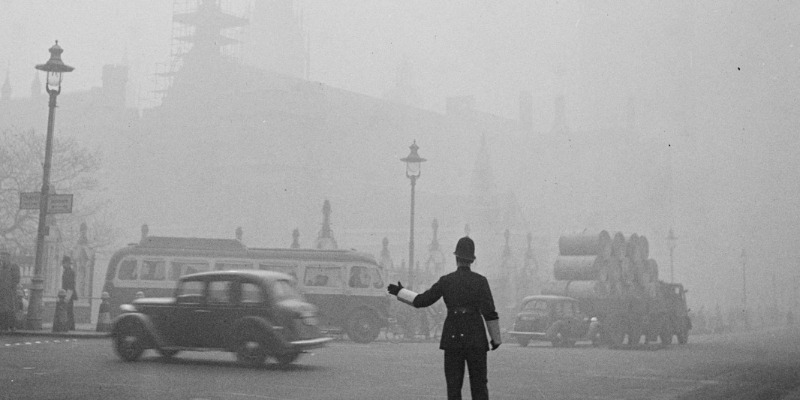
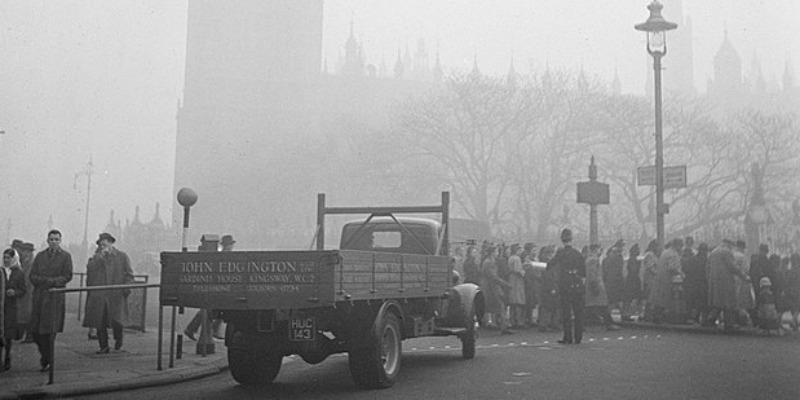
The silence continued until December 1952 when, due to particular weather conditions, London was enveloped in a thick and malodorous fog which took possession of the city for a few days.
In that period there was a sudden increase in air pollution caused by the stationing of the Azores anti-cycle which created a thermal inversion over the city, creating a layer of cold ground air and a warm upper air with no wind.
The hot air in contact with the cold one created a dew, giving birth to a massive amount of humidity that mixed with the pollutants of the combustion of coal present in the environment. Furthermore, the permanence of cold air led to an increase in the use of coal for heating, making the situation worse.
Another concomitant factor to bear in mind is that the coal available in England was of very poor quality, as the best was sold all over the world. abroad, and this meant that by burning a fuel with a high sulfur content, a large quantity of sulfur dioxide was released into the air.
A blanket 100 to 200 meters thick was therefore created which polluted the air both outside and inside the buildings, reducing visibility in transport but also for pedestrian traffic.
The victims, in the immediate vicinity of the days of the great smog, were 4000 in London alone but, in subsequent periods, some were counted about 12,000 that could be traced back to this phenomenon, with the addition of about 100,000 sick people.
In the four days mentioned above, enormous quantities of the following impure substances were released into the atmosphere:
- 1 000 tons of smoke particles
- 140 tons of hydrochloric acid
- 14 tons of fluorine compounds
- 370 tons of sulfur dioxide converted into 800 tons of sulfuric acid
In 1954 the ministry of health , in the face of the statistically significant increase in deaths and respiratory diseases, he advanced the hypothesis that it could be an influence. These hypotheses, it is not known whether prompted by partisan economic interests , was subsequently denied through the observation of general medicine in the London area and the vaccination situation of the population, leading to a confirmation that the phenomenon had been caused by smog.
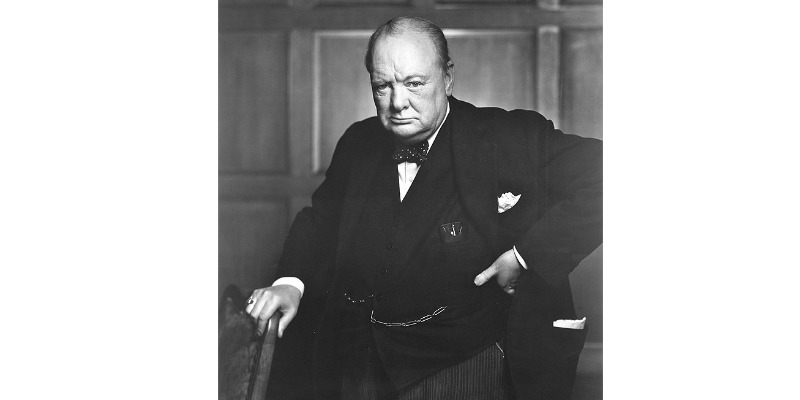
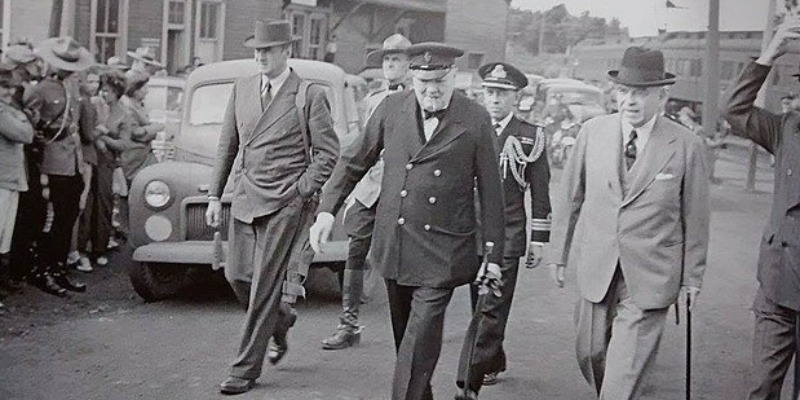
The government of the time, chaired by Winston Churchill, sought a way out in the face of the scientific information presented by the Ministry of Health, to avoid a social and industrial transformation that would not have been pleasing to the voters.
This transformation contemplated:
- the abandonment of the use of coal in homes and factories to switch to gas, which would have meant the end of particulate matter from coal and present in the air, with a marked improvement in its quality
- the conversion of fuel in industrial machines
- moving factories out of cities.
On July 5, 1956, the British Parliament promulgated the law called the Clean Act, which was signed by Queen Elizabeth, remaining in force until 1964.
This law, as the first of an environmental nature, will remain a milestone in the field of air quality control and pollutant emissions, despite, over the decades later, it was repeatedly implemented and updated.
Automatic translation. We apologize for any inaccuracies. Original article in Italian.