- Introduction to Volcanic Supereruptions
- Cooling Mechanisms of Volcanic Eruptions
- Climatic Impacts of Supereruptions
- The Toba Eruption: A Prehistoric Catastrophic Event
- Taupo: The Most Violent Eruption of the Ice Age
- Tambora 1815: The Year Without Summer
- Krakatoa 1883: An Explosion That Shook the World
- Monte Pinatubo 1991: Lessons from the 20th Century
- Ecological and Demographic Consequences of Supereruptions
- Preparation and Mitigation of the Impacts of Future Supereruptions
In-Depth Analysis of Climatic Mechanisms and the Consequences of the Largest Eruptions in History
By Marco Arezio
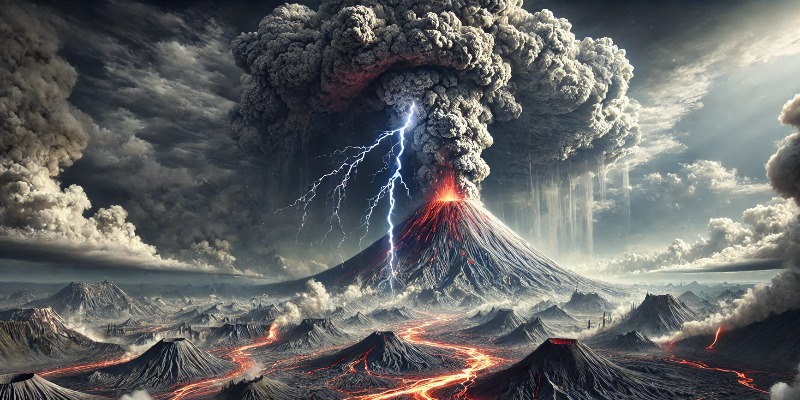
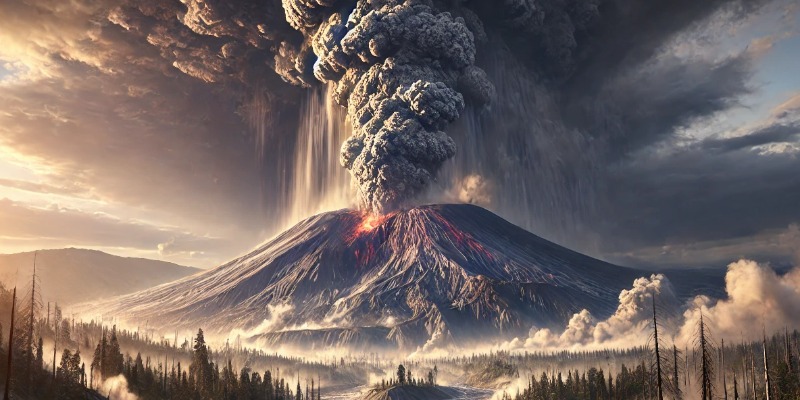
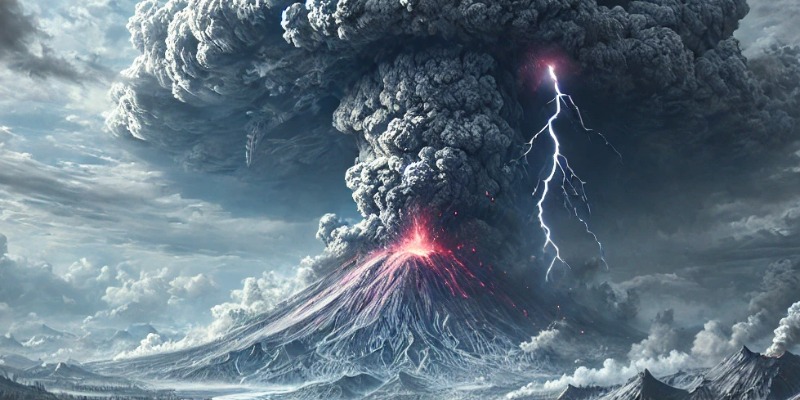
Volcanic eruptions are natural phenomena of extraordinary power that can have significant and lasting impacts on the Earth's climate.
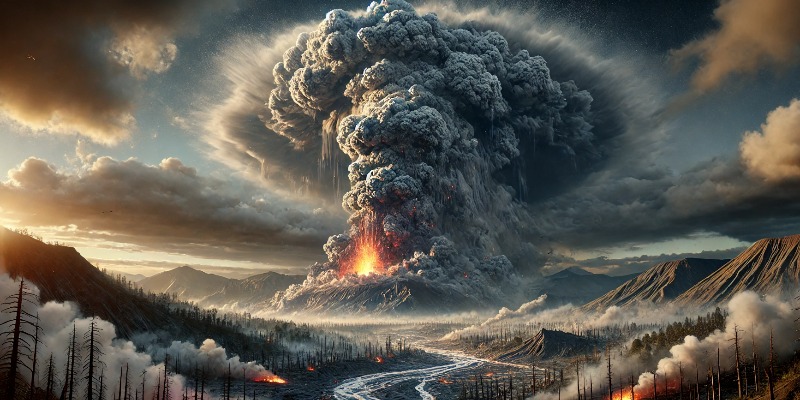
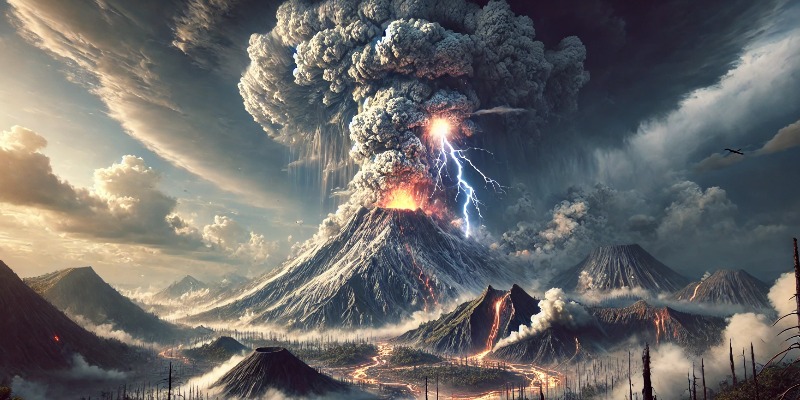
Among these phenomena, supereruptions represent events of exceptional magnitude, capable of releasing immense quantities of ash and gases, such as sulfur dioxide, into the atmosphere. These materials can influence the global climate for years, causing significant cooling of the Earth.
This article explores the mechanism through which supereruptions cool the planet and offers a historical timeline of the largest eruptions, analyzing their climatic consequences.
Mechanism of Volcanic Cooling
When a supervolcanic eruption occurs, large quantities of ash and gases are ejected into the atmosphere. Sulfur dioxide (SO2) is particularly important in this process.
Once released, it oxidizes and forms sulfate aerosols that reflect sunlight, reducing the amount of solar energy reaching the Earth's surface.
This process, known as "negative radiative forcing", leads to a cooling of the Earth's surface. Sulfate aerosols can remain in the stratosphere for several years, maintaining the cooling for prolonged periods.
The dispersion of volcanic ash and sulfate aerosols in the stratosphere has a similar effect to clouds but on a global scale.
The reduction in incoming solar radiation decreases evaporation and precipitation, altering global climatic patterns. These changes can lead to a reduction in average global temperatures, directly affecting seasons and agricultural cycles.
Timeline of Historical Supereruptions
Eruption of Toba (about 74,000 years ago)
Location: Sumatra, Indonesia
Volume of ejected material: 2,800 km³
The Toba eruption is one of the largest volcanic explosions known. The event expelled enormous quantities of ash and gases into the atmosphere, creating a vast caldera lake. The global dispersion of volcanic ash influenced the world's climate for years.
It is estimated that the Toba eruption caused a "volcanic winter" with a decrease in global temperatures of about 3-5°C.
This event has been linked to a genetic bottleneck in the human population, suggesting a significant impact on the demographics of the time. Ecological consequences include the destruction of vast forest areas and the reduction of biodiversity.
Eruption of Taupo (about 26,500 years ago)
Location: New Zealand
Volume of ejected material: 1,170 km³
The Taupo eruption was one of the most violent of the last 70,000 years. The ejected material formed a thick layer of ash that dispersed over much of the southern hemisphere.
The eruption triggered a period of global cooling, affecting the climate of the southern hemisphere. The deposited ash had significant impacts on local ecology, with changes in vegetation patterns and food webs.
Eruption of Tambora (1815)
Location: Sumbawa, Indonesia
Volume of ejected material: 160 km³
The Tambora eruption was one of the most powerful volcanic eruptions in recent history.
The eruptive column reached 43 km in height, dispersing ash throughout the stratosphere.The Tambora eruption is famous for causing the year without a summer in 1816. Global temperatures dropped by about 0.4-0.7°C, causing severe agricultural losses in North America and Europe and leading to widespread famines.
Climatic changes also influenced the distribution of diseases, with an increase in cholera and typhus epidemics.
Eruption of Krakatoa (1883)
Location: Indonesia
Volume of ejected material: 25 km³
The Krakatoa eruption was characterized by catastrophic explosions that destroyed much of the island. The generated tsunamis caused devastation in many nearby coastal areas.
The Krakatoa eruption cooled global temperatures by about 1.2°C in the months following. The effects on the climate lasted for about five years, contributing to anomalous weather conditions worldwide.
Volcanic ash produced spectacular sunsets, also influencing the culture and art of the period.
Eruption of Mount Pinatubo (1991)
Location: Philippines
Volume of ejected material: 10 km³
The Mount Pinatubo eruption was one of the largest of the 20th century. The eruptive column reached 35 km in height, and the eruption was accompanied by acid rains and mudflows.
This eruption led to a global cooling of about 0.5°C for two years. The released sulfate aerosols reduced incoming solar radiation, highlighting the importance of volcanoes in the Earth's climate system.
The Pinatubo eruption also provided valuable information for current climate models, helping to improve predictions of future climate changes.
Future Implications
Understanding the impact of supereruptions is crucial for preparing and mitigating their future effects. Integrating historical data with modern climate models can help predict the consequences of similar events in the future.
Furthermore, studying past eruptions provides important insights into potential risks to agriculture, human health, and the global environment.
Supereruptions can have devastating effects on infrastructure, disrupting air travel, contaminating water supplies, and damaging agricultural crops. Emergency planning and adopting adaptation strategies can significantly reduce the impact of these events.
Conclusion
Supervolcanic eruptions represent some of the most powerful natural events capable of influencing the Earth's climate for years.
From the released ash and sulfur dioxide to the resulting global climatic changes, these eruptions provide valuable lessons on the role of volcanoes in our planet's climate system.
Through the historical analysis of the major eruptions, we can better understand the mechanisms of climate cooling and prepare to face the future challenges posed by these natural cataclysms.
Studying supereruptions is essential not only for understanding the Earth's past but also for preparing for potential future catastrophes.
International collaboration in volcanological and climate research can improve our response and mitigation capabilities, protecting communities and preserving the global environment.