- Thermal Waste: A Sustainable Opportunity for Energy Efficiency
- Understanding Thermal Waste: Definition and Types
- Industrial Sector and Thermal Waste: An Analysis of the Sources
- Thermal waste in the energy sector: how it is generated
- Thermal Waste Recovery Techniques
- Heat Exchangers: Principles and Applications
- Cogeneration: Maximizing Energy Efficiency Uses of Thermal Waste: Opportunities and Benefits
How Recovering Waste Heat Can Improve Energy Efficiency and Reduce Environmental Impact
by Marco Arezio
Have you ever heard of waste heat? Perhaps not often, but it’s a significant reality for our energy efficiency and the environment. Imagine all the heat lost during industrial processes or energy production. Well, that heat is what we call "waste heat."
In this article, I'll tell you what waste heat is, how it’s generated, how we can recover it, and how we can use it to improve our daily lives and our planet.
What is Waste Heat?
Waste heat is, simply put, thermal energy that is dispersed during various industrial or energy processes. When we talk about waste heat, we refer to all that unused heat that ends up being released into the environment.
This energy, if not recovered, represents a significant loss in terms of efficiency and an unnecessary contribution to global warming.
Types of Waste Heat
Think of a steel factory or a power plant. In these places, a lot of heat is generated, and often a significant portion is wasted. There are different types of waste heat:
Exhaust Heat: This comes from engines and gas turbines. It’s the heat that exits through exhaust gases.
Spent Steam: Used in many industries as a heat transfer medium, spent steam is what remains after it has done its job.
Hot Air Flows: Present in ventilation and air conditioning systems in factories.
Cooling Fluids: Used to maintain operational temperatures, often releasing heat into the environment.
How is Waste Heat Generated?
Waste heat is generated in many industrial and energy processes. Let’s see some examples:
Industrial Sector
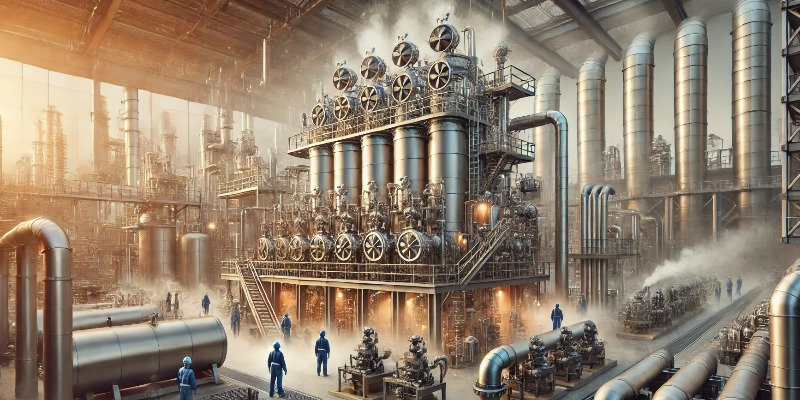
In industry, heat is crucial for many processes. Take metallurgy: melting metals requires a lot of heat, and some of this is wasted. The same happens in the chemical industry, where reactions produce heat that is often not fully utilized.
Even in cement production, the clinker kiln releases a lot of heat. We shouldn’t forget the food industry, where pasteurization and sterilization generate excess thermal energy.
Energy Sector
In the energy sector, like in thermal power plants, a lot of heat is generated that is not always fully utilized. Gas and steam turbines used in power plants produce residual heat that can be recovered.
How is Waste Heat Recovered?
Fortunately, there are several technologies and strategies to recover this precious energy.
Here are some of the main recovery techniques:Heat Exchangers
Heat exchangers are devices that transfer thermal energy from one fluid to another. Imagine a hot pipe warming another pipe filled with cold water: this is the basic principle of a heat exchanger. They are used in many sectors to improve energy efficiency.
Cogeneration
Cogeneration is a very interesting technique that allows simultaneous production of heat and electricity. Instead of wasting the heat, it is used to generate electricity, improving the overall efficiency of the system and reducing emissions.
Steam Recovery Units
These devices condense spent steam, recovering latent heat. It’s like transforming the steam from a pressure cooker into reusable energy.
Thermal Storage Systems
Thermal storage systems store the recovered heat for later use. It’s like putting hot water in a thermos to use it later.
How is Waste Heat Utilized?
Recovered waste heat can be used in many ways to improve energy efficiency and reduce operational costs:
Heating Industrial Processes
Recovered heat can be used to warm other industrial processes, improving the overall efficiency of the plant.
Electricity Generation
Heat can be used to power steam turbines or Stirling engines, producing additional electricity.
Space Heating
Heat can be used for heating offices, homes, or industrial spaces, reducing the need for fossil fuels.
Absorption Cooling
Residual heat can power absorption cooling systems, which use thermal energy to produce cold air, useful for air conditioning or industrial refrigeration.
Conclusions
Waste heat is a valuable and often underestimated resource. Recovering and reusing this residual energy not only helps us reduce operational costs but also decreases greenhouse gas emissions, thus contributing to the sustainability of our planet.
Adopting technologies for waste heat recovery is a winning strategy for industries aiming to improve their energy efficiency and reduce their environmental impact.
So, next time we think about the heat that is wasted, let’s remember it could be a precious resource ready to be utilized.