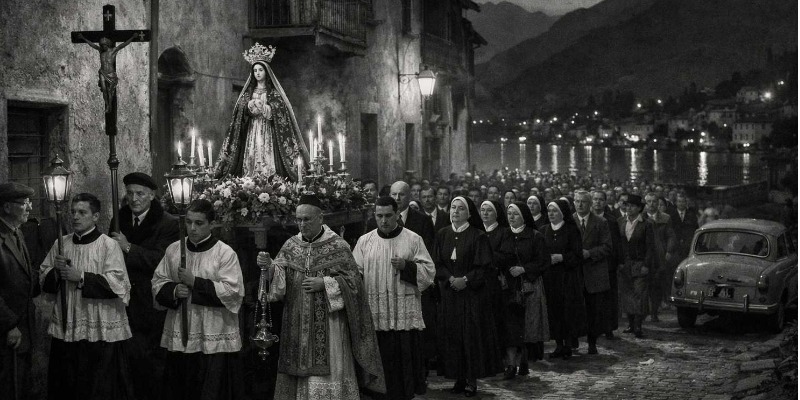
On a clear and deceptively serene morning, Dervio's silence is shattered by a discovery that transforms a sacred place into a theater of provocation. A carefully planned gesture, exposed to the light of day, reveals that evil no longer seeks to hide, but demands to be seen. Fear quickly spreads, along with the realization that nothing is random and that every detail is part of a precise plan.
As the country reacts with disbelief and superstition, the investigation takes a disturbing turn: the violence takes on a recognizable grammar. Lucia realizes that it's no longer a matter of chasing isolated leads, but of reading a deliberate language, constructed to challenge the investigators. The time for caution seems over. Someone has decided to raise the bar and drag everyone into their own charade.
A Ritual Murder in Dervio: The Staging of Horror and the Escalation of the Investigation
Crime Novel. The Secrets of the Abbey of Piona. Chapter 12: The Stage of the Churchyard of Dervio
It was a cold but clear morning, one of those that seem designed to convince anyone that the world, at least for a few hours, can be an orderly place. The parish church of Dervio stood out pale against the sky, its light stone made even more severe by winter. At that hour the village was a mosaic of closed shutters, rare footsteps, visible breath. The lake barely moved, a slow, rippled skin, and in that water—as in an ancient memory—were reflected the snow-covered mountains on the opposite shore, with a stark contrast: dark and white, iron and chalk, life and frost. If someone had had the time to really look, they would have felt a kind of almost guilty serenity, the calm that comes when you think that nothing bad can happen in a place like this.
Anita stepped out of the rectory around seven, as she had done for twenty-five years. The door closed behind her with a short, familiar sound. Anita was small, wiry, a body made for work rather than rest. She wore a dark coat that reached almost to her ankles and a scarf tied hastily, with the habit of someone who had never had the luxury of wasting time. She carried a worn broom, a trash bucket, and a bag already prepared, as if the village itself had taught her that dirt does not wait.
She knew dirt well, after all. The visible kind and the invisible kind.

She had been the parish priest’s housekeeper all her life.
Attentive, yes, and a bit of a gossip too, because in Dervio gossip was a form of meteorology: it told you which way the wind was blowing in other people’s homes. Anita knew everything and pretended to know little. She knew who went to church and who went just to be seen. She knew who had a sick mother and who had a son who never came home. She knew the couples who argued behind closed windows and the brothers who had not spoken in years. And she also knew, for some time now, that since that mess in Corenno Plinio— that dead man, those rumors, that police presence—people had stopped believing that evil always stayed elsewhere....