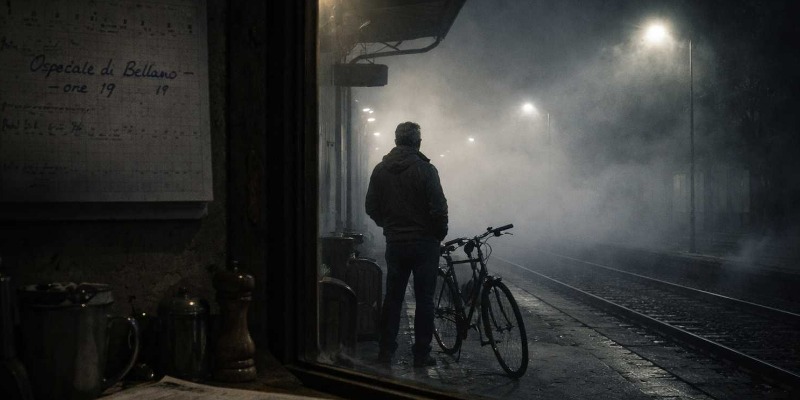





A carefully marked appointment on Enrico's calendar becomes an anchor of normality in a world that has ceased to be normal. The road along the lake, the February chill, and the solitude of the smaller stations make up a seemingly ordinary journey, yet one filled with foreboding. In Dervio, the empty platform and a sudden fog transform the space into a contourless corridor, where even the sounds seem lost.
A tiny detail changes the perception of safety and shifts the boundary between expectation and threat. In parallel, Lucia and Lisa navigate a balance between intuition and investigative rigor, reconstructing a logic that never quite aligns with appearances. In a hotel reading room, the confrontation uncovers a disturbing idea: they're not just chasing a culprit, but a method. And when a method is understood, it reacts. The chapter closes by tightening the tension on a simple, cruel realization: someone chooses people, not by chance, but by strategic necessity.
Waiting, Fog, and Subtle Signals Along the Lakeside Line
Mystery novel. The Secrets of the Abbey of Piona. Chapter 11: The Station in the Fog
Enrico had marked the appointment with almost childlike care, as if that small square on the calendar could hold his whole day together and, deep down, his fear as well. “Bellano Hospital – 7 p.m.” was written in his slightly slanted handwriting, squeezed between a grocery list and a reminder to fetch potatoes from the pantry. He had hung the calendar in the kitchen, near the window overlooking the lake, because the light was better there and because, when the world began to make too much noise, he needed to see at least one thing that stayed still.
He hoped Andrea would still be there to check the dressing. Not only because Andrea’s hand had been gentle the last time—competent, precise, without hurting him more than necessary—but because Enrico needed a familiar face. A face that did not speak of nails, of bodies found too late, of paper slips abandoned like breadcrumbs to guide someone through the woods. He wanted to say thank you. He wanted to ask him, almost in a whisper, whether they were doing all right after that murder in Corenno Plinio, as if the question might restore a human outline to that event, a boundary.
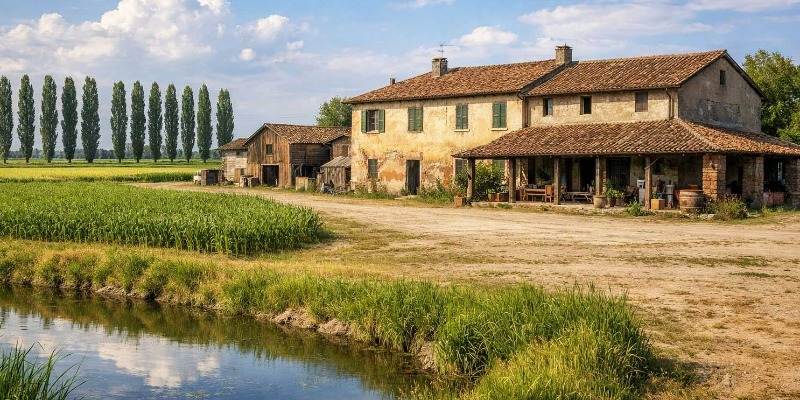
He set off on his bicycle when the afternoon was not yet evening, but had already decided to become one. The February air cut into his skin like a thin blade, without blood, but with the same precise pain. Every breath entered his lungs with a metallic taste and came out whiter, more tired. The road along the lake was almost empty: a few lit windows behind stone walls, a shutter gently banging, the distant sound of a scooter passing and vanishing at once, swallowed by the curves.

The houses of Corenno stayed behind him like a cluster of shadows pressed against the rock.
Enrico pedaled with his shoulders slightly hunched, as if posture alone could repel the cold. The chain creaked faintly with every turn, and that repeated sound gave him an illusion of company. From time to time the lake appeared through the bare branches: flat, dark, with a gray light resting on it like ash. It was not a landscape. It was a mood.He reached Dervio station with numb fingers and burning legs. He locked the bike with a quick, almost nervous gesture, as if he feared even metal could betray him. He checked his watch: he still had time....