- Recycled glass: an infinite resource for sustainable construction
- From waste to raw material: the virtuous cycle of glass
- Innovative applications of recycled glass in construction
- Cellular glass and lightweight concrete: performance and advantages
- Cladding, flooring and aesthetic solutions with recycled glass
- Energy efficiency and emissions reduction with recycled glass
- Case studies of sustainable buildings using recycled glass
- Market prospects and business opportunities for recycled glass
From waste reduction to improved energy performance: recycled glass as a key material for the architecture of the future
by Marco Arezio
In the popular imagination, glass is a fragile, transparent, almost ephemeral material. Yet, in the world of sustainable construction, it is taking on a new dimension: that of a strategic resource, capable of embodying the principles of the circular economy and transforming waste into valuable construction elements. It is no longer simply bottles, windows, or sheets of glass that find a second use, but a material that, through the recycling chain, becomes the protagonist of innovative and functional architectural projects.
Recycled glass is not a secondary substitute, a "poor" material destined for marginal finishes: on the contrary, it is a high-performance resource, capable of improving the aesthetic and technical quality of buildings. Its introduction in the construction industry is now an integral part of corporate sustainability strategies and European regulations, which push for reduced environmental impact and energy efficiency.
The circular potential of glass
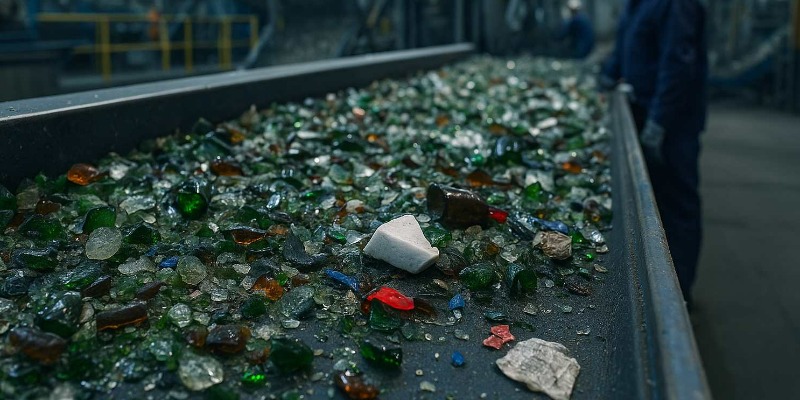
Glass's unique characteristic is that it can be recycled virtually infinitely, without losing its chemical and mechanical properties. Each recovered glass fragment, the so-called cullet, becomes a secondary raw material that reduces the need for silica sand, soda, and limestone. This brings two immediate benefits: a reduction in waste destined for landfills and a reduction in the energy required for melting, as recycled glass melts at lower temperatures than virgin raw materials.
The integration of recycled glass into building production processes is therefore a concrete example of a circular economy, in which urban or industrial waste enters a virtuous cycle, transforming into new design opportunities. This aspect aligns with international sustainability protocols, from LEED to BREEAM, which reward the use of recycled and low-impact materials.
Construction Applications: Beyond Transparency
Window glass is the first thing that comes to mind, but recycling in the construction industry is much broader and more complex. Once treated, glass granules can be used in a variety of ways:
Lightweight concrete: The use of recycled glass as a partial aggregate replaces gravel or sand, improving thermal and acoustic insulation. Specifically, the finely ground glass reduces the density of the concrete, offering lightweight, high-performance solutions for precast panels and flooring.
Thermal insulation: By foaming recycled glass, a lightweight, porous material with excellent insulating properties is obtained, used in panels and building blocks. This "cellular glass" combines lightness and compressive strength, offering an eco-friendly alternative to traditional materials.
Wall coverings and floors: Recycled glass tiles, available in numerous colors and textures, combine aesthetics and durability. Their ability to reflect light also helps enhance the brightness of spaces.
Decorative aggregates: Used in architectural concrete or Venetian terrazzo, recycled glass fragments add a unique aesthetic value, creating surfaces that tell a story of recovery and innovation.
Each application demonstrates how glass, far from being confined to its traditional function, can be transformed into a versatile, load-bearing element of sustainable construction.
Energy, resources and emissions reduction
The use of recycled glass in construction is not just aesthetically pleasing or technically advantageous, but also translates into tangible energy and environmental savings. For every 10% of recycled glass used in melting, the process's energy consumption is reduced by 2-3% and CO₂ emissions are proportionally reduced.
Considering that the construction sector is responsible for approximately 40% of global greenhouse gas emissions, the positive impact glass recycling can have on a global scale is clear. Reducing the need for virgin raw materials also means preserving fragile ecosystems, limiting the extraction of sand—an increasingly scarce resource—and minimizing overall procurement costs.
Case studies: when recycled glass becomes architecture
Glass recycling in construction is no longer just an abstract concept, but a concrete reality that finds application in construction sites, redevelopment projects, and new builds. Recent cases from several European countries demonstrate how recycled glass can translate into practical and competitive solutions.
1. Milan's sustainable residential neighborhood
In Milan, as part of a low-impact social housing project, the use of concrete with recycled glass aggregates for internal and external flooring was tested. The material was produced by replacing approximately 20% of the traditional sand with glass granules recovered from post-consumer bottles.
The result was twofold: on the one hand, a lightweight concrete, easier to install and with a 15% higher thermal insulation coefficient than conventional mixes; on the other, a striking aesthetic effect, thanks to the reflection of natural light on the surfaces.
The floors in common areas, such as lobbies and corridors, thus feature a unique texture, combining durability and design.2. A school in Freiburg (Germany) with cellular glass panels
The city of Freiburg, already known for its commitment to sustainability, has adopted recycled cellular glass blocks for the thermal insulation of a new elementary school. The material, derived from crushed glass and then foamed at controlled temperatures, was used as an insulating layer in the walls and roof.
The panels ensured high compressive strength (over 0.7 MPa), very low thermal conductivity (0.08 W/mK), and class A1 fire performance, meaning they were completely non-combustible. In environmental terms, the use of cellular glass is estimated to have reduced the construction site's CO₂ emissions by over 200 tons compared to traditional expanded polystyrene solutions.
3. The headquarters of a design company in Copenhagen
In Denmark, a design company wanted to transform its new headquarters into a manifesto of sustainability. The architectural project featured extensive use of recycled glass tiles and interior cladding, made from post-industrial sheets and colored bottles.
Each room features walls covered with semi-transparent surfaces that play with natural light, creating changing atmospheres throughout the day. From a technical standpoint, the tiles have demonstrated a surface hardness superior to standard ceramic materials and a resistance to chemicals, making them ideal for high-traffic areas. Commercially, the project has also had a positive impact on the company's image: the company has seen a more than 30% increase in positive customer perception, thanks to the evident use of recycled materials.
4. Road infrastructure in Spain
A lesser-known but highly significant application involves the construction of roadbeds and sub-bases with recycled glass in the Catalonia region of Spain. The carefully selected and treated glass fragments were used as a substitute for gravel.
This solution reduced the cost of procuring virgin material, improved surface drainage, and repurposed over 15,000 tons of glass that would otherwise have been destined for landfill. Tests on pilot sections demonstrated that the mechanical performance of the underlayment was comparable to that of traditional materials, with an overall cost reduction of 12%.
5. Residential projects in the United States
Even overseas, in California, some companies have experimented with producing decorative surfaces and kitchen countertops using recycled glass granules embedded in a resin or cement matrix. These materials have replaced marble and granite in several mid- to high-end homes, with notable results: the countertops are resistant, durable, more affordable, and, above all, clearly communicate the ecological value of recycling.
The commercial success has been remarkable: companies specializing in this segment have tripled their market share in just a few years, demonstrating that the sustainability-design combination can transform into a competitive business.
Market opportunities and future prospects
From a commercial perspective, recycled glass represents a growing supply chain. Companies that choose to integrate it into their products gain competitive advantages, thanks to the ability to communicate a concrete commitment to sustainability. In a context where end customers—from private individuals to public entities—are increasingly concerned about the environmental impact of construction, recycled glass becomes a differentiating factor.
Furthermore, growing legislative attention, with incentives and regulations that reward the use of recycled materials, is pushing the industry toward increasingly widespread adoption. The challenge will be standardizing and certifying materials to ensure safety, performance, and reliability.
The future of sustainable construction cannot ignore the integration of supply chains like glass. The ability to transform common waste into a valuable architectural element represents not only a technical opportunity, but also a cultural message: building in harmony with the natural cycle of resources.
Conclusion
Recycled glass is no longer just a "green" option, but a truly strategic resource. Its ability to combine beauty, performance, and sustainability makes it a symbolic material for the construction of the future. Each recovered glass granule reflects not only light, but also a vision: that of a world in which building means respecting, innovating, and regenerating.
© Reproduction Prohibited