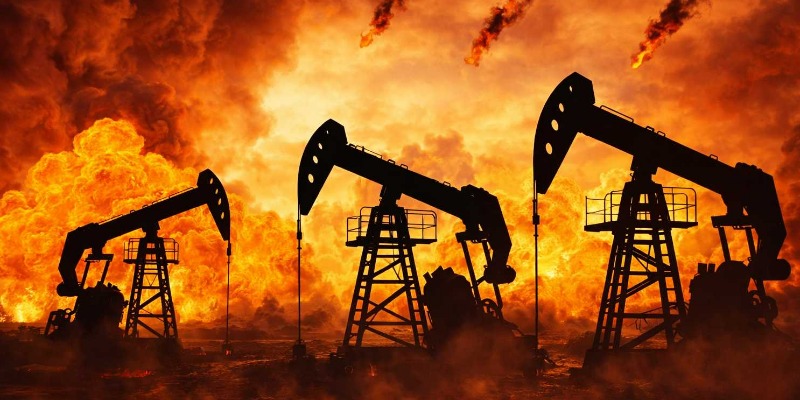
- Global Oil Dependence: Why the World Economy Remains Vulnerable to Energy Crises
- Energy wars and instability in raw material markets
- The Strait of Hormuz crisis and its impact on global oil trade
- Why Middle Eastern oil remains central to the world economy
- Europe's energy vulnerability and dependence on resource imports
- Critical raw materials and the new geopolitics of industrial resources
- The strategic return of recycling in global economic policies
- Circular economy and supply chain security
- The role of recycled materials in the technology and manufacturing industries
- Towards a new economic model based on circular resources and industrial resilience
Geopolitical Dependence on Oil and Critical Resources: Why the Circular Economy Is Becoming an Industrial Strategy
Author: Marco Arezio
Date: 2026
From oil dependency to global geopolitical tensions: how wars, energy instability, and resource scarcity are transforming recycling into a decisive economic and industrial strategy.
Introduction
For more than a century, the global industrial economy developed according to a relatively simple model: extracting natural resources, transforming them into products, and finally disposing of them as waste. This linear system worked for a long time because raw materials were perceived as abundant and because the energy needed to extract and process them, particularly oil, was available at relatively low cost.
Over the last few decades, this perception has slowly begun to change. Global economic growth, population increase, and the expansion of emerging economies have multiplied demand for energy and industrial raw materials. At the same time, the production of many of these resources has remained concentrated in areas of the planet marked by political instability, regional conflicts, or geopolitical tensions.
This combination of factors has made a structural fragility of industrialized economies increasingly clear: dependence on energy sources and materials coming from regions of the world that are difficult to control or predict. Oil is the most obvious example of this vulnerability, but it is not the only one. Today, many fundamental raw materials for modern industry—from metals to rare earths—are concentrated in a small number of countries and subject to complex geopolitical dynamics.
In this scenario, recycling and the circular economy are taking on a new meaning. They are no longer only environmental tools aimed at reducing the impact of waste on the planet, but are progressively becoming a strategic component of the economic and industrial security of nations.
Global Dependence on Oil and the Vulnerability of Industrial Economies
For more than a century, oil has represented the backbone of modern economic development. Not only as a fuel for transport or for energy production, but also as a fundamental raw material for the chemical industry, for the production of plastics, fertilizers, solvents, and thousands of other products used in everyday life.
This central role, however, has created a structural problem. The main oil reserves on the planet are not evenly distributed, but are concentrated in a few specific areas, particularly in the Middle East, in some regions of Africa, and in parts of Central Asia. Many of these territories are characterized by fragile political balances, regional tensions, or geopolitical rivalries that make global energy supply vulnerable to sudden crises.
When conflicts or military tensions occur in these regions, the impact on energy markets can be immediate. Disruptions in production, attacks on oil infrastructure, or threats to strategic maritime routes can cause rapid increases in energy prices, with chain effects on the global economy.
This vulnerability has become even more evident in recent years, as geopolitical tensions have demonstrated how much the global energy system depends on a delicate balance between production, transport, and political stability.
Energy Wars and the Instability of Raw Material Markets
Contemporary geopolitical crises are not only about control of territories or regional political balances. More and more often, behind conflicts and international tensions there is an economic dimension linked to access to natural resources.
Control over energy sources and industrial raw materials has become one of the most important factors in defining the balance of power among nations. When these resources are threatened by wars, economic sanctions, or trade blockades, the effect is immediately reflected in global markets.
Oil and raw material prices can fluctuate rapidly in response to geopolitical events, creating economic instability and difficulties for industries that depend on these resources. Rising energy costs often translate into inflation, slower economic growth, and loss of competitiveness for many companies.
In this context, resource security is becoming a central issue for the economic policies of industrialized countries.
The Strait of Hormuz Crisis and the New Raw Materials Shock
One element that makes the fragility of the current global economic system even more evident is the energy crisis that broke out after the joint attack by the United States and Israel against strategic Iranian targets. Tehran’s military response quickly transformed the regional conflict into an event with global economic consequences, especially with regard to energy supply.
The most critical point of the crisis is represented by the Strait of Hormuz, one of the most important maritime passages on the planet for energy trade. This narrow corridor of sea separating Iran from Oman is only a few dozen kilometers wide, yet an enormous share of the world’s energy passes through it. Every day, around 17–20 million barrels of oil transit through these waters, equal to about 20% of global consumption, in addition to a significant share of worldwide liquefied natural gas exports, especially from Qatar.
When the conflict with Iran intensified and Tehran threatened to prevent the passage of oil tankers, maritime traffic in the area slowed dramatically. Several shipping companies suspended routes through the strait, and numerous tankers remained stationary while waiting for safer conditions. Within a few days, tanker traffic collapsed and passage through the world’s most important energy corridor nearly disappeared.
The consequences for raw material markets were immediate. The price of Brent crude oil, which before the crisis fluctuated around seventy to eighty dollars per barrel, quickly exceeded the threshold of one hundred dollars and in some phases of tension continued to rise, fueling fears of a new global energy crisis.
The blockage of the strait also caused an energy supply shock without precedent in the recent history of the oil market. According to estimates by the International Energy Agency, the reduction in exports from the region could exceed several million barrels per day, making this disruption one of the most serious ever recorded for the global energy market.
In response to the crisis, industrialized countries began releasing oil from their strategic reserves in order to stabilize markets and contain rising prices. However, these reserves represent only a temporary solution and cannot replace supplies from the Persian Gulf for long.
The economic consequences of this situation are spreading rapidly throughout the entire global industrial system. Rising energy prices affect production costs, transport, agriculture, and numerous manufacturing sectors. The economies most affected are those that depend most heavily on energy imports, in particular many European and Asian countries.
But the Strait of Hormuz crisis highlights an even deeper problem: the fragility of the global industrial system in the face of geopolitical tensions. When a single area of the planet can block such a large share of global energy supplies, it means that the entire economic system depends on an extremely delicate balance.
For this reason, the Iranian crisis does not represent only a geopolitical event, but also a sign of the transformation underway in the global economy. Resource security is becoming a central issue for industrial strategies and for the economic policies of nations.
In this context, recycling and the circular economy take on an even more strategic value. Reducing dependence on raw materials extracted in geopolitically unstable regions means increasing the resilience of economies and building production systems that are less vulnerable to energy shocks and international crises.
The recovery of materials already present in industrial economies—metals, plastics, electronic components—can help reduce pressure on global supply chains. Cities and production systems accumulate large quantities of resources over time that, if recovered and reintroduced into production cycles, can reduce the need for new extraction and limit dependence on vulnerable trade routes.
In other words, the Strait of Hormuz crisis clearly demonstrates that recycling is not only an environmental policy, but also an economic security strategy. In a world characterized by geopolitical tensions and competition for resources, the ability to recover materials within one’s own economy becomes one of the key factors of industrial resilience.
Why Middle Eastern Oil Remains Central Even in the Era of the Energy Transition
In recent years, public debate on energy has been dominated by the theme of the energy transition. The spread of renewable energy, the development of electric vehicles, and climate policies are progressively reducing the role of fossil fuels in the long-term strategies of industrialized economies. However, this transformation, though significant, is not taking place as quickly as is often imagined in political discourse.
Oil still occupies a central position in the global economy. Even in countries that are investing heavily in renewable energy, much of transport systems, logistics, and the chemical industry still depend to a large extent on petroleum derivatives. It should not be forgotten that oil is not only a fuel: it is also the basis of numerous industrial supply chains, from the production of plastics to fertilizers, from solvents to synthetic materials used in a great many productive sectors.
The energy transition also requires long timeframes. Replacing global energy infrastructures—refineries, distribution networks, transport systems, and industrial plants—requires enormous investments and decades of technological transformation. Even in the most advanced countries from the point of view of decarbonization, the share of energy coming from fossil sources remains significant.
In this context, the Middle East continues to represent one of the nerve centers of the global energy economy. The region hosts some of the largest oil reserves on the planet and remains one of the main energy export hubs toward Europe, Asia, and other industrialized economies.
This reality creates a paradoxical situation. On the one hand, climate policies aim to progressively reduce the use of fossil fuels. On the other hand, in the short and medium term, global economies continue to depend substantially on oil coming precisely from those regions that are geopolitically the most unstable.
Tensions in the Persian Gulf show how delicate this balance is. Military events, diplomatic crises, or threats to maritime routes can have immediate effects on international energy markets. When the flow of oil from the Middle East is called into question, the impact concerns not only fuel prices, but the entire global economic system.
This situation highlights another aspect that is often overlooked in the contemporary energy debate. The ecological transition is not only about the development of new energy technologies, but also implies a profound transformation in the way economies use material resources.
Reducing dependence on oil does not simply mean producing more renewable energy. It also means using materials more efficiently, extending the life of products, and recovering resources already present in the economic system.
In this sense, the circular economy represents one of the most important tools for supporting the energy transition. Recovering materials through recycling means reducing the need for new extraction and lowering pressure on global supply chains.
Recycling therefore becomes an integral part of the energy and industrial strategy of the future. It does not directly replace oil as an energy source, but it helps reduce overall dependence on resources extracted in geopolitically unstable regions.
Europe’s Energy Fragility and Dependence on Imports
Among the world’s major economies, Europe represents one of the clearest examples of energy dependence. The continent has limited natural resources compared to its industrial needs and must import a large share of the energy and raw materials it uses.
This dependence makes the European economy particularly sensitive to geopolitical crises and changes in energy markets. When the price of oil or gas rises suddenly, the impact quickly spreads through the entire economic system, affecting production costs, the prices of goods, and citizens’ purchasing power.
In recent periods, international tensions have shown how much this situation can represent a strategic vulnerability. Reducing dependence on imports of energy and raw materials has therefore become an increasingly important objective for European industrial policies.
Critical Raw Materials and the New Geopolitical Competition for Resources
If in the past oil represented the main strategic resource, today the landscape of raw materials has broadened significantly. Modern technologies—from electric vehicles to electronic devices, from renewable energy to digital infrastructure—require a growing quantity of metals and specialized materials.
Elements such as lithium, cobalt, nickel, copper, and rare earths have become indispensable for contemporary technological development. However, these resources too are often concentrated in a small number of producing countries, creating new forms of economic and geopolitical dependence.
The growing global demand for these materials is fueling increasingly intense international competition, in which access to resources becomes a determining factor for the industrial and technological development of nations.

The Strategic Return of Recycling in Industrial Policies
In this context of growing competition for natural resources, recycling is returning to the center of economic and industrial strategies. Recovering materials from waste does not only mean reducing the environmental impact of industrial production, but also reducing dependence on imports of raw materials.
Advanced economies are beginning to consider the materials contained in waste as a true reserve of resources. Cities and production systems accumulate large quantities of metals, plastics, and other materials over time that can be recovered and reintroduced into production cycles.
This process progressively transforms waste into a sort of urban mine, capable of supplying secondary raw materials without the continuous need to extract new natural resources.
Circular Economy and the Resilience of Supply Chains
Global supply chains have become increasingly complex and interconnected. Modern industries depend on networks of suppliers distributed across the world, and any disruption in one part of the chain can have cascading effects on the entire production system.
The circular economy offers a possible response to this vulnerability. Recovering materials within national or regional economies makes it possible to reduce dependence on supplies coming from distant and politically unstable countries.
In this way, recycling contributes not only to environmental sustainability, but also to economic resilience.
The Role of Recycled Materials in Technological Industries
Many industrial sectors are already integrating recycled materials into their production chains. The metallurgical industry increasingly uses scrap to produce steel and aluminum, while the battery sector is developing technologies to recover valuable metals from end-of-life devices.
The plastics industry is also evolving rapidly, with the development of high-quality recycled polymers capable of replacing virgin materials in numerous industrial applications.
These transformations show how recycling can become a structural element of modern industry.
Industrial Strategies to Reduce Dependence on External Resources
To address the challenges related to resource security, many governments are developing new industrial strategies based on more efficient material management.
These strategies include the promotion of recycling, the development of technologies for material recovery, and the creation of more local and resilient production chains.
The objective is to build an economic system that is less vulnerable to geopolitical crises and better able to manage available resources sustainably.
The New Economic Paradigm of Circular Resources
The raw materials crisis and geopolitical tensions are accelerating a profound transformation of the global economic system. The linear model based on extraction, production, and disposal is progressively giving way to a more complex paradigm in which resources are used for longer, recovered, and reintroduced into production cycles.
In this new scenario, the circular economy does not represent only a response to environmental challenges, but also a tool for strengthening the economic security of nations.
Recycling thus becomes one of the pillars of a more resilient industrial system, capable of reducing dependence on geopolitically unstable resources and of building a more sustainable economic future.
Sources
International Energy Agency – Global Energy Outlook
European Commission – Critical Raw Materials Strategy
OECD – Global Raw Materials Outlook
European Parliament – Critical Raw Materials for the EU
Bruegel – European Fossil Fuel Dependence
Transport & Environment – EU Oil Dependency Report
Economics Observatory – Energy conflicts and inflation
Journal of Cleaner Production – Circular Economy and Resource Security