- What is Lake Nyos and Why is it So Dangerous?
- The CO₂ Release: The Night That Shook Cameroon
- Limnic Eruption: The Science Behind the Lake Nyos Disaster
- The Deadly Effects of Carbon Dioxide Release
- Human and Environmental Consequences of the Lake Nyos Disaster
- Degassing Solutions to Prevent Future Disasters
- Volcanic Lakes at Risk: The Case of Lake Kivu
- Lessons and Warnings from the Lake Nyos Disaster for the Future
Discover the Environmental Tragedy of 1986 in Cameroon, When a Massive Release of Carbon Dioxide from Lake Nyos Caused One of the Greatest Natural Disasters in Modern History
By Marco Arezio
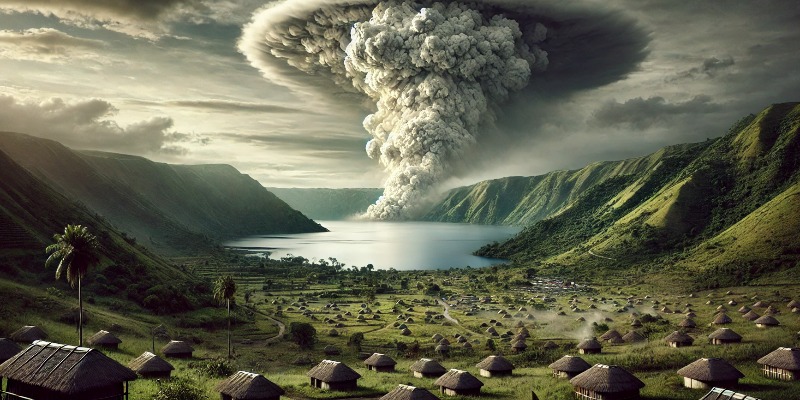
On August 21, 1986, in a remote area of Cameroon, one of the most tragic and mysterious natural disasters in modern history occurred. Lake Nyos, located on a dormant volcano, suddenly released an enormous amount of carbon dioxide (CO₂), killing over 1,700 people and thousands of animals within a radius of several kilometers. This catastrophic event left a profound mark on history and raises critical questions about the relationship between humans and the environment.
What is Lake Nyos?
Lake Nyos is a crater lake located in the northwest region of Cameroon. Its volcanic origin makes it unique but also potentially dangerous. The waters of the lake conceal a large amount of dissolved CO₂, trapped at great depths due to the pressure of the overlying water. This accumulation of gas results from underground volcanic activity that continues to generate CO₂.
The Fatal CO₂ Release: What Happened?
On the night of August 21, 1986, a sudden and massive release of CO₂ from Lake Nyos created a deadly gas cloud that quickly spread to the surrounding villages. The CO₂ concentration reached 10% in some areas, suffocating all forms of life it encountered. Most victims were found in lower-lying areas, where the heavier-than-air gas had accumulated.
Scientific investigations suggest that a landslide or a small earthquake may have triggered the sudden release of accumulated gas. This phenomenon, known as a "limnic eruption," is rare but devastating.
Human and Environmental Consequences
The event left no traces of struggle or attempts to flee among the victims, indicating that death was rapid and silent.
The impact on the territory was devastating: entire villages were decimated, and the local fauna was almost completely wiped out.From an environmental perspective, the event raised greater awareness of the risks associated with gas-rich crater lakes. It was discovered that other lakes, such as Lake Kivu between Rwanda and the Democratic Republic of Congo, present similar dangers.
Prevention Measures: What Was Done After the Disaster?
After the disaster, scientists installed degassing systems in Lake Nyos to gradually release the accumulated CO₂ and prevent future limnic eruptions. These systems consist of pipes that allow the gas to slowly emerge to the surface, reducing pressure at great depths.
Additionally, other volcanic lakes worldwide have been monitored to identify similar situations and prevent analogous tragedies.
Lessons Learned and Messages for the Future
The Lake Nyos disaster is an emblematic example of how natural phenomena can have a devastating impact on human life and ecosystems. It underscores the importance of monitoring natural risks, especially in vulnerable regions, and developing strategies to mitigate these dangers.
The tragedy also serves as a warning to address climate change and its potential consequences. Understanding and respecting the mechanisms of nature are essential to ensuring the safety of human communities and the protection of the environment.
Conclusion
Lake Nyos and its 1986 tragedy represent a crucial lesson in environmental risk management. Although similar events are rare, their destructive potential demands constant vigilance. With technological progress and international collaboration, it is possible to mitigate such risks and safeguard both human lives and our fragile ecosystem.
© Reproduction Prohibited