- Regulatory evolution in urban wastewater management
- New European Directive: a step towards environmental sustainability
- Urban purifiers: from infrastructures to circular economy hubs
- How sewage treatment plants will be able to generate energy from sludge
- Phosphorus and nitrogen recovery: the role of nutrients for agriculture
- Reclaimed water: a strategic resource against water scarcity
- Energy neutrality: the future of large purification plants
- Advanced and quaternary treatments: defense against micropollutants and microplastics
- Producer Responsibility: The Polluter Really Pays
- Technological innovation: the heart of the ecological transition in wastewater
New Technologies and European Directives Transform Wastewater Treatment Plants into Resource Recovery Centers and Emission Reduction Hubs
By Marco Arezio
Urban wastewater management has long been one of the fundamental pillars for preserving the environment and ensuring public health. However, the current context calls for a radical shift in perspective. The European Union, through the revision of the Urban Wastewater Directive, proposes an innovative vision in which treatment plants are no longer merely infrastructures for liquid waste processing but become key players in the ecological transition. The goal is to transform them into resource recovery centers capable of generating energy, raw materials, and regenerated water, thereby significantly reducing environmental impact.
New European Directive 2024: Advanced and Sustainable Wastewater Management
Urban wastewater management in Europe is about to undergo a significant transformation with the entry into force of the new Directive (EU) 2024/3019, set for January 1, 2025. This regulation, which will replace the previous Directive 91/271/EEC of 1991, introduces stricter measures for wastewater treatment, expanding its scope and aligning with the objectives of the European Green Deal.
Key Innovations of Directive 2024/3019
Expansion of Scope: The new directive lowers the threshold for mandatory urban wastewater collection and treatment, including settlements with more than 1,000 population equivalents, compared to the previous threshold of 2,000. This means that more communities will need to equip themselves with adequate wastewater management systems.
Introduction of Advanced Treatments: More sophisticated treatments are planned to remove nutrients such as nitrogen and phosphorus (tertiary treatment) by 2039 in plants serving over 150,000 population equivalents. Additionally, by 2045, these plants will need to implement quaternary treatment to eliminate micropollutants such as PFAS and microplastics, thereby protecting the environment and human health.
Extended Producer Responsibility: The directive introduces the "polluter pays" principle, requiring pharmaceutical and cosmetic producers to cover at least 80% of the additional costs for removing micropollutants from wastewater. This economic incentive aims to reduce the release of harmful substances into the environment.
Energy Neutrality Goal: By 2045, wastewater treatment plants serving over 10,000 population equivalents must achieve energy neutrality, utilizing renewable energy generated internally. This will contribute to reducing greenhouse gas emissions and improving energy efficiency in the sector.
Promotion of Treated Wastewater Reuse: Member States are encouraged to promote the reuse of treated wastewater, particularly in areas affected by water stress, for appropriate purposes such as agricultural irrigation and industrial use, thereby contributing to water resource conservation.
Implementation Timeline
The directive will come into effect on January 1, 2025, with various deadlines for implementing the planned measures:
July 31, 2027: Deadline for Member States to transpose the directive.
2035: Mandatory secondary treatment for all settlements with at least 1,000 population equivalents.
2039: Implementation of tertiary treatment in plants serving over 150,000 population equivalents.
2045: Introduction of quaternary treatment and achievement of energy neutrality in large plants.
This new regulation represents a decisive step toward more sustainable and efficient urban wastewater management in Europe, contributing to environmental protection and public health.
An Ambitious Regulatory Framework
The European Urban Wastewater Directive, introduced in 1991, marked a pivotal moment in environmental regulation, setting minimum standards for urban wastewater treatment. Today, more than three decades later, it is evident that an update is needed to address new climatic, economic, and technological challenges. The ongoing revision aims to integrate the principles of the European Green Deal, focusing on three main objectives: improving water quality, contributing to climate neutrality, and maximizing the recovery of resources contained in wastewater.
This vision translates into a push for technological innovation and more sustainable management.
Treatment plants, traditionally considered a financial burden for public administrations, are being transformed into productive hubs with positive impacts on the environment and communities.The Role of Treatment Plants in the Ecological Transition
To fully understand the scope of this transformation, it is crucial to analyze the new roles that treatment plants can assume. They are no longer just facilities for processing wastewater to reduce pollution but also platforms for harnessing the potential of wastewater through energy recovery, nutrient extraction, and water reuse.
Energy Recovery from Treatment Sludge
One of the most significant innovations involves energy recovery from treatment sludge. These contain organic matter that, through anaerobic digestion, can be converted into biogas. This gas, primarily composed of methane, can be used to produce electricity and heat, making the plant self-sufficient and, in some cases, capable of supplying energy to the public grid.
An additional evolution is represented by biomethane, obtained by purifying biogas. This renewable fuel can be used for transportation or injected into natural gas distribution networks, contributing to the reduction of greenhouse gas emissions.
Nutrient Recovery for Agriculture
Wastewater contains valuable elements such as phosphorus and nitrogen, essential for agricultural production. Advanced technologies allow the recovery of these nutrients in the form of usable compounds, such as struvite, a crystalline mineral used as fertilizer. This approach not only reduces dependence on chemical fertilizers but also helps mitigate issues related to eutrophication, a phenomenon caused by an excess of nutrients in water bodies.
Production of Regenerated Water
Another crucial aspect is the reuse of treated water. Through advanced refinement techniques such as membrane filtration and UV disinfection, it is possible to obtain high-quality water for non-potable uses. This regenerated resource can be employed in agriculture, industry, or ecosystem restoration, reducing pressure on natural water resources, particularly in areas affected by water scarcity.
Reducing Greenhouse Gas Emissions
A lesser-known but highly relevant element involves the greenhouse gas emissions associated with wastewater treatment. Biological treatment processes produce methane and nitrous oxide, gases with a high global warming potential. The new directive encourages the adoption of measures to capture and reuse these gases while reducing emissions from the plant’s energy consumption.
Technological Innovation and Sustainable Development
The transformation of treatment plants into "green factories" is made possible by the adoption of advanced technologies. Real-time monitoring systems, based on IoT sensors, allow for process optimization and energy savings. Artificial intelligence offers tools to predict water loads and improve operational efficiency, while ultrafiltration membranes and advanced oxidation processes ensure increasingly effective water treatment.
These innovations not only enhance the sustainability of the facilities but also open new economic opportunities. Resource recovery, such as energy, nutrients, and regenerated water, creates new markets and reduces operational costs, making the circular economy model not only environmentally beneficial but also economically viable.
A Sustainable Future for Treatment Plants
The revision of the Urban Wastewater Directive represents a significant step forward toward a more sustainable future, where treatment plants become key players in the ecological transition. This vision requires substantial initial investments and joint commitment from governments, businesses, and local communities, but the long-term benefits are evident.
The transformation of treatment plants into circular economy hubs is not just a response to environmental challenges but also an opportunity to rethink our relationship with natural resources. Through technology and innovation, it is possible to create infrastructures that combine efficiency, sustainability, and resilience, marking a new chapter in wastewater management.
© Reproduction Prohibited
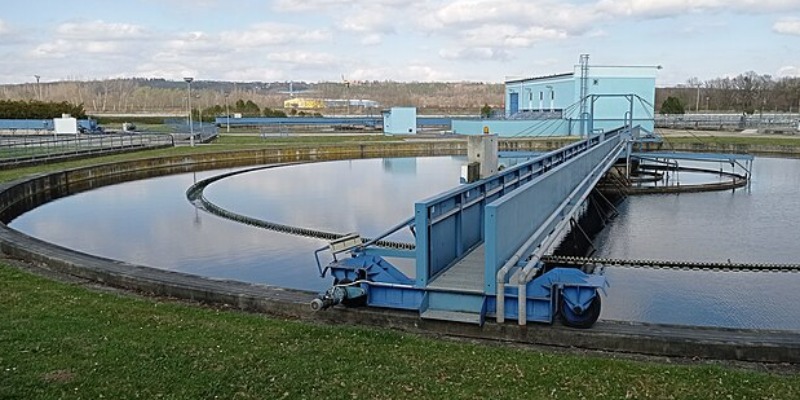
Photo Wikimedia