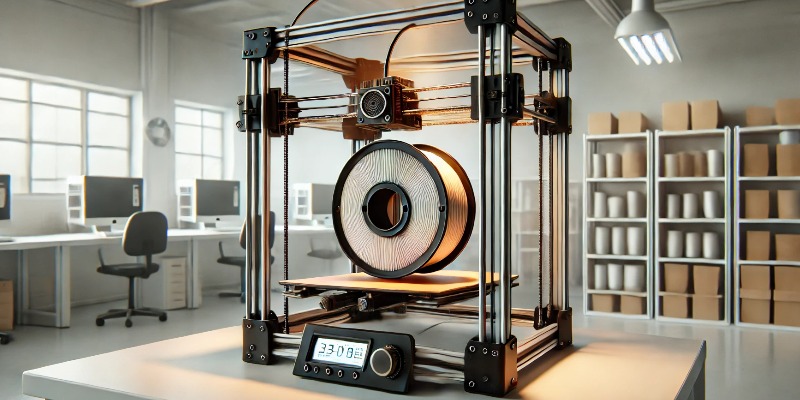





- Introduction to sustainable 3D printing
- The role of recycled polymers in additive manufacturing
- Differences between virgin and recycled polymers
- Technical properties of recycled materials in 3D printing
- Moulding issues with recycled polymers
- Technological innovations to improve regenerated materials
- Eco-friendly processes in additive manufacturing
- Practical applications of recycled materials in 3D printing
- Opportunities and obstacles in adopting sustainable materials
- Towards a greener future with 3D printing and the circular economy
Technical Differences, Environmental Benefits, and Innovations for a More Sustainable Future in Additive Manufacturing (3D)
By Marco Arezio
3D printing, also known as additive manufacturing, is revolutionizing the industrial landscape with its ability to produce customized objects and its potential to reduce waste.
However, the increasing use of this technology has raised concerns about its environmental impact, driving the sector toward more sustainable practices.
The adoption of recycled materials and eco-friendly processes has become essential to reduce plastic waste and promote a circular economy.
In this context, understanding the differences between using recycled and virgin polymers is crucial, as these directly influence the performance and applicability of materials in 3D printing.
Recycled Materials in 3D Printing
Polymers are the most widely used materials in 3D printing due to their versatility and adaptability. The adoption of recycled polymers is rapidly growing to address the environmental challenges posed by the production of virgin plastics.
Among the main recycled materials used in 3D printing are PLA, PETG, nylon, ABS, and other technical polymers, each with unique characteristics and applications.
Differences Between Virgin and Recycled Polymers
Despite their environmental advantages, recycled polymers present significant differences compared to virgin materials, which can affect print quality and the mechanical properties of the final product.
Chemical Composition
The chemical composition represents one of the key differences between virgin and recycled polymers. Virgin polymers consist of intact, undegraded polymer chains, ensuring optimal mechanical properties such as strength, elasticity, and thermal stability.
Recycled polymers, on the other hand, undergo molecular degradation during recycling processes like shredding and regranulation. This results in shorter polymer chains, compromising mechanical strength and thermal stability.
Mechanical Properties
The mechanical properties of recycled polymers are generally inferior to those of virgin materials. Virgin polymers provide superior mechanical strength, making them ideal for structural applications or high-performance requirements.
Recycled materials, in contrast, tend to be less durable and more brittle, making them suitable only for less critical applications. Additionally, the chemical degradation of recycled materials reduces elasticity, increasing fragility compared to virgin polymers.
Surface Quality
Products printed with virgin polymers exhibit better surface quality than those made with recycled polymers. Virgin materials produce smooth and uniform surfaces due to their purity and consistency.
In contrast, recycled polymers may contain impurities or exhibit micro-defects from recovery processes, resulting in rough or irregular surfaces during printing, often requiring additional finishing to achieve satisfactory results.
Behavior During Printing
Virgin polymers ensure optimal flowability during extrusion, providing dimensional precision and strong layer adhesion. Recycled materials, however, can exhibit variable viscosity, necessitating precise adjustments to printing settings.
Moreover, the reduced chemical quality of recycled materials can compromise layer adhesion, negatively impacting the overall robustness of the printed object.
Thermal Stability
Thermal stability is another critical aspect distinguishing virgin polymers from recycled ones. Virgin polymers are designed to maintain consistent thermal stability during printing, while recycled polymers tend to have reduced thermal tolerance.
This requires stricter temperature control during printing to avoid warping and defects.Analysis of Commonly Used Recycled Materials
Recycled PLA
Popular for its biodegradability and renewable origins, but recycled PLA has reduced thermal stability and mechanical strength, limiting its use in structural or high-performance contexts.
Recycled PETG
Derived from post-consumer plastic bottles, it offers good mechanical and thermal properties, though slightly inferior to virgin PETG. Ideal for functional parts and prototypes.
Recycled Nylon
Maintains excellent mechanical properties, though with reduced elasticity. Suitable for industrial applications such as technical components.
Recycled ABS
Faces challenges like property degradation during recycling. Additives are often used to improve fluidity and strength, making it suitable for decorative or non-structural applications.
Strategies to Enhance Recycled Materials
Addressing the challenges of using recycled polymers in 3D printing requires advanced strategies to close the gap with virgin materials.
Chemical Additives: Adding plasticizers, antioxidants, and reinforcing agents can improve ductility, thermal stability, and mechanical strength.
Blending with Virgin Polymers: Mixing recycled materials with a percentage of virgin polymers combines the best properties of both, balancing sustainability and performance.
Advanced Filtration and Separation: Removing contaminants ensures more homogeneous recycled materials, suitable for high-quality 3D printing.
Viscosity and Rheology Control: Techniques like crosslinking reactions or rheology modifiers enhance flowability and precision during printing.
Compatibilizers for Mixed Materials: Improve cohesion in recycled blends from diverse sources, ensuring better layer adhesion and product robustness.
Sustainable Applications and Future Prospects
The integration of recycled materials and eco-friendly printing techniques is already finding applications across various sectors:
Manufacturing: Production of lightweight, repairable components.
Construction: Use of recycled polymers for 3D-printed bricks.
Consumer Goods: Custom objects and accessories made with regenerated filaments.
As recycling technologies evolve and sustainable processes are adopted, 3D printing has the potential to become a cornerstone of the circular economy, reducing environmental impact and promoting responsible resource use.
The differences between virgin and recycled polymers pose challenges but also offer opportunities for innovation and improved production processes.
Conclusions
3D printing is not just a revolutionary technology but also a powerful tool to address the environmental challenges of our time.
By maximizing the potential of recycled materials and sustainable solutions, we can foster the adoption of more efficient production models and create a future where innovation and environmental respect are in perfect harmony.
© Reproduction Prohibited