- Structural characteristics of recycled PP and differences compared to polyethylenes for film
- Possible industrial applications of recycled PP in film form
- Mechanical limits and fragility of recycled PP in flexible packaging
- Polymer compatibility and criticality of PP–PE blends
- Role of compatibilizers and crosslinking in recycled PP for film
- Behavior of recycled PP in film extrusion and bubble stability
- Typical defects of recycled PP film and process causes
- Industrial strategies and design criteria for the conscious use of recycled PP for film
Applications of recycled polypropylene in flexible film: blends, compatibilization, extrusion and design criteria
Essay. Recycled Plastic Film. Chapter 6: Recycled PP for Film. Structural Limitations, Process Criticalities, and Industrial Strategies for Use
Polypropylene (PP) is one of the most widely used polymers globally for packaging applications, thanks to its combination of rigidity, thermal resistance, and good processability. However, its use in the form of flexible film, especially when recycled material is used, presents profoundly different characteristics and critical issues compared to the polyethylenes analyzed in the previous chapters.
Understanding the realistically possible applications of recycled PP for films and the intrinsic limits of the blends is a fundamental step to avoid inappropriate approaches and to valorise the material in an industrially sustainable way.
Unlike LDPE, LLDPE, and HDPE, PP has a molecular structure that gives the material greater rigidity and lower elastic deformation capacity. This characteristic, which in virgin material represents an advantage in many rigid or semi-rigid applications, becomes a critical factor when attempting to transform PP into thin, flexible films. In the case of recycled PP, these critical issues are further amplified by the variability of the material and the presence of polymer fractions with different characteristics.
Possible applications of recycled PP in film form must therefore be identified starting from a realistic evaluation of the material's properties.
Technical films, semi-rigid bags, protective casings, and applications where flexibility is not a primary requirement are the main areas of use. In these contexts, recycled PP can offer advantages in terms of thermal resistance, structural rigidity, and dimensional stability, especially when the film is intended to operate at higher temperatures than those typical of polyethylenes.
A particularly interesting application area is films for industrial and logistics packaging, where recycled PP can be used to make bags and liners with good mechanical and chemical resistance. In these applications, the material is not subjected to high elastic deformations, but must guarantee strength and crush resistance.
The intrinsic rigidity of PP can therefore be exploited as a functional element, rather than as a limitation.

However, switching from virgin PP to recycled PP introduces a number of limitations that must be carefully considered.
The main ones involve reduced elongation at break and material toughness. Recycled PP tends to exhibit greater brittleness than virgin PP, especially when the source material includes materials subjected to repeated thermal cycling or oxidative stress. This brittleness limits the material's use in applications requiring significant deformation capacity or impact resistance.From a blending perspective, recycled PP is often combined with other polymers to improve some of its performance. However, compatibility between PP and other materials represents one of the main technical limitations. Unlike polyethylenes, which exhibit good mutual compatibility, PP exhibits a greater tendency to phase separation when blended with different polymers. This phenomenon results in non-uniform phase dispersion and a reduction in the film's mechanical properties.
Blends of recycled PP with polyethylenes, for example, can offer improved flexibility, but they also introduce compatibility and melt stability issues. Without specific interventions, these blends tend to present separate domains that act as weak points in the material. From a finished product perspective, this translates into a greater likelihood of breakages, surface defects, and extrusion instability.
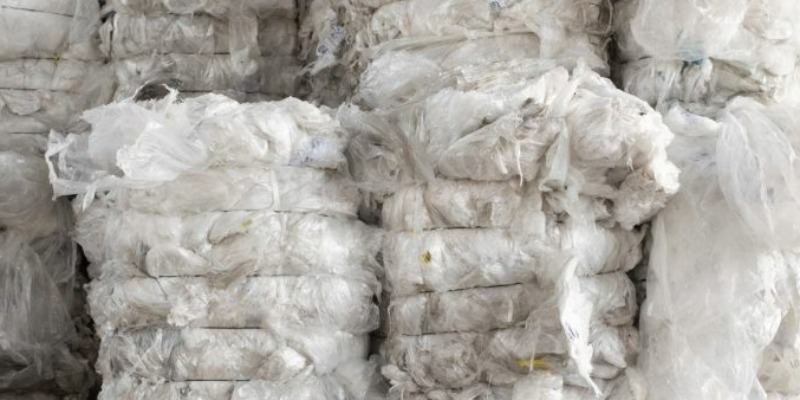
Another limitation of recycled PP blends is the variability of the input material. Post-consumer PP comes from extremely diverse applications, including rigid packaging, BOPP film, fibers, and technical products. This heterogeneity is reflected in the characteristics of the recycled material and makes it difficult to obtain blends with consistent behavior. Even small variations in the flow composition can have significant effects on the film's performance.
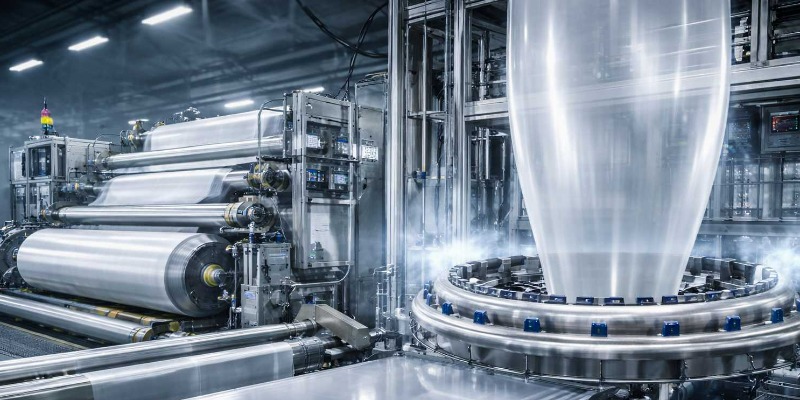
From a processing standpoint, recycled PP film requires more stringent processing conditions than polyethylenes. The processing window is generally narrower, and the material is more sensitive to variations in temperature and extrusion speed. In blends, this sensitivity can be further accentuated, increasing the risk of bubble instability and film defects.....
© Reproduction Prohibited