- Strategic role of characterization in the recycling of post-consumer plastics
- Thermal memory of recycled polymers: use history, degradation and regeneration potential
- DSC analysis in plastic recycling: thermal transitions, crystallinity and complex polymer blends
- TGA analysis of plastic recyclates: thermal stability, inorganic residues and degradable additives
- FTIR spectroscopy in plastic recycling: polymer identification and contamination diagnostics
- NMR and molecular structure of recycled polymers: chain length, copolymers and structural degradation
- Analysis of organic and inorganic contamination in recyclates: VOCs, mineral particles and impacts on the process
- Mechanical and rheological tests of recycled materials: critical parameters for quality, processability and technical uses
From the thermal memory of polymers to rheology in extrusion: how DSC, TGA, FTIR, NMR, mechanical testing and contamination control define the industrial performance of secondary plastic raw materials
Essay. Recycling of Post-Consumer Plastics. Chapter 7: Characterisation of Materials in Plastic Recycling. Thermoanalytical, Spectroscopic and Mechanical Analyses to Govern Recyclate Quality
In the plastic recycling chain, material characterisation is the crucial bridge between sorting and transformation. It is the moment when the material, no longer a waste but not yet a fully defined industrial resource, is questioned in its deepest nature: its molecular identity, its thermal history, the level of its contamination, its mechanical behaviour and its regeneration potential. The quality of the recyclate is not determined solely by the purity of the incoming stream, nor by the efficiency of the sorting technologies: it is the result of an accurate analysis that makes it possible to understand whether the polymer, after being collected, sorted and washed, still possesses the characteristics required to compete, at least partially, with virgin plastics.
In its most advanced segments, the recycling industry can no longer rely on the mere empirical experience of operators or on visual assessment of the material. The complexity of post-consumer streams, the heterogeneity of sources, the presence of additives and invisible contaminants, and the thermal and oxidative degradation that packaging undergoes during its service life all require analytical tools capable of delivering a precise and reproducible picture. Characterisation is not a technical ritual: it is a process of knowledge, without which it is impossible to guarantee stable properties of the regenerated pellets, reliability in processing and consistency with the expectations of the end-use sectors.

By its very nature, recyclate is a material that carries a memory.
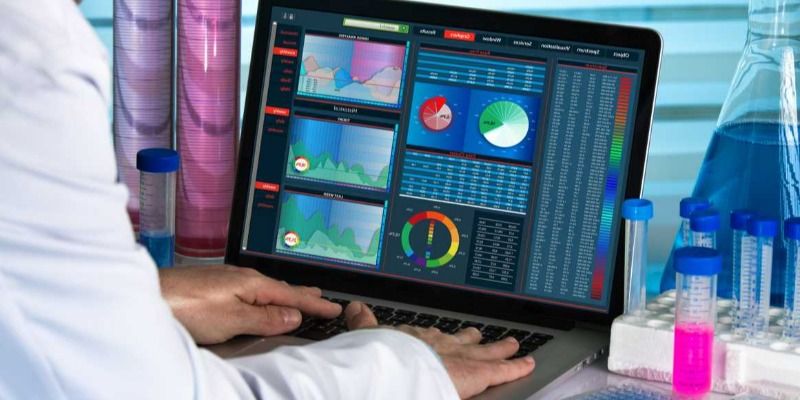
Every thermal cycle, every exposure to light, every contact with chemicals, every mechanical compression and every surface contamination alters its molecular structure, even when these changes are not immediately visible. Analytical determinations such as differential scanning calorimetry (DSC), thermogravimetric analysis (TGA), infrared spectroscopy (FTIR) or nuclear magnetic resonance (NMR) have the function of reading this memory, recognising the material’s history and predicting its future behaviour. They are tools that make it possible to trace back the transformations undergone by the polymer and provide recyclers with essential information on what it will be possible to obtain in the subsequent stages.....© Reproduction Prohibited