- Phosphorus recovery from sewage sludge: why it's strategic for the circular economy
- Phosphorus as a critical raw material: geopolitical risks and European dependence
- How sewage sludge is formed and why it contains recoverable phosphorus
- Chemical speciation of phosphorus in sludge: forms, bonds and extraction difficulties
- Struvite precipitation: technology, industrial benefits, and fertilizer quality
- Thermal recovery of phosphorus from sludge ash: processes and technical issues
- Emerging technologies for selective phosphorus extraction: bioleaching, membranes and electrochemistry
- Contaminants in sewage sludge: heavy metals, microplastics and persistent compounds
- Energy balances, LCA and environmental sustainability of phosphorus recovery
- European regulations, the recycled fertilizer market, and the future of recovered phosphorus
From Wastewater Treatment to Sustainable Fertilizer Production: Chemical, Thermal and Biological Processes for Phosphorus Recovery from Sewage Sludge and Their Role in the Ecological Transition
Author: Marco Arezio. Expert in circular economy, polymer recycling and industrial plastic processing. Founder of the rMIX platform dedicated to enhancing secondary raw materials.
Date: April 8, 2026
Phosphorus as a Critical and Non-Substitutable Resource
Phosphorus is a cornerstone element for life and global agricultural productivity, yet its availability represents one of the most underestimated challenges of the modern industrial system. Embedded in fundamental biological cycles—from cellular energy (ATP) to DNA structure—phosphorus cannot be replaced or synthetically replicated through industrial chemical processes. This clearly distinguishes it from other strategic nutrients, such as nitrogen.
From an industrial perspective, almost all phosphorus used today comes from the extraction of phosphate rocks. However, these resources are finite and concentrated in a limited number of geopolitical areas, creating structural dependency for Europe. Market dynamics, combined with growing global demand, make phosphorus prices volatile and potentially critical for food security.
In this context, recovering phosphorus from secondary flows is no longer an optional environmental strategy, but a strategic necessity. Sewage sludge emerges as one of the most relevant sources, both in terms of quantity and continuity of supply.
Origin and Composition of Sewage Sludge
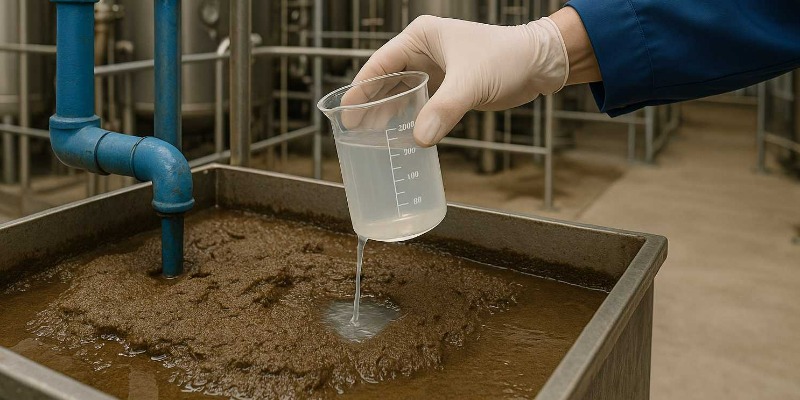
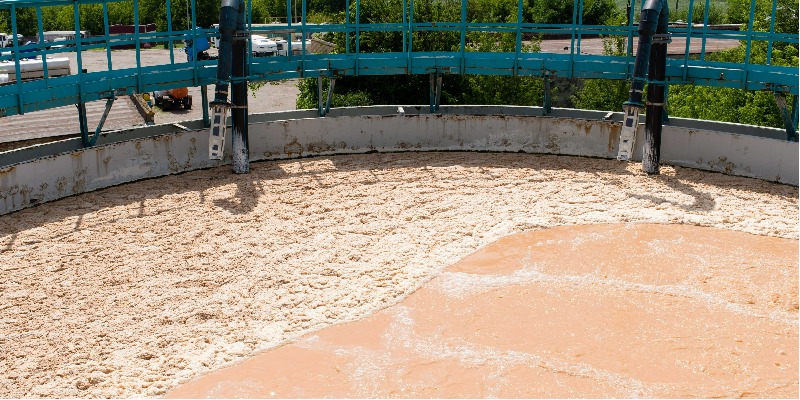
Sewage sludge is the direct result of municipal and industrial wastewater treatment processes, where nutrients are removed through integrated biological and chemical mechanisms. During activated sludge treatment, microorganisms assimilate phosphorus, storing it in the biomass as intracellular polyphosphates.
At the same time, in chemical precipitation systems, phosphorus is removed by adding iron or aluminum salts, converting it into insoluble compounds. This dual mechanism creates a highly heterogeneous matrix, where phosphorus is distributed between organic and inorganic fractions.
From a physico-chemical standpoint, sludge consists of a complex mixture of water (up to 95%), organic matter, mineral salts and contaminants. Phosphorus content, expressed on a dry basis, can reach significant values (2–6%), making sludge a true “urban mine.”
Differences in Phosphorus Forms and Recovery Limitations
Phosphorus recovery is strongly influenced by its chemical form, or speciation. In sludge, phosphorus exists in three main categories: soluble phosphorus (orthophosphates), metal-bound phosphorus (Fe, Al, Ca) and organic phosphorus.
Orthophosphates are the easiest fraction to recover, while forms bound to iron and aluminum exhibit high thermodynamic stability and low solubility. This represents one of the main technological barriers, as these compounds require specific treatments to be converted into recoverable forms.
Anaerobic digestion can partially modify phosphorus distribution, releasing a soluble fraction, but it is often insufficient to ensure efficient recovery. Therefore, more intensive strategies such as acid solubilization or thermal treatments are used to break the most stable chemical bonds.
Engineering of Struvite Precipitation
Struvite precipitation is one of the most established processes for phosphorus recovery. Chemically, it involves a controlled crystallization reaction between magnesium, ammonium and phosphate ions, resulting in a stable compound that can be used as fertilizer.
The complexity of the process lies in controlling operational parameters. The pH must be maintained under alkaline conditions, generally between 8 and 9, while the molar ratio between reagents must be carefully balanced. Supersaturation leads to crystal nucleation, followed by controlled growth.
Industrial reactors, often fluidized-bed systems, are designed to promote the formation of crystals of appropriate size, improving separation and final product quality. The resulting struvite offers excellent agronomic characteristics: slow nutrient release, high bioavailability and reduced environmental impact.
Thermal Recovery of Phosphorus from Ashes
When sludge has a high contaminant content or particularly complex composition, thermal treatment becomes an effective solution. Incineration drastically reduces sludge volume and concentrates phosphorus in the ashes.
These ashes contain phosphorus in a more accessible form but also heavy metals and other contaminants. Recovery occurs through acid leaching or advanced thermochemical treatments that selectively separate phosphorus.
One of the most critical aspects is the energy balance. Incineration requires significant energy input, but this can be partially offset by energy recovery from the combustion of the organic fraction.
Emerging Technologies for Selective Extraction
Emerging technologies aim to improve the efficiency and sustainability of phosphorus recovery. Bioleaching uses microorganisms to solubilize phosphorus, reducing the need for chemical reagents. Electrochemical processes enable selective separation based on potential gradients, while advanced membranes isolate specific ionic species.
These technologies, still under development, offer significant advantages in terms of selectivity and contaminant reduction. However, their industrial implementation requires further optimization.
Management of Contaminants in Sludge
One of the most critical aspects of phosphorus recovery is the presence of contaminants. Sludge may contain heavy metals, microplastics and persistent organic compounds, which must be removed to ensure product safety.
Purification technologies include chemical, thermal and physical processes, often combined. The choice depends on the type of contaminants and the required purity level.
Energy Balances and LCA Analysis
Life Cycle Assessment (LCA) is a key tool for evaluating sustainability. Processes must be analyzed across the entire lifecycle, from sludge treatment to fertilizer production.
Struvite-based technologies generally have lower environmental impact, while thermal processes require careful management of emissions and energy consumption.
Industrial Integration and Circular Models
Integrating recovery systems into treatment plants represents a major evolution. Wastewater treatment plants are no longer just treatment facilities but become resource production platforms.
This approach reduces operational costs and creates new economic opportunities, fostering circular value chains.
European Regulations and Future Development
European regulations are increasingly promoting phosphorus recovery by introducing standards for recycled fertilizers and limiting direct sludge application in agriculture.
In the near future, phosphorus recovery will become a fundamental component of sustainable resource management and ecological transition.
Conclusion
Phosphorus recovery from sewage sludge represents one of the most advanced frontiers of the circular economy. Transforming complex waste into a strategic resource demonstrates how technological innovation and sustainability can converge into concrete solutions.
FAQ
Why is phosphorus considered a critical raw material?
Phosphorus is considered critical because it is essential for agriculture and soil fertility, yet its natural reserves are limited and concentrated in a few regions worldwide. Europe relies heavily on imports of phosphate rock, making it vulnerable to geopolitical risks, price volatility and supply disruptions. Recovering phosphorus from sewage sludge reduces this dependency and strengthens resource resilience.
Why does sewage sludge contain phosphorus?
Sewage sludge contains phosphorus because this nutrient is removed from wastewater during treatment processes. Microorganisms assimilate part of it during biological treatment, while another portion is chemically precipitated using iron or aluminum salts. As a result, phosphorus accumulates in sludge.
What is the easiest form of phosphorus to recover?
Soluble orthophosphates are the easiest form to recover because they are already dissolved and can be captured through precipitation or separation processes. In contrast, phosphorus bound to metals such as iron or aluminum requires more intensive treatments.
What is struvite and why is it important?
Struvite is a crystalline compound composed of magnesium, ammonium and phosphate. It is important because it allows phosphorus to be recovered in a stable, slow-release fertilizer form with high agronomic value.
Is phosphorus recovery from ash more effective than struvite?
Effectiveness depends on the context. Struvite recovery is more suitable for soluble phosphorus streams, while ash-based recovery is better for heavily contaminated sludge or systems with thermal treatment.
Which contaminants are most critical?
Heavy metals, microplastics and persistent organic pollutants are the main contaminants. Their removal is essential to ensure safe reuse.
Can recovered phosphorus be used directly in agriculture?
In some cases, such as struvite, it can be used directly if it meets quality standards. Other forms may require further purification.
Is phosphorus recovery energy-efficient?
It depends on the technology. Struvite processes are generally more energy-efficient, while thermal processes require higher energy input but may recover energy from sludge.
What are the industrial benefits of integration?
Integration transforms wastewater plants into resource recovery facilities, reducing costs and creating new economic opportunities.
What is the future of phosphorus recovery in Europe?
It will likely become a standard practice, driven by regulations, sustainability goals and the need for resource independence.
Sources
European Commission – Critical Raw Materials List (2023)
European Sustainable Phosphorus Platform (ESPP)
IWA – Phosphorus Recovery Reports
Metcalf & Eddy – Wastewater Engineering
European Environment Agency (EEA)
US EPA – Biosolids and Nutrient Recovery
Image under license
© Reproduction Prohibited