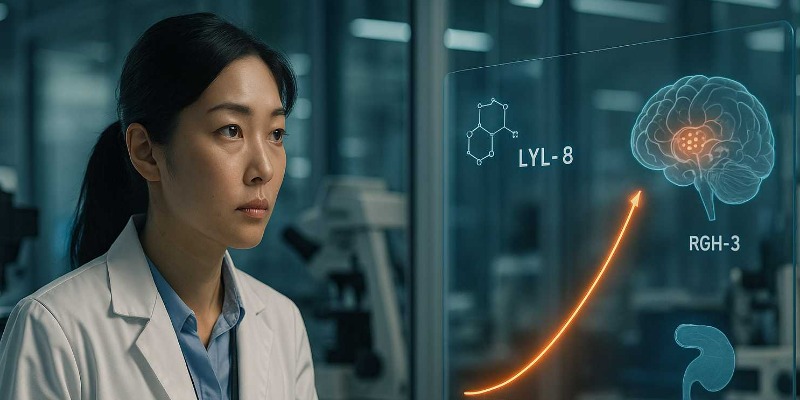
In the heart of Osaka, among hyper-technological laboratories and urban landscapes sculpted by winter light, a team of young scientists is about to revolutionize world neuropharmacology. After months of feverish work, Japanese researchers led by Aya Nakamura announce the discovery of LYL-8: a molecule capable of silencing the most destructive impulses of the amygdala, the “anger center” in the human brain.
While the team experiences the exhilaration of discovery and the weight of its responsibilities, the echo of an unprecedented question begins to spread in the outside world: what happens when a simple pill can tame anger, tame entire populations, perhaps change the course of human coexistence? The laboratory becomes the scene of scientific and ethical tensions, between data that defy understanding and the first signs of a global race for information.
The night that follows the discovery is full of omens: behind every monitor, every dialogue, every reflection on the windows of the city, one senses that the real challenge is just about to begin—a challenge that will touch not only the synapses, but the very freedom of being human.
A team of Japanese scientists announces the discovery of the LYL 8 molecule, capable of inhibiting negative impulses in the amygdala; financial markets, governments, and bioethicists begin to question the impact of a society without anger.
Stories. Osaka unveils LYL 8: the first “anti-anger pill.” Chapter 1 – The Flash in the Laboratory
Osaka, Suita district, January 14, 2025.
The winter sun, low on the horizon, slips between the city’s glass and steel skyscrapers in slow, oblique paths. Each ray, bouncing off polished surfaces, scatters into dazzling fans of light that sweep over asphalt, trams, and zinc rooftops; when it strikes the mirrored facade of the Kaito Mori Advanced Neuropharmacology Center, the reflection stretches out like a blade of liquid metal, touching the thin clouds above.
On the fifteenth floor, the city pulses with its usual commotion: intermittent car horns, bicycle bells, vending machine speakers inviting people to buy hot drinks despite the biting cold. Yet, descending by elevator to the basement, the din dissolves into a whisper. Three levels underground, time seems suspended; only a continuous hum, soft yet deep, reveals that the technological heart of the building is awake and alert. Huge air filters draw in atmosphere, passing it through ultra-fine membranes before releasing it again: twelve complete exchanges every minute—enough to prevent a single speck of dust from settling on the delicate equipment, or a stray bacterium from infiltrating the cell cultures.
The laboratory’s tempered glass door opens with a barely perceptible sigh, as if a draft of wind had drawn back an invisible curtain.
Aya Nakamura enters in silence, her step light yet assured. Her white lab coat falls sharply over her shoulders; the university’s magnetic badge reflects the cold LED light, calibrated to mimic the sun’s spectrum and avoid stressing the neural cultures. Around her neck, a strand of black pearls inherited from her mother—the only personal touch in a space dominated by steel and glowing plasma.She brushes her thumb against her earpiece and speaks softly:
— Natsumi, how are we with the “K series”?
Amidst columns of chromatographs and robotic arms reminiscent of gigantic stovetops, Natsumi Sugawara barely looks up from a display:
— Three minutes to the final deposition, then I’ll cross-check with the electrical traces.
The phrase is brief, almost military; yet it reflects work involving twenty precision machines and dozens of parameters. On an anti-static bench, tiny pipetting robots—no larger than pastel-colored bandages—move above orderly rows of multi-well plates. In their micro-reservoirs, they hold drops of amber-reflected liquid: LYL-8, the eighth version of a protein fragment that the lab has modified in 172 different ways to find the most stable formula. Each robotic arm moves in a measured rhythm, somewhere between a classical dancer and an industrial press; the ensemble reminds Aya of an ultramodern ballet with no music, only the regular hiss of pistons and the soft click of Teflon tips rising and falling.
Buy the English PDF of the book for €7.90
© Reproduction Prohibited