- History of Neoprene: from the first discoveries to industrial use
- What is Neoprene: Structure and Chemical Definition
- Properties and distinctive characteristics of Neoprene
- Neoprene production methods: emulsion polymerization
- Applications of Neoprene in industry and commerce
- How to recycle Neoprene: challenges and eco-friendly solutions
- Neoprene vs EPDM Comparison: Why They Are Confused
- Main differences between Neoprene and EPDM
- Advantages of Neoprene in various sectors: from automotive to sports
- SEO and disclosure aspects: why talk about Neoprene today
Discover how neoprene was created, what its properties are, how it is produced and recycled, and why it is often confused with EPDM
by Marco Arezio
Neoprene is one of the best-known and most iconic synthetic materials of the 20th century, stemming from chemical research aimed at discovering artificial rubber with technical characteristics superior to natural rubber. Its historical roots date back to the 1930s, when the growing demand for rubber—combined with supply difficulties and the high costs of natural rubber—drove the chemical industry to identify synthetic alternatives.
In 1930, researchers at DuPont, led by scientist Julius Arthur Nieuwland and chemist Wallace Hume Carothers, developed and patented for the first time a compound known as polychloroprene, initially marketed as “DuPrene.” Just a few years later, the name was changed to “Neoprene,” destined to become synonymous with quality and durability. Thanks to an improved polymerization process and an ever-growing understanding of its potential, neoprene began to be used in numerous industrial fields, including the automotive, aeronautical, construction, and technical apparel sectors.
Neoprene’s historical importance also lies in its role as the first commercially successful synthetic elastomer after the discovery of butadiene rubber. This breakthrough dramatically transformed many production processes and contributed to reshaping the industrial supply chain of various sectors. Today, neoprene remains an essential material, although its popularity has been accompanied by other synthetic rubbers, such as EPDM or silicone.
Chemical Definition and Main Characteristics
Molecular Structure
From a chemical standpoint, neoprene is a synthetic polymer of chloroprene, namely 2-chloro-1,3-butadiene. It is obtained through an emulsion polymerization process, during which chloroprene monomer molecules bond together in long chains. This molecular bond gives the final rubber high chemical and mechanical resistance.
The presence of the chlorine atom in the polymer’s molecular structure helps improve its thermal stability and resistance to oxidation, making neoprene more durable than many other synthetic rubbers. Additionally, the introduction of crosslinks within the polymer structure (known as cross-linking) further increases its resistance to abrasion and degradation phenomena.
Physical and Chemical Properties
The main properties that make neoprene a highly versatile material are:
- Chemical Resistance: Neoprene is resistant to many chemical agents, including oils, fats, hydrocarbons, and moderate solvents.
- Thermal Stability: The operating temperature range generally extends from about -40°C to +120°C (sometimes up to 135°C, depending on the formulation).
- Good Elasticity: Although not on par with other elastomers like silicone, neoprene maintains excellent elasticity even at relatively low temperatures.
- Reduced Flammability: Compared to other synthetic rubbers, neoprene is less prone to rapid burning.
- Mechanical Properties: It has good tensile and tear strength, along with excellent vibration dampening capacity.
These chemical-physical characteristics, together with good workability, have contributed to neoprene’s success in a wide range of applications, making it a benchmark material in many industries.
Neoprene Production Processes
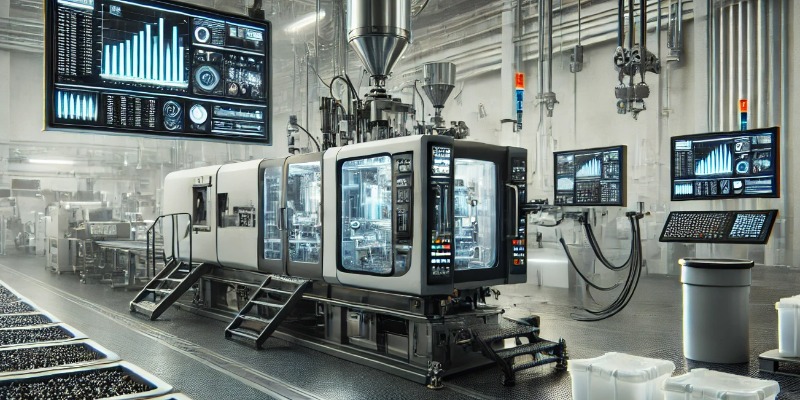
The industrial process for producing neoprene can be summarized in several fundamental phases. Although variations exist depending on the manufacturer, the basic procedure remains the same and includes:
- Chloroprene Synthesis: The base monomer, chloroprene (2-chloro-1,3-butadiene), is synthesized starting from butadiene and chlorine. This chemical reaction generally takes place in a controlled environment, in the presence of catalysts and moderate temperatures.
- Emulsion Polymerization: The chloroprene monomer is emulsified in water with the addition of a surfactant. In the presence of an initiator, the chloroprene polymerizes, forming long chains.
- Coagulation and Separation of the Polymer: Once polymerization is complete, the polymer (neoprene) is coagulated, separated from the water and reaction residues, then dried to remove excess moisture.
- Formulation and Compounding: In the next phase, the raw polymer is often mixed with additives (antioxidants, flame retardants, curing agents, pigments) to improve or customize its properties depending on the final application.
- Vulcanization: The resulting compound is finally subjected to vulcanization processes (commonly sulfur-based or using other agents), creating crosslinks between polymer chains, thereby increasing stability and resistance.
The entire process requires strict quality control and environmental compliance, especially in phases involving potentially hazardous chemicals such as chlorine or butadiene.
Industrial and Commercial Applications
Automotive and Transportation Sector
Neoprene is widely used in the automotive sector, where it is utilized for gaskets, flexible hoses, bellows, and other sealing components. Its resistance to oil and fuel, together with its stability under thermal fluctuations, makes it ideal for parts exposed to mechanical stress and aggressive chemical agents.
Likewise, in the railway and aerospace sectors, neoprene is used in door and window seals, suspension systems, and other components requiring high performance and long-lasting durability.
Construction Industry
In the construction sector, neoprene is mainly employed as a joining and insulation material: from expansion joints to seals for windows and curtain walls. Being an excellent thermal and acoustic insulator, it is often used to dampen vibrations and noise, improving indoor comfort. Additionally, its resistance to weather conditions such as rain and sunlight ensures durability over time.
Technical Sports Apparel
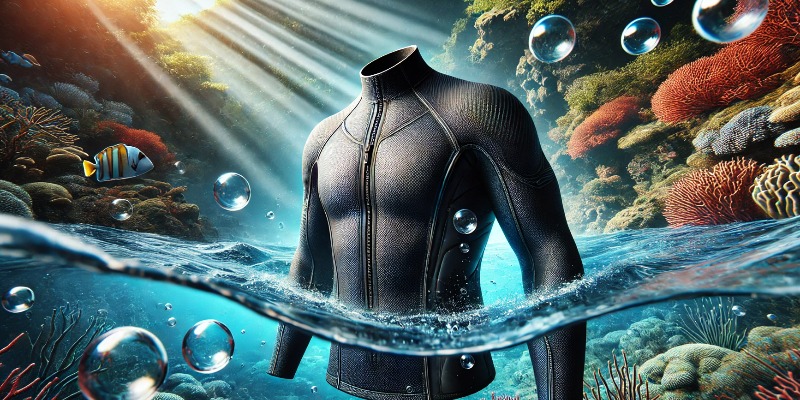
One of the most recognized uses of neoprene is in the manufacture of wetsuits for scuba diving, surfing, and other water sports. In this area, neoprene offers:
- Thermal Insulation: Thanks to the presence of microscopic air bubbles in the material, reducing heat loss.
- Water Resistance: The closed-cell structure prevents water from penetrating.
- Elasticity: Facilitates movement, ensuring comfort during sporting activities.
In addition to wetsuits, neoprene is used in the production of knee pads, elbow pads, and other sports protective gear for its ability to absorb impacts and provide joint support.
Other Sectors
Neoprene is also widely used in the production of conveyor belts, protective tarps, cable sheathing, mechanical components for industrial machinery, footwear, and various accessories (cases for electronic devices, laptop covers, etc.). Its versatility makes it particularly appreciated in applications requiring a combination of resistance, stability, waterproofing, and flexibility.
Neoprene Recycling and Sustainability
Like many other synthetic elastomers, neoprene presents significant challenges in terms of recycling and environmental sustainability. The presence of chlorine makes chemical recycling more complex, while vulcanization introduces crosslinks that are difficult to “break” and reuse. However, in recent years, some strategies and technologies have been developed to reduce environmental impact:
- Mechanical Recycling: One of the most common methods consists of grinding or granulating neoprene scraps (e.g., production offcuts). This granulated material can be partially reused as filler in new rubber compounds.
- Chemical Recycling (Devulcanization): There are chemical or thermal processes aimed at breaking the crosslinks formed during vulcanization in order to recover part of the polymer. However, these processes can be expensive and require high energy consumption.
- Creative Reuse (Upcycling): In recent years, the practice of reusing neoprene sheets or trimmings to create new products—such as bags, fashion accessories, cushions, and coverings—has gained popularity. This approach extends the material’s life cycle, though it is not a true industrial recycling method.
With growing environmental awareness driving the search for more sustainable materials, several manufacturers have begun exploring bio-based alternatives or less impactful polymerization processes. However, for now, traditional neoprene remains in widespread use due to its technical performance.
Comparison Between Neoprene and EPDM: Why They Are Sometimes Confused and How They Differ
EPDM: Definition and Characteristics
EPDM (Ethylene Propylene Diene Monomer) is a synthetic elastomer primarily composed of three monomers: ethylene, propylene, and a small percentage of diene, which allows for vulcanization. EPDM’s properties include:
EPDM is widely used in construction, for waterproof roofing systems, and in automotive components that do not come into contact with fuels (e.g., door and window seals).
Reasons for Confusion Between Neoprene and EPDM
Confusion between neoprene and EPDM can arise for various reasons:
Key Differences
Despite the apparent similarities, there are substantial differences:
Conclusions
Neoprene, first discovered in the 1930s as a synthetic alternative to natural rubber, has carved out a major role in numerous industrial sectors thanks to its chemical, thermal, and mechanical resistance. This synthetic elastomer stands out for its versatility: from automotive to construction, from sports apparel to more specialized industrial applications.
The ecological challenge associated with its recycling, while critical, has found some new avenues of resolution through mechanical, chemical, and creative reuse processes. Within the landscape of synthetic rubbers, neoprene is often confused with other materials like EPDM, but their main difference lies in their distinct molecular compositions and, consequently, their varying chemical and physical properties.
As circular economy, environmental sustainability, and the pursuit of low-impact solutions continue to gain momentum, it is likely that neoprene production processes will see further improvements, along with innovations in recycling technologies. Despite the emergence of new polymers and bio-based alternatives, neoprene remains today a reference material in sectors requiring high performance and long-term reliability, confirming its status as one of the cornerstones of polymer engineering.
© Reproduction Prohibited
Essential Bibliography
DuPont: Historical developments and original patents (1930–1950).
Carothers, W.H., & Nieuwland, J.A.: Pioneering work on chloroprene synthesis.
ASTM (American Society for Testing and Materials): Standards related to testing and specifications for synthetic rubbers.