- The global impact of microplastics
- Origin, classification and exposure routes of M/NPs
- Evidence of human brain accumulation
- Crossing the blood-brain barrier
- Toxic mechanisms in the nervous system
- Link to Alzheimer's, Parkinson's and ALS
- Role of the gut-brain axis and the microbiota
- Experimental models and preclinical data
- Methodological limitations and research perspectives
- Implications for public health
Microplastics and neurodegeneration: Analysis of toxic mechanisms and implications for Alzheimer's, Parkinson's, and ALS
by Marco Arezio
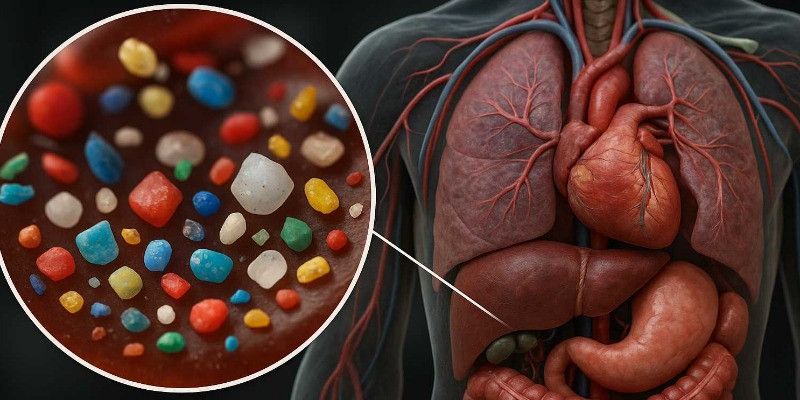
In recent years, the presence of microplastics and nanoplastics (M/NPs) in the environment has been recognized as one of the most complex and pervasive challenges to human healt. These particles, invisible to the naked eye and now widespread in every ecosystem, enter the body through water, food, and air, with the potential to accumulate in tissues and interfere with delicate biological processes.
At the same time, neurodegenerative diseases – Alzheimer’s, Parkinson’s, Amyotrophic Lateral Sclerosis (ALS) and other forms of brain degeneration – are rapidly increasing globally, representing a growing health, social and economic problem.
Initial scientific evidence shows that M/NPs can reach the brain, cross the blood-brain barrier, and activate toxic processes that coincide with the typical mechanisms of neurodegenerative diseases. This article critically reviews current knowledge, biological hypotheses, and future research prospects, with a focus on public health implications.
Microplastics, tiny fragments of synthetic polymers, often less than 5 millimeters in size, arise from the fragmentation of larger objects or are directly produced in this form for industrial and commercial purposes. Their presence affects not only marine ecosystems, but also soil, the atmosphere, and the food chain. Constantly passing through natural cycles, these particles inevitably reach the human body, raising questions about their interaction with complex biological systems such as the nervous system.
Origin, classification and exposure routes of M/NPs
Primary microplastics are intentionally created small, such as in cosmetic microbeads, while secondary microplastics arise from the progressive degradation of plastic waste exposed to solar radiation, mechanical stress, or atmospheric agents. Nanoscale particles, which are even smaller, can form through further fragmentation.
The main routes of entry into the body are ingestion of contaminated water and food, inhalation of airborne dust, and, to a lesser extent, skin contact. Once penetrated, particles can accumulate in various areas, including the lungs, liver, and kidneys, with recent studies reporting their presence in the human brain as well.
Evidence of human brain storage
The identification of microplastics in brain tissue represents one of the most surprising and concerning discoveries. Postmortem analyses have revealed significant quantities of plastic particles in the brains of dementia patients, in higher concentrations than in other organs. While a causal relationship cannot yet be established, the mere presence of these particles suggests that the central nervous system is not immune to this type of contamination.
The blood-brain barrier (BBB) is a highly selective biological filter, designed to protect the brain from external agents. However, nanosized particles can cross it through several mechanisms: endocytic transport, impaired cell junctions during inflammatory states, passage along the olfactory pathway from the nose to the olfactory bulb, or via immune cells that transport the particles like Trojan horses. The size, surface charge, and shape of the particles determine the likelihood of crossing this protective barrier.
Toxic mechanisms in the nervous system
Once in the brain, microplastics can trigger harmful processes through several pathways:
- Oxidative stress: uncontrolled production of free radicals that damage membranes, proteins, and neuronal DNA.
- Neuroinflammation: activation of glial cells with release of pro-inflammatory cytokines that chronicize brain inflammation.
- Mitochondrial dysfunction: energetic alterations that compromise neuronal vitality.
- Neurotransmitter imbalance: interference with dopamine, acetylcholine, and other mediators essential for synaptic function.
- Microvascular obstruction: physical presence of particles in the cerebral capillaries, resulting in local ischemia.
- Synergistic effect with other environmental toxicants: ability to transport heavy metals or pesticides, amplifying the overall toxicity.
These processes largely coincide with mechanisms already known to be central to neurodegenerative diseases.
Link to Alzheimer's, Parkinson's and ALS
Neurovegetative diseases have multifactorial origins, but they share common ground with the processes activated by microplastics.
- Alzheimer's: Oxidative stress and neuroinflammation can promote the deposition of beta-amyloid and hyperphosphorylated tau.
- Parkinson's disease: The vulnerability of dopaminergic neurons may be aggravated by ROS and a pro-inflammatory microenvironment.
- ALS: mitochondrial and axonal alterations may be exacerbated by chronic exposure to plastic particles.
Although definitive epidemiological evidence is lacking, the convergence of pathogenic mechanisms suggests that microplastics may act as an additional or accelerating risk factor.
Role of the gut-brain axis and the microbiota
In addition to directly entering the brain, microplastics can affect neurological health through the gut-brain axis. Once ingested, they alter the composition of the microbiota, causing dysbiosis and increasing intestinal permeability. This allows inflammatory molecules to enter the bloodstream, fueling a state of systemic inflammation that can compromise the blood-brain barrier and amplify the brain's vulnerability.
Experimental models and preclinical data
Cell culture studies have shown that microplastics induce neuronal apoptosis and oxidative stress, while animal models have shown brain accumulation and cognitive deficits after prolonged exposure. Recent experiments have even documented the possibility of capillary micro-obstructions, resulting in neuronal ischemia. Although the doses used in laboratories often exceed those realistic for humans, these results demonstrate the biological plausibility of neurological damage from microplastics.
Methodological limitations and research perspectives
Research in this field is hampered by numerous challenges: the risk of contamination during experiments, difficulty detecting particles in tissues, a lack of standardized protocols, and the absence of longitudinal studies in humans. Future priorities should include the development of more sensitive techniques for detecting microplastics, long-term epidemiological studies, and experimental models more closely aligned with real-world exposure conditions.
Implications for public health
If the connection between microplastics and neurodegenerative diseases were confirmed, the consequences for public health would be enormous. Prevention should be based on policies to reduce plastic use, improve water and air filtration techniques, develop biodegradable alternative materials, and implement targeted education programs. Research will need to integrate neuroscience, environmental toxicology, and public health to address this emerging global challenge.
Conclusion
Current evidence shows that microplastics are not only an environmental problem but also a potential neurological risk factor. Their accumulation in the brain, their ability to cross biological barriers, and the activation of toxic processes consistent with those of neurodegenerative diseases suggest a link to Alzheimer's, Parkinson's, and ALS. However, conclusive epidemiological evidence is lacking: more research is needed to clarify the true extent of this phenomenon. In the meantime, reducing microplastic contamination remains an essential preventative strategy for brain health as well.
© Reproduction Prohibited
Sources
- Nihart AJ et al., Bioaccumulation of microplastics in deceased human brains, Nature Medicine, 2025.
- Sun J et al., Microplastic/nanoplastic and neurological health, 2024.
- Zheng Y et al., Nanoplastics and microplastics on the central nervous system, 2024.
- Gecegelen E. et al., A novel risk factor for dementia: chronic microplastic, 2025.
- Weiss A. et al., The impact of microplastics on neurodegenerative diseases, 2024.
- Eisen A. et al., Nanoplastics and Neurodegeneration in ALS, 2024.
- Huang H. et al., Microplastics in the bloodstream can induce cerebral microvascular obstruction, 2025.
- Liu S. et al., Neurotoxicities induced by micro/nanoplastics: A review, 2024.
- Moiniafshari K. et al., A perspective on the potential impact of microplastics, 2025.
- Frontiers in Public Health, Exposure to microplastics and neurological disorders, 2025.