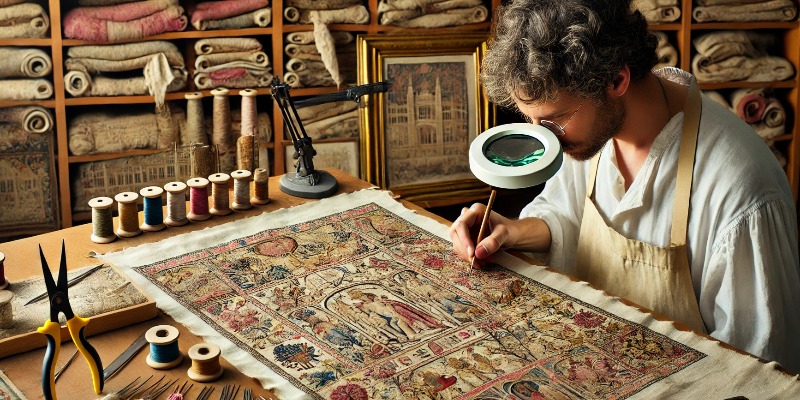





- Introduction to the Restoration of Works of Art and Historical Artifacts
- Integrative Restoration: Principles and Objectives
- Integrative Restoration Techniques in Different Materials
- Conservative Restoration: Safeguarding Historical Authenticity
- Conservative Approaches for Paintings, Textiles, Stone, Wood, Metal and Paper
- Comparison between Integrative and Conservative Restoration
- Ethical Challenges in the Restoration of Works of Art
- Conclusion: Towards a Balance between Conservation and Integration
Approaches and Methodologies in the Restoration of Artworks and Historical Artifacts: From Aesthetic Reconstruction to Preservation of Material Integrity
by Marco Arezio
The restoration of artworks and historical assets has a long and complex tradition, characterized by a delicate balance between preservation and intervention.
Over the centuries, the concept of restoration has evolved alongside the development of aesthetic and scientific theories, leading to the definition of two main approaches: integrative restoration and conservative restoration.
These two methods reflect different perspectives on how to intervene on paintings, textiles, stone, wood, metal, and paper artifacts, but both share the common goal of preserving cultural heritage for future generations.
The chosen approach depends not only on the type of artwork but also on the historical and cultural context, as well as the specific conditions of the artifact.
Integrative Restoration: Redefining the Form
Integrative restoration is a practice aimed at restoring the aesthetic unity of a work of art or historical artifact by filling physical and visual gaps without compromising the original integrity of the work.
This type of intervention is often used when the piece has suffered significant damage, such as the loss of parts of materials, colors, or decorative surfaces. The goal is to restore the readability and aesthetic unity of the object, so the work can be enjoyed in its entirety.
Characteristics of Integrative Restoration
Integrative restoration focuses on reintegrating missing or damaged parts without falsifying the original work.
The interventions are carried out in a reversible manner, meaning they can be removed or altered in the future without further damaging the object. This is a fundamental principle in the field of cultural heritage conservation.
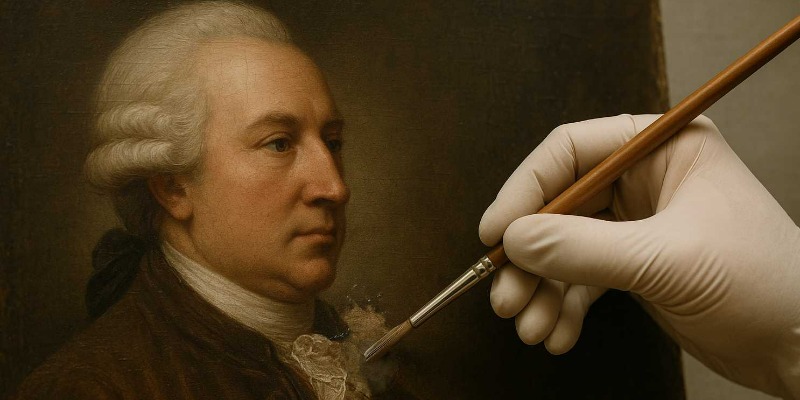
For example, in the restoration of a painting, missing color areas might be reintegrated using techniques such as hatching or "rigatino," which allow the restored parts to be easily distinguished from the original ones.
In the case of stone sculptures, gaps can be filled with compatible materials that do not confuse the viewer about what was added later.
Material-Specific Techniques
Paintings: In paintings, integrative restoration may include the reconstruction of lost paint layers or the application of varnishes to restore the original brightness of the work.
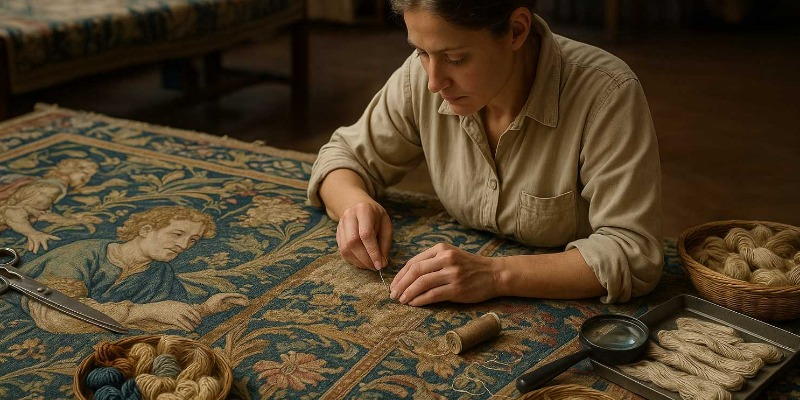
Textiles: In textiles, threads and weaves can be replaced or reconstructed, ensuring consistency with the original texture and appearance.
Stone: Stone sculptures can be completed using resins or synthetic materials that mimic the appearance of the original stone but remain easily recognizable.
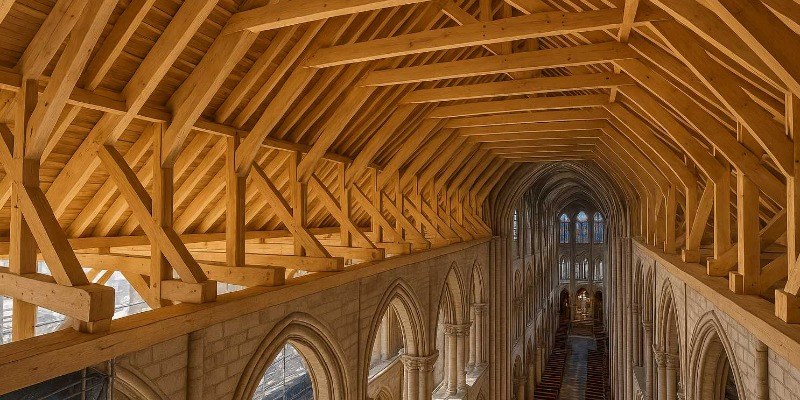
Wood: In wooden artifacts, integrative restoration may involve the insertion of new wooden sections, treated to harmonize visually with the original.
Metal: In metal restoration, new parts are commonly added to replace corroded or missing elements, with careful attention to compatibility.
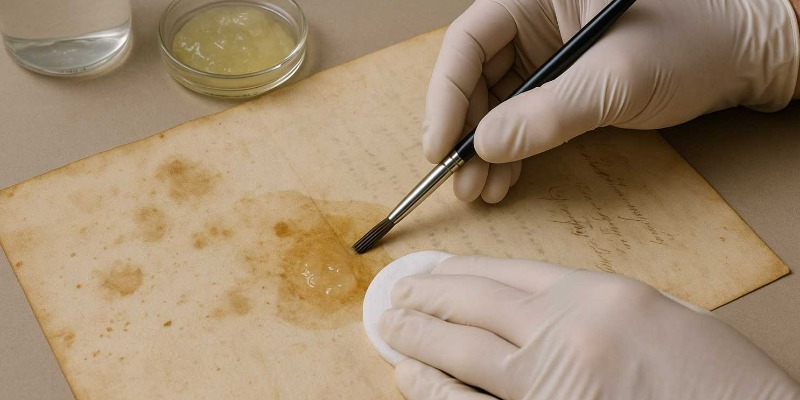
Paper: For manuscripts or prints, missing areas can be filled with new paper portions, treated to match the color and texture of the original.
Integrative restoration aims to provide a visual experience as close to the original as possible, while clearly respecting the historical and artistic authenticity of the work.
Conservative Restoration: Preserving the Original Integrity
Conservative restoration, unlike the integrative approach, is based on the idea that the artwork or historical artifact should be preserved in its current condition, without attempting to "complete" or enhance what has been lost over time.
This method focuses on stabilizing and consolidating the artifact, preventing further deterioration, without trying to restore its original appearance.
Characteristics of Conservative Restoration
The conservative approach starts from the assumption that every change, deterioration, or damage to the work is part of its history and should be respected as such. The intervention is limited to protecting and preserving what remains of the original work, ensuring it is safeguarded from further damage.
In a painting, for example, this might mean treating the painted surfaces to slow down oxidation or moisture damage, without reintegrating the missing colors.
For a stone sculpture, it could involve applying consolidating treatments that strengthen the stone without altering its shape or appearance.
Material-Specific Techniques
Paintings: The focus is on consolidating the canvas and paint, often using resins or special adhesives to prevent color detachment.
Textiles: In conservative textile restoration, the structure can be stabilized with methods that prevent further damage, without reintegrating missing parts.
Stone: Surface consolidations to halt erosion without altering the structure of the original stone.
Wood: Conservative restoration of wood may include protective treatments against moisture or pests, without adding new parts.
Metal: For metal artifacts, treatments to halt corrosion or stabilize corroded surfaces are common.
Paper: Fragile paper is stabilized through techniques such as lamination or the application of protective layers without attempting to "rebuild" missing areas.
Comparison of the Two Approaches
The debate between integrative and conservative restoration reflects a broader tension between the aesthetics and ethics of restoration.
On the one hand, integrative restoration seeks to recreate the visual unity of the work, allowing for more complete enjoyment by the public. On the other hand, conservative restoration focuses on preserving the historical and artistic value without altering the material testimony of the piece.
The choice between the two approaches often depends on the specific conditions of the work, its historical value, the intent of the restoration, and the destination of the work (for example, whether it will be displayed in a museum or kept in a private collection).
Ethical Challenges in Restoration
In addition to technical aspects, restoration brings with it fundamental ethical questions. How far is it right to intervene in a work? To what extent can an artifact be altered without compromising its historical and cultural value?
These dilemmas are particularly acute in integrative restoration, where the line between reintegration and falsification can be thin.
In conservative restoration, the main challenge lies in balancing the preservation of the artifact with the need to allow public enjoyment. Stabilizing a work can sometimes lead to a partial loss of readability or visual accessibility.
Conclusion: A Balanced Approach
There is no one-size-fits-all solution for the restoration of artworks and historical assets, and often a balanced approach between integrative and conservative restoration may be the best solution.
While some artifacts may require more drastic interventions to restore their aesthetic integrity, others may only need minimal interventions to prevent further deterioration.
The important thing is that every intervention is carried out with respect for the original work and with an approach that favors the reversibility and compatibility of the materials used.
In a world where the preservation of cultural heritage is essential to keeping historical memory alive, restoration, in all its forms, remains a crucial activity to ensure that future generations can continue to enjoy these precious testimonies of the past.