




- Introduction to Nucleating Agents
- How Nucleating Agents Work in Plastics
- Types of Nucleating Agents: Insoluble and Soluble
- Advantages of Using Nucleating Agents
- Improving Crystallinity and Mechanical Properties
- Impact of Nucleating Agents on Polymer Transparency
- Industrial Applications of Nucleating Agents
- Conclusions and Future Prospects
A technical overview of the use of nucleating agents to optimize crystallinity, transparency, and mechanical properties of semi-crystalline plastics, with a focus on industrial applications
By Marco Arezio
Semi-crystalline plastics, such as polypropylene (PP) and polyethylene (PE), are widely used in industry due to their excellent mechanical, thermal, and chemical properties. However, the final characteristics of these materials are closely linked to their crystalline structure, which can be influenced during the production process.
To improve crystallinity, transparency, and other properties of semi-crystalline plastics, nucleating agents are added, playing a crucial role in optimizing the material’s performance.
This technical article delves into how nucleating agents function, their types, and the benefits they bring to the production process of plastic materials.
What are nucleating agents?
Nucleating agents are additives used to improve the crystalline structure of semi-crystalline plastics. These agents promote the formation of crystalline nuclei during the cooling of the molten plastic, speeding up the crystallization process.
This leads to a finer, more controlled structure, which consequently enhances the mechanical and optical properties of the material.
How nucleating agents work
The crystallization process of semi-crystalline plastics is a determining factor in their final performance. In the absence of nucleating agents, the polymer crystallizes slowly, generating large spherulites that negatively impact the optical and mechanical properties.
Nucleating agents, on the other hand, act as "seeds" on which crystallization can begin, accelerating the crystal formation process and reducing spherulite size.
The addition of nucleating agents thus results in faster crystallization, reducing production cycle times, and creating a finer and more homogeneous crystalline structure, which improves the dimensional stability of the final product.
Types of nucleating agents
Nucleating agents can be divided into two main categories: insoluble nucleating agents and soluble nucleating agents.
Insoluble nucleating agents
These additives, often composed of metal oxides, silica, talc, or boron nitride, remain dispersed in the molten plastic and act as nucleation sites where crystals can form. These materials are particularly effective in improving the mechanical and thermal properties of plastics, though they may not always provide optimal transparency.
Soluble nucleating agents (Clarifiers)
Clarifiers, such as those used in polypropylene, dissolve in the molten polymer and form a three-dimensional fibrous network during cooling, on which crystallization occurs.
The resulting nucleation is dense and uniform, ensuring the production of materials with high transparency and improved optical properties. These additives are particularly used to enhance the appearance of transparent plastic products.Benefits of using nucleating agents
The use of nucleating agents offers numerous advantages in the processing of semi-crystalline plastics, including:
Faster crystallization: The presence of nucleating agents increases the speed of crystal formation, reducing the time required for the cooling and solidification of the plastic part. This results in greater production efficiency, with shorter cycle times.
Improved mechanical properties: The finer crystalline structure achieved through nucleating agents increases the stiffness, impact resistance, and dimensional stability of the plastic material.
Transparency: Clarifiers, in particular, allow for transparent plastic materials with excellent optical properties, essential for applications requiring high aesthetic quality.
Reduction of aesthetic defects: More controlled crystallization reduces sink marks and other aesthetic defects that may occur during the cooling of the plastic material.
Industrial applications of nucleating agents
Nucleating agents are used in a wide range of industrial sectors, including:
Packaging
In the packaging sector, transparency is often a fundamental requirement. Clarifiers are used to improve the transparency of polypropylene, for example, in the production of food containers.
Automotive sector
Semi-crystalline plastics reinforced with nucleating agents offer greater resistance and dimensional stability, making them ideal for the production of lightweight and durable automotive components.
Electronics
The improved properties of nucleated plastics, such as dimensional stability and heat resistance, make them suitable for electrical and electronic components.
Furniture and consumer products
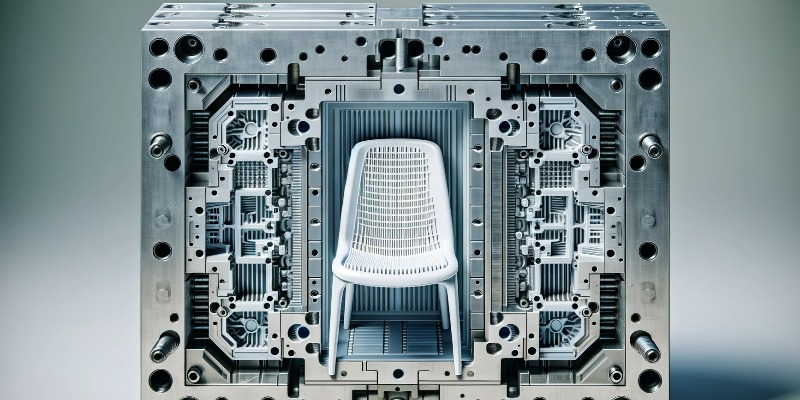
Transparent and durable plastic materials, obtained with the use of nucleating agents, are widely used in the production of household items, plastic furniture, and consumer devices.
Conclusion
Nucleating agents are essential for improving the performance of semi-crystalline plastics, offering significant advantages in terms of production speed, mechanical properties, aesthetics, and transparency.
With the continuous development of new additives and technologies, the use of nucleating agents will continue to play a crucial role in the optimization of plastics for a wide range of industrial applications.