- How Digital Culture is Redefining Aesthetics and Consumption in the 21st Century
- Digital fashion and virtual reality: how the concept of style is changing
- Social Media and Co-creation: The Rise of Web-Inspired Styles
- Post-digital design: between synthetic architecture and creative sustainability
- Sustainability 4.0: technology, blockchain and new models of ethical consumption
- The Power of Digital Communities in Responsible Fashion and Design
- Brands leading the digital evolution towards a sustainable future
- Towards an integrated ecosystem between virtual aesthetics and environmental responsibility
Digital Trends and Social Media Are Redefining Contemporary Aesthetics and Responsible Consumption
by Marco Arezio
In the heart of the 21st century, digital culture has evolved from being a simple complement to everyday life into a driving force that shapes aesthetics, behaviors, and values.
Fashion, design, and sustainability are now undergoing a profound transformation, powered by digital trends, social media, and immersive technologies. Virtual platforms have not only changed the way we consume content and goods but are also redefining what we consider beautiful, desirable, and responsible.
In this article, we explore the intersection of digital culture, contemporary aesthetics, and sustainability, examining how these three fields are increasingly influencing one another.
Digital Fashion: Virtual Aesthetics and New Narratives
Fashion is one of the sectors most deeply transformed by digital culture. With the rise of social media, fashion has shifted from an exclusive, top-down dynamic to a participatory practice where users co-create trends, styles, and content.
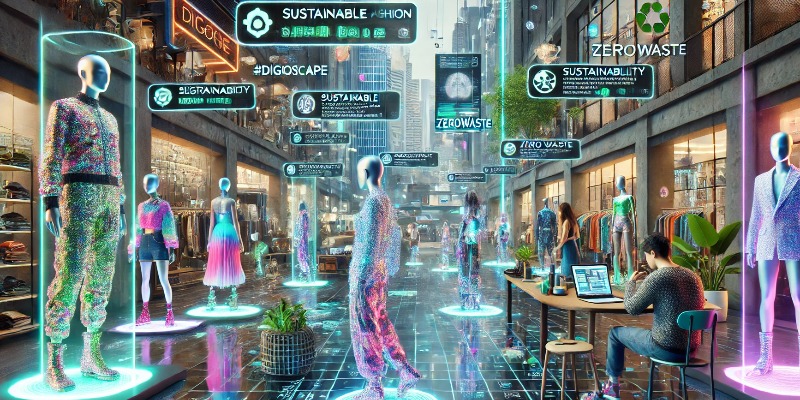
Platforms like Instagram, TikTok, and Pinterest are seeing the explosion of styles inspired by “cyber,” “Y2K,” “meta-futuristic,” or “digital grunge” aesthetics — all movements born or amplified in the digital world.
But this phenomenon goes beyond trend diffusion. Thanks to generative AI and augmented reality (AR), fully digital fashion collections are emerging, wearable only in virtual worlds or within the metaverse.
Brands like The Fabricant, DressX, and NFT initiatives from fashion houses such as Gucci and Dolce & Gabbana offer digital garments that consume no physical resources, dramatically reducing environmental impact while redefining the very concept of ownership.
Design and Visual Culture in the Post-Digital Era
Design — understood both as a physical product and as an aesthetic experience — is also undergoing a major transformation. Digital culture introduces new visual codes: textures inspired by video game landscapes, glitch-like patterns, synthetic worlds, and impossible architectures.
In interior design, a new trend known as digiscape aesthetic is emerging, translating the language of virtual landscapes into real environments: neon lights, biomorphic forms, and materials that mimic digital surfaces like holographic or iridescent textures. At the same time, parametric design and generative algorithms allow for the creation of unique, optimized objects that reduce waste and utilize recycled materials — fully aligned with sustainability principles.
Sustainability 4.0: Conscious Consumption Meets Technology
Digital culture doesn’t just influence style — it also transforms how we communicate and experience sustainability. Social media has amplified people's ability to stay informed, mobilize, and make more conscious choices. Hashtags like #sustainablefashion, #zerowaste, or #slowdesign bring together global communities focused on eco-friendly practices, circular economy, and ethical production.
Meanwhile, apps and platforms are emerging to help consumers assess the environmental impact of the products they buy. Blockchain technology, for instance, enables full traceability of a product’s supply chain, ensuring transparency and authenticity. Additionally, 3D printing is becoming a key technology for on-demand, localized production, reducing the environmental costs of global logistics.
The Role of Digital Communities
One of digital culture's most powerful aspects is its capacity to foster communities.
Online communities play a central role in spreading new aesthetic and environmental awareness. Content creators, independent designers, and climate activists collaborate, share ideas, and engage an ever-growing audience.These communities also act as creative laboratories, experimenting with new forms of collaboration between the physical and digital worlds. One example is the open source fashion movement, where designers share patterns and editable projects freely, making fashion more accessible and encouraging local, sustainable production.
Trailblazing Brands in Digital Fashion, Innovative Design, and Sustainability
Several pioneering brands are embracing the influence of digital culture while blending virtual aesthetics, technological innovation, and environmental awareness. Here are some standout examples:
The Fabricant: One of the world’s first digital fashion houses. Based in Amsterdam, it creates garments exclusively for virtual environments or digitally enhanced photos. These pieces have no physical impact and promote zero-waste fashion while reshaping aesthetic identity in the metaverse.
DressX: A platform that lets users purchase virtual clothing to “wear” in photos and videos for social media. Its founders present it as a sustainable alternative to fast fashion, aimed at those who want fresh looks without accumulating physical garments.
Gucci: The iconic Italian fashion house has released digital collections for Roblox and The Sims, and collaborated with Superplastic for NFTs and virtual accessories. The Gucci Vault platform explores new digital narratives rooted in sustainability and craftsmanship.
IKEA: In the design world, IKEA is exploring augmented reality with its IKEA Place app, which allows users to visualize furniture in their homes. Simultaneously, the Swedish brand has launched a circular economy initiative called Buy Back, enabling customers to resell used furniture — a fusion of tech and sustainability.
Stella McCartney: A long-time pioneer in sustainable fashion, she combines ethics and innovation. Her work includes biotechnological materials like Mylo™ (a mushroom-based leather alternative) and blockchain-certified NFTs that transparently document the origins of her garments.
Balenciaga: The brand has brought its collections into Fortnite, creating a distinctive digital style somewhere between cyber aesthetics and postmodern irony. This approach prompts new reflections on how fashion can thrive even in non-physical realms.
Adidas: The company has released NFT collections and digital collaborations with platforms like Bored Ape Yacht Club, while also developing physical product lines made from recycled materials such as Parley Ocean Plastic, proving that sustainability and tech innovation can — and should — coexist.
A Transforming Ecosystem
These examples show that we’re no longer witnessing isolated pioneering initiatives, but rather a full-blown evolution of the entire fashion and design ecosystem. Brands that succeed in merging digital creativity with environmental responsibility will be best equipped to meet the challenges of tomorrow and engage with a new generation of consumers — more connected and more conscious than ever.
Far from being a separate universe, digital culture is now a tangible extension of our everyday reality. Fashion, design, and sustainability are learning to speak this new language — one that is aesthetic, ethical, and undeniably digital.
© Reproduction Prohibited