- The CIA and French Multinationals: The Hidden Truth of the 1990s
- Industrial espionage after the Cold War
- France-USA: The battle for energy contracts
- Elf Aquitaine and the case of Algeria under siege by the CIA
- The press revelations that shook Europe
- France's response and the role of the DGSE
- Echelon and global surveillance technologies
- The consequences of espionage on European politics
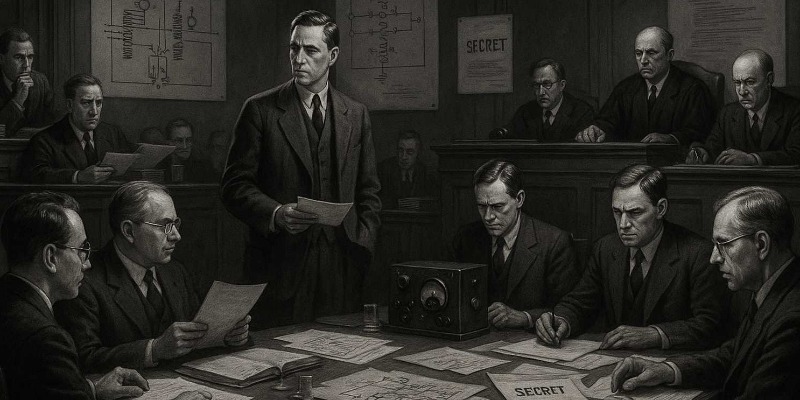
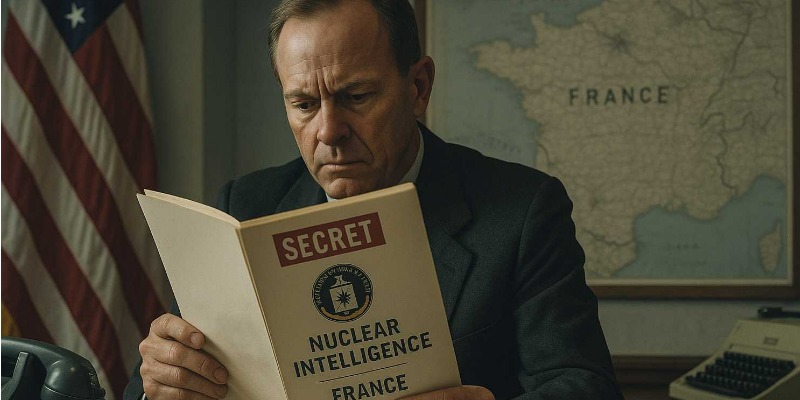
A landmark investigation into the CIA's industrial espionage operations in the 1990s against French multinational energy and aerospace companies
by Marco Arezio
In the 1990s, Europe was redefining its role in the global world. The Cold War was over, the Soviet Union had dissolved, and the United States found itself in a position of unrivaled dominance. But behind the myth of a new era of international collaboration, dark forces were stirring in the folds of economic competition: the silent war of the secret services.
France, with its multinational energy and aerospace companies, was one of the main victims of this invisible struggle. Documents and revelations leaked starting in the mid-1990s exposed a systematic CIA operation aimed at stealing strategic information from European companies, aiming to benefit American giants.
A new enemy after the Cold War
For nearly half a century, Western intelligence agencies had a clear mission: to contain Soviet influence. With the fall of the Berlin Wall, that enemy suddenly vanished, and the role of intelligence agencies had to be reinvented.
In the United States, the belief spread that economic supremacy was the new battleground. American companies needed to be protected from "unfair" competition from European and Asian firms, often accused of receiving government subsidies. The fertile ground was energy, a sector in which France and the United States faced off with opposing interests.
The heart of the matter: billion-dollar contracts
The CIA's main targets were French giants such as Électricité de France (EDF), GDF (later Engie), Elf Aquitaine, and companies linked to the nuclear and aerospace industries, such as Aérospatiale. Allegations that emerged in the 1990s revealed that American intelligence had implemented wiretaps and surveillance aimed at obtaining the industrial secrets and trading strategies of these companies.
The goal was twofold: first, to gain advance knowledge of French bids for billion-dollar contracts in the Middle East and Asia; second, to pass this information on to American giants like Exxon, Mobil, and Boeing, who could thus beat their European competitors to the punch.
The Elf Aquitaine case and Algeria
One of the most controversial episodes involved the Elf Aquitaine company, then a major player in France's energy industry. According to testimonies gathered in the 1990s, the CIA allegedly spied on Elf's negotiations with the Algerian government regarding the development of gas and oil deposits.
The Americans, thanks to wiretaps and local allies, obtained confidential information on the financial terms of French bids, allowing their companies to submit more competitive proposals. These incidents fueled suspicions that behind the rhetoric of "fighting international corruption"—which the US promoted through laws such as the Foreign Corrupt Practices Act—lay an intelligence strategy aimed at targeting European rivals.
The revelations of Le Monde and Time
It was primarily the press that brought the scandal to light. In 1993, the French newspaper Le Monde published a series of investigations exposing the existence of industrial espionage programs targeting Europe. Shortly thereafter, the American magazine Time confirmed, in a now-famous article, that the CIA had indeed "reprogrammed" part of its activities to protect US economic interests.
Journalistic investigations, corroborated by statements from former European agents and parliamentarians, highlighted how the collection of economic data had become a priority for American intelligence, often with the justification that foreign companies enjoyed “unfair advantages” due to the support of their governments.
The French reaction and the political scandal
France reacted forcefully. In 1995, President Jacques Chirac openly denounced the risk of an "economic war" waged by covert means. Within the Elysée Palace, the conviction grew that the transatlantic alliance was actually a shady terrain, where national interests were systematically sacrificed.
In Paris, the role of the Direction Générale de la Sécurité Extérieure (DGSE), the French secret service, was strengthened, receiving greater funding and autonomy to protect national companies. During the same period, cases of "counterespionage" aimed at intercepting American attempts increased.
Surveillance Technologies: From Echelon to the Internet
A central point of the investigation was the discovery of the Echelon system, a global surveillance network operated by the United States, the United Kingdom, Canada, Australia, and New Zealand. Created during the Cold War to monitor Soviet communications, in the 1990s Echelon was adapted for economic espionage, allowing the interception of telephone calls, faxes, and early electronic communications from governments and multinationals.
Through this infrastructure, millions of sensitive data were collected and analyzed. In France, there was open talk of "state piracy," an accusation that undermined trust between Paris and Washington.
An invisible and unregulated war
The case of the French multinationals revealed how fragile the line between allies and rivals was. For the United States, defending its leadership also meant not hesitating to strike at historic partners like France. For the French, however, it confirmed that globalization was far from neutral ground, but a battlefield where even "friendly" governments played dirty.
The consequences are still reverberating today: Europe's distrust of American technology and energy giants, as well as the push to strengthen European strategic autonomy, have deep roots in the events of the 1990s.
Lessons from the past
Thirty years later, the case of the CIA and French multinationals remains a paradigmatic example of how industrial espionage has become a structural dimension of international competition. The silent war of the 1990s anticipated dynamics that today, with digitalization and cyberespionage, are commonplace.
The questions of that time—how far can a state go to protect its own businesses? What ethical limits exist on economic espionage?—remain unanswered. But the France vs. USA case demonstrates that, behind the official facades, the struggle for economic power is ruthless and continues to unfold in the shadows.
© Reproduction Prohibited