




- Fiberglass: History, production and use in the industrial and construction sector
- Fiberglass's Difficult Journey Towards a Circular Economy: Solutions and Challenges
- Fiberglass recycling: Problems and opportunities in the treatment and reuse of manufactured products
- Fiberglass and sustainability: Recycling technologies to reduce environmental impact
- Fiberglass: How manufacturing and recycling are evolving towards the circular economy
- Use of fiberglass in industrial sectors: Applications and benefits of glass fibers
- Fiberglass: From production to the challenges of recycling for a more sustainable future
Fiberglass: history, production, use and recycling. The difficult way towards a circular product economy
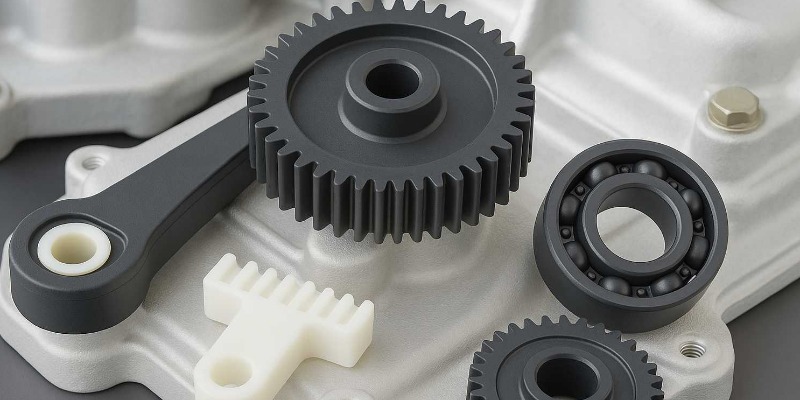
Fiberglass is certainly a product that has had a very important success given the flexibility of use, the relative ease of production and the technical characteristics of the manufactured products that could replace or improve the performance of other materials used up to then.
Fiberglass was born in the 1920s, a period in which materials were being studied that had performance characteristics similar to those of construction metals (construction, aeronautics, naval) but which could add an advantage in terms of weight saving.
During the 1940s, polyester was reinforced by using asbestos fiber, a composite plastic material with which, for example, additional tanks for aircraft were built .
During the 50s of the last century, the increase in the production of glass fiber led to a progressive replacement of the asbestos fiber, creating technically more advanced products and widening the field of application.
BUT WHAT IS FIBERGLASS?
It is a glass reinforced composite plastic, also called VTR or GRP , using fabrics or felts with randomly oriented fibers and subsequently impregnated with thermosetting resins , generally liquid, composed of polyester or vinyl ester or epoxy , which harden and connect the fibers themselves through the action of catalysts and accelerators.
The main characteristics of fiberglass products are:
– Lightness
– High mechanical characteristics
– Durability
– Corrosion resistance
– Weather resistance
– Excellent electrical insulation
– Fire behavior manageable with specific additives
– Good thermal insulation
– Poor maintenance
HOW ARE FIBERGLASS MANUFACTURED PRODUCTS?
Premising that fiberglass is not a traditional plastic compound that needs heat and an important mechanical force (extrusion, injection, blowing) to make the products, but it is based on the work that the polymerized resin that comes into contact with the fibers does of glass.
The main production processes are as follows:
“Hand Lay-Up” consists in the coating by brush or roller of resins, correctly added with catalysts and accelerators, which determine their polymerization even at room temperature, on glass fabrics. The solidification of the resins allows the incorporation of the glass fibers present in the mold creating the article in vertroresina.
“Filamnet Winding” consists in applying, on a normally metallic rotating cylinder, a wire impregnated with catalyzed resin. By winding this wire continuously on the mold, which will then be removed once the resin has hardened, cylindrical tubes or tanks can be created.
“Resin Transfer Molding” consists in dry spreading, on one side of a mold, a set quantity of glass fibers, then the mold is closed again with its copy and the resin is injected, at low pressure, inside. With this system it is possible to carry out the injection procedure inside the mold also under vacuum.
“Pultrusion” consists of a production similar to the classic extrusion of plastic materials, suitable for composite materials for the creation of particular profiles.
WHICH SECTORS ARE INTENDED AND WHICH FIBERGLASS MANUFACTURES CAN BE REALIZED?
The excellent technical and aesthetic qualities of fiberglass products allow them to be used in many fields with very wide applications:
The products made with fiberglass are really many and it is not possible to mention them all, but we will indicate the products that, on the market, make the largest volumes:
THE RECYCLING OF FIBERGLASS
Fiberglass, being a compound material, as we have seen, escapes from the logic of the classic recycling of plastic materials , thus creating various and complex problems for its recycling.
The first problem that we can remember is the presence of the thermosetting resins of which the product is composed, in fact, as we know, the polymerization reaction is always irreversible, this means that if we treated the ground fiberglass products with heat, as is done in generally with other plastics, we would not be able to return the resins used to liquid form.
The second problem concerns the glass fibers that are used to reinforce the recipe . According to epidemiological studies conducted on animals in the laboratory, prolonged inhalation of the dust from these fibers would cause carcinomas and mesotheliomas.
Although there is no evidence of human tests on animals, the European Community has issued a specific directive, including glass fibers among the dangerous substances subject to the labeling obligation.
In fact, the glass fibers used for the manufacture of products are considered category 3 carcinogens and must bear the R40 label which identifies the possibility of irreversible health effects.
Therefore, in the context of end-of-life recycling systems, we can report the main disposal destinations:
Among the disposal systems used today, in terms of volumes, landfilling is certainly still the most used, with all the negative effects of the case.
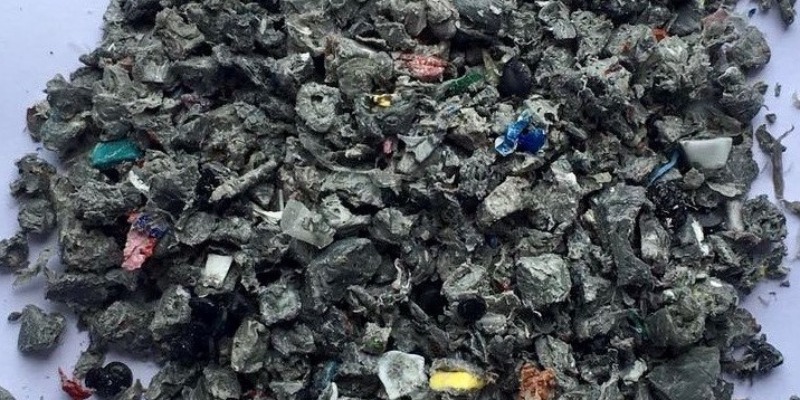
As for the grinding of powder products , it is certainly the easiest way, from a practical point of view, but leaves all the doubts from the health point of view that we have reported above open.
While as regards recycling through pyrolysis or acid digestion it is not, today, economically convenient.
It is clear that the way to dispose of the waste of fiberglass products, at the end of life, could be that of reusing ground powders in mixtures suitable for the production of finished products , but the volumetric reduction operation of fiberglass products must be carried out using suitable equipment , in isolated chambers, therefore not simple grinding mills, which safeguard workers’ health.
There is also on the market a method of recycling fiberglass waste produced with orthophthalic, isophthalic or vinyl ester resins defined as “recovery with thermal-chemical treatment”.
Through this process it would be possible to recover about 85% of the mother resin, in the form of a liquid and about 99% of the fibers that make up the reinforcement.
Tests made by the manufacturer would show that the recovered resin, which is iodine-laden, could be mixed with the virgin resin for the creation of new products without there being any performance decay.
As for the fibers recovered with this system, a calcination treatment is recommended on them, to eliminate the carbon residues present before being reused.