- Electronic Terrain: What It Is and How It Works
- The Role of PEDOT Polymer in the Electronic Field
- eSoil and Hydroponics: A Winning Combination
- Benefits of Electronic Terrain on Agriculture
- Accelerated Growth: eSoil Test Results
- Electronic Terrain and Environmental Sustainability
- Future Applications of eSoil in Vertical Farming
- How Electronic Terrain Will Change Food Production
Discover how eSoil, the electronic soil based on conductive polymers, can boost agricultural productivity by 50% and revolutionize hydroponic farming
By Marco Arezio
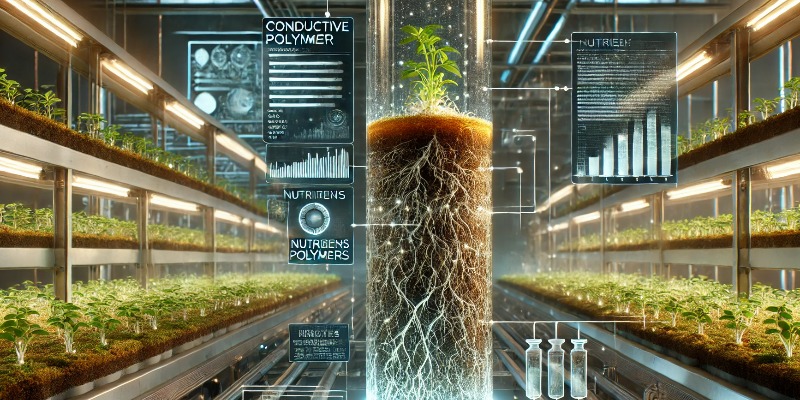
The global challenge of food production is becoming increasingly pressing, and innovative technologies like "electronic soil" promise to provide concrete solutions to enhance agricultural efficiency while minimizing environmental impact. eSoil, developed by researchers at Linköping University in Sweden, represents a revolutionary idea: a technological substrate for hydroponic farming, capable of optimizing plant growth through electrical conduction.
What Makes Electronic Soil Unique?
Electronic soil is composed of a mixture of organic substances and a conductive polymer material known as PEDOT (Poly(3,4-ethylenedioxythiophene)). This polymer, already known for its use in OLED displays and other electronic applications, allows the substrate to conduct electrical impulses, stimulating plant growth in an innovative way.
Using hydroponics, a cultivation method that employs nutrient-rich liquid solutions instead of traditional soil, eSoil delivers electrical impulses directly to the roots, accelerating nutrient absorption and improving the overall efficiency of the growth process.
Promising Results from Experimental Tests
The results obtained by researchers, published in the scientific journal PLOS ONE, demonstrate an average growth increase of 50% compared to traditional hydroponic methods. During the experiments, barley plants grown with eSoil showed significant improvements in productivity, confirming the potential of this technology to transform the agricultural sector.
This approach opens doors to optimizing global food production, an urgent necessity given the growing world population and the limitations of natural resources.
Implications for the Future of Agriculture
The introduction of electronic soil could mark a turning point in addressing some of the most critical challenges of modern agriculture:
Environmental sustainability: By reducing the need for soil and water, this technology is particularly suitable for cultivation in arid environments or urban areas where access to fertile land is limited.
Resource waste reduction: Electrical stimulation optimizes nutrient absorption, decreasing the use of fertilizers and their environmental impact.
Vertical farming: eSoil is perfectly suited for vertical farms, enabling intensive production in limited spaces.
A New Era for Food Security
In a world with a continuously growing population and increasingly unstable climate, technologies like eSoil not only address the need for increased food production but do so ethically and sustainably. The use of materials like PEDOT to create smart substrates is just the beginning of a new technological era where electronics and biology work together to revolutionize the agricultural sector.
The future of agriculture lies in innovation. Electronic soil is an example of how science can provide concrete solutions to global problems, improving not only production but also the quality of life on a planetary scale.
© All Rights Reserved