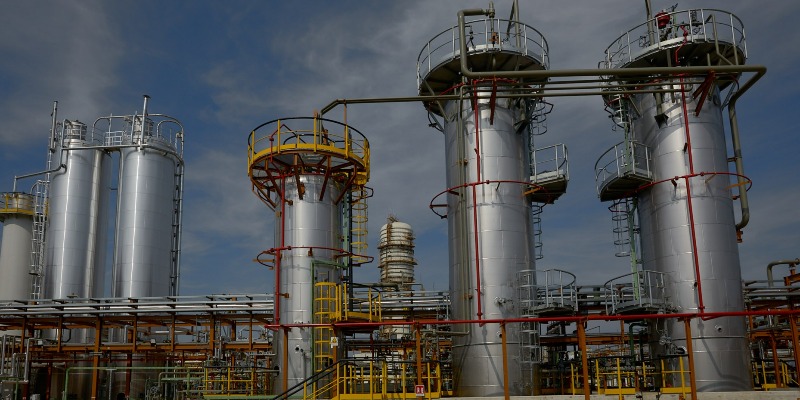
- Hoop® demonstration plant by Versalis inaugurated in Mantua
- Hoop® Technology: How Chemical Recycling of Mixed Plastics Works
- From plastic to r-naphtha: a new resource for the chemical industry
- The Hoop® system in numbers: capacity, structure and test results
- Versalis and SRS: an Italian partnership for sustainable innovation
- The environmental impact of chemical recycling according to the Hoop® project
- Priolo as the next target: towards large-scale industrial production
- An opportunity for Mantua: local development and circular transition
From mixed non-recyclable plastic comes a new raw material for industry
by Marco Arezio
In the heart of the Po Valley, among the production lines and historic spaces of the Versalis plant in Mantua, a decisive step towards a more circular and sustainable economy was taken today. The demonstration plant based on Hoop® technology was inaugurated, an all-Italian innovation destined to radically transform the way we treat the most complex plastic waste.
The result of the collaboration between Versalis – a chemical company of the Eni group – and the company SRS (Research and Development Services) , the Hoop® technology was born with an ambitious goal: to recover value from those mixed plastic materials that, until now, escaped the logic of traditional mechanical recycling. These are heterogeneous, contaminated or multilayered plastics, often destined for incineration or disposal in landfill. Thanks to this new process, however, they can be chemically broken down and reconverted into a precious raw material: the so-called r-naphtha, a hydrocarbon that can re-enter the production cycle as a basis for new plastics, including food packaging.
The newly launched plant, built inside the Mantua hub on an area of about 5,000 square meters, required over a year of work and involved more than twenty-five specialized companies, bringing a daily average of seventy workers to the field. This is not a simple technical test: we are faced with a real test bench on a real scale, designed to validate and optimize a process that - if it gives the expected results - will be replicated on a large scale in Sicily, in Priolo, where an industrial plant with a capacity of 40,000 tons per year is already in the planning phase.
The first operational tests, conducted in recent weeks, have already provided very positive indications, confirming the efficiency of the pyrolysis reactor in treating mixed plastics and the good quality of the r-naphtha produced. From an environmental point of view, the outlook is encouraging: it is estimated that, in the first ten years of operation, this type of plant could avoid the emission of over 139,000 tonnes of CO₂ equivalent, contributing substantially to the European decarbonisation objectives.
The initiative is part of a broader industrial strategy, also supported at community level.
The Hoop® project was selected by the Innovation Fund of the European Union among the most innovative proposals in the field of low-carbon technologies. This recognition underlines the transformative potential of this approach: a chemistry that not only produces, but regenerates; that does not limit itself to minimizing the impact, but tries to close the circle of materials.For Mantua, a city closely linked to chemistry for decades, the opening of the plant also marks a rebirth under the banner of sustainable innovation. The site is no longer perceived as just a traditional production site, but becomes a testing ground for forward-looking solutions. And in doing so, it involves a network of local companies, artisans, technicians and suppliers who find new opportunities in the ecological transition.
"With Hoop® we are inaugurating a new phase of our activity, more attentive to circularity and the regeneration of materials", declared Versalis CEO Adriano Alfani during the inaugural ceremony. "It is a step that unites the Italian industrial experience with the vision of a responsible and competitive chemistry".
The case of Hoop® shows how, even in industrial fields traditionally considered to have a high environmental impact, it is possible to make virtuous innovation. Especially when the push does not come only from technology, but also from a cultural change, which puts collaboration between public bodies, businesses, territories and European institutions at the center.
With the demonstration plant in Mantua, Versalis is not just exploring a new recycling method: it is sending a concrete message to the entire Italian production system. The solutions exist, they are realistic and can create value – economic, environmental and social. It is up to us to seize them and accompany them with far-sighted industrial policies and investments in research, infrastructure and training.
Because the circular economy, if well done, is not just an ecological project: it is a competitiveness strategy, a horizon for the industry of tomorrow.
Versalis Photo
© Reproduction prohibited