- The new frontier of advanced biofuels
- Waste biomass: types and potential for sustainable energy
- Innovative technologies for the production of advanced biofuels
- Anaerobic digestion: the heart of organic waste valorization
- Gasification and pyrolysis: thermochemical processes for bioenergy
- Environmental benefits and impacts of the biofuel supply chain
- Technical, logistical and regulatory challenges in the development of the sector
- Future scenarios: biorefineries, bioeconomy and supply chain integration
How the valorization of residual biomass is transforming the energy and environmental sector
by Marco Arezio
The energy sector is experiencing one of its most profound transformations since the Industrial Revolution. Driven by climate emergencies, the European Green Deal and the progressive decommissioning of fossil fuels, the energy world is now looking with growing interest towards waste biomass as a strategic raw material for the production of advanced biofuels.
This is not just a technological response, but a real paradigm shift: what until yesterday was considered waste – agricultural residues, industrial by-products, sewage sludge, organic fraction of urban waste – now becomes a key resource for the transition towards more circular, resilient and low-emission energy systems.
The debate on these issues, until a few years ago relegated to insiders, is today at the center of political agendas, industrial strategies and academic reflections. To orient oneself in this rapidly changing scenario, reference texts such as "Advanced Biofuels and Bioproducts ", which offers a complete and updated overview of conversion technologies and economic aspects of new generation biofuels, and "Bioenergy with Carbon Capture and Storage (BECCS), dedicated to CO₂ removal solutions integrated with bioenergy, are particularly useful.
Waste biomass: a key resource in the circular economy
To understand the scope of the advanced biofuels revolution, it is essential to start from the very nature of the biomass involved. Today, research and industry are focusing on residual biomass – that is, everything that, at the end of a primary production cycle, no longer has an immediate function and risks becoming a management or environmental problem. The main flows used include:
- Agricultural residues: straw, corn stalks, fruit shells, grape marc, pomace, cereal by-products.
- Forestry waste: branches, bark, residues from sawmills and wood processing.
- Urban organic waste: wet fraction of solid urban waste (FORSU), food waste from canteens and restaurants.
- Sewage sludge: derived from civil and industrial wastewater treatment plants.
- Industrial by-products: residues from the agri-food, paper and textile industries.
These materials are, for the most part, of low or no commercial value and often associated with disposal costs and environmental impacts. Their energy valorization allows to reduce the overall ecological footprint of the production sectors, close the cycle of materials according to the principles of the circular economy and open new innovative industrial supply chains.
Advanced Biofuels: Definition, Processes and Technologies
The term "advanced biofuel" refers to fuels produced from unconventional raw materials - waste, residues, biomass not intended for human consumption - and obtained through advanced technological processes. They are different from first-generation biofuels, often criticized for their impact on the food-feed balance and competition for agricultural resources.
Enabling technologies for advanced biofuels include:
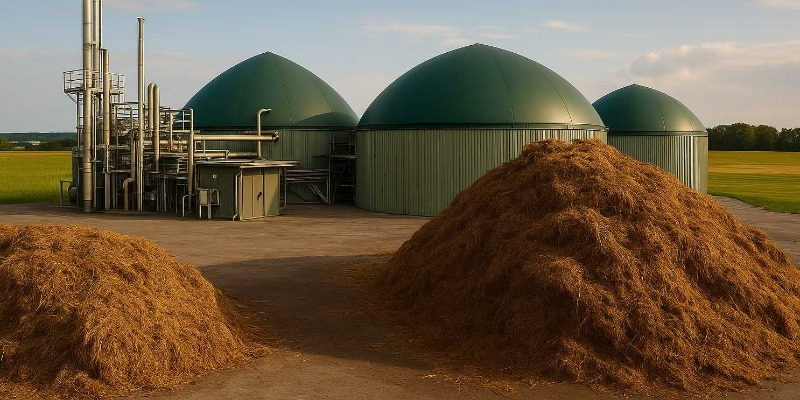
- Anaerobic digestion: microbial process in the absence of oxygen that transforms organic matter into biogas (methane + CO₂). Fundamental for the treatment of FORSU, sludge and agro-industrial waste.
- Gasification and pyrolysis: thermochemical conversion of lignocellulosic biomass into syngas and bio-oil, which can be used as intermediates for the production of bio-methane, green hydrogen, drop-in liquid fuels.
- Advanced fermentation: use of enzymes and engineered microorganisms to convert even complex matrices (cellulose, hemicellulose, lignin) into ethanol and other higher alcohols.
- Hydrogenation and catalytic upgrading: processes that transform waste oils and fats into HVO (Hydrotreated Vegetable Oil), one of the most interesting frontiers for aviation and heavy mobility.
Impacts, opportunities and critical issues of the supply chain
The use of advanced biofuels offers numerous environmental and socioeconomic benefits:
- Reduction of greenhouse gas emissions, thanks to the closed carbon cycle and the recovery of materials destined for waste.
- Replacement of fossil fuels in sectors that are difficult to decarbonise (heavy transport, aviation, energy-intensive industry).
- Production of digestate, which can be used as a natural fertilizer in agriculture, contributing to the closure of nutrient cycles.
- Creation of added value for rural areas and agricultural businesses, thanks to the diversification of income sources.
However, there are challenges. The advanced biofuels supply chain requires widespread and efficient logistics for biomass collection, investments in high-tech plants and a stable and incentivizing regulatory framework. Critical issues also remain on the social acceptability of the plants, on the emissions of unwanted compounds and on competition with other uses of biomass.
Many thought-provoking texts on this topic that analyze the balance between benefits and impacts throughout the life cycle of different types of biofuels.
Future scenarios and innovative developments
The growth prospects of the sector are strongly linked to the decarbonisation strategies of the European Union (RED III), to the programmes supporting the bioeconomy and to the evolution of research on conversion technologies.
We are witnessing a progressive shift towards the maximum integration of production cycles, the recovery of residual sources that are still underused today (such as microalgae or textile waste) and the development of multifunctional biorefineries capable of producing not only energy, but also bioproducts with higher added value (polymers, fertilisers, bioplastics).
To orient oneself among these trajectories, a volume such as Biofuels for a More Sustainable Future is recommended, an international reference for technicians, operators and policy makers interested in the practical implementation of anaerobic digestion plants and the challenges of energy integration.
Conclusion: Circularity as a lever for the transition
The revolution of advanced biofuels is not just a question of technologies, but of systemic vision: rethinking waste as resources, integrating different industrial supply chains, closing material and energy cycles, promoting community resilience.
Only through an integrated and circular approach, in which technological innovation, local economy and public policies dialogue with each other, will it be possible to successfully address the challenge of decarbonisation and chart the path towards a more equitable and sustainable energy future.
© Reproduction prohibited