- What are 3D Printable Reinforced Polymers?
- How 3D printing with short, continuous fibers works
- Additive technologies for composite materials
- The advantages of reinforced 3D printing in a sustainable perspective
- Industrial applications of 3D printed reinforced polymers
- Technical challenges in 3D printing with reinforcing fibers
- The role of bio-based and recycled materials in additive composites
- Future prospects for sustainable additive manufacturing
How 3D Printing with Reinforcing Fibers Is Transforming the Advanced Plastics Industry
When we think of 3D printing, we often imagine a world of prototypes, quick models, and lightweight plastics designed for shape or function testing. But that image is now outdated. Additive manufacturing has evolved into a robust tool for industrial production—capable of producing finished parts that are strong, reliable, and high-performing.
Among the most promising developments in this field is the use of fiber-reinforced polymers, composite materials that combine lightness and mechanical strength with durability and customizability. It’s a major transformation—not only in engineering terms but also from an environmental perspective. As the world urgently seeks sustainable alternatives to conventional manufacturing, the ability to 3D print reinforced materials with precision, efficiency, and flexibility opens entirely new scenarios.
Polymers and Fibers: An Alliance for the Future of Manufacturing
At the core of this revolution is the meeting of two worlds: that of thermoplastic polymers—ductile, versatile, and lightweight—and that of high-performance fibers, such as glass, carbon, or aramid, known for their superior mechanical properties. The combination of these materials yields structured composites that outperform traditional plastics in tensile strength, bending resistance, wear, and chemical durability.
In the past, such composites were mostly available in laminated form or manufactured using compression molding. Today, however, new additive manufacturing technologies allow these materials to be directly 3D printed, with increasing sophistication. This unlocks a level of control over form, internal structure, and fiber distribution that was previously unthinkable.
Two Paths, One Goal: Enhanced Performance Without Losing Flexibility
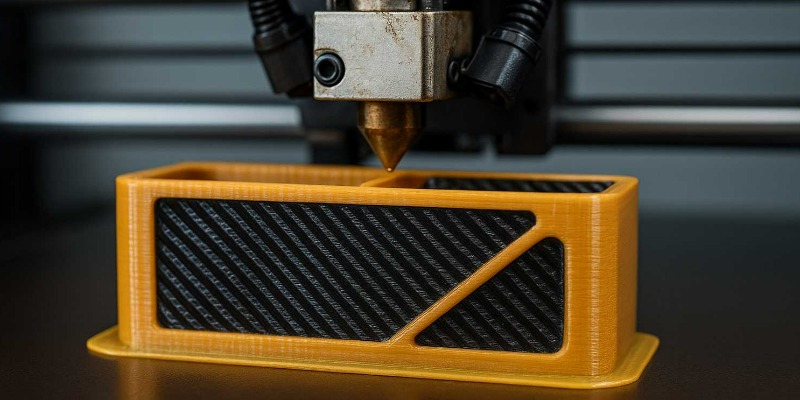
There are two main approaches to 3D printing fiber-reinforced materials. One involves filaments pre-filled with short fibers: these spools contain a polymer matrix blended with micro-fiber fragments that enhance the mechanical properties of the final part without affecting printability. This method is relatively simple and compatible with many FFF (Fused Filament Fabrication) printers, making it an accessible entry point into the world of composites.
The second, more advanced method uses continuous fibers. Here, the printer is engineered to co-extrude long fibers along with the polymer, effectively “weaving” reinforcement directly into the part. This approach requires specialized machinery and advanced slicing software, but it enables the production of truly structural components, with performance levels comparable to certain industrial laminates. For example, a carbon fiber-reinforced plastic bracket printed using this method can be lighter and stronger than its metal equivalent.
Beyond the Technology: Environmental and Industrial Benefits
The true value of these materials goes far beyond lab test data. The ability to print only what is needed, with minimal waste, significantly reduces environmental impact.
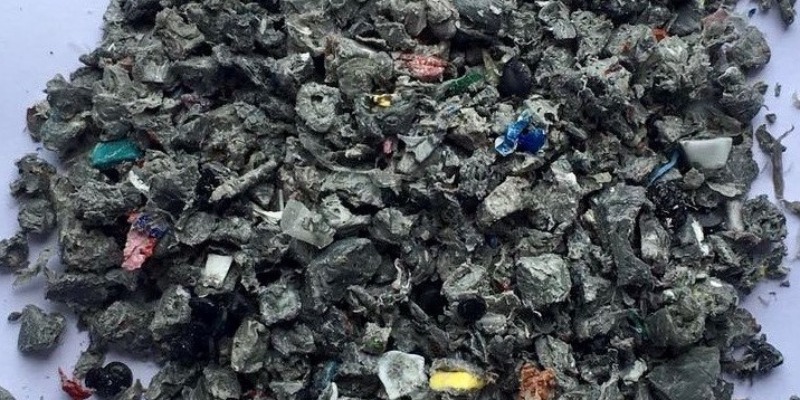
On-demand production eliminates the need for lengthy logistics, bulky storage, and energy-intensive processes. Tooling costs are lowered, and time-to-market is shortened—an essential factor in all competitive sectors.Moreover, many manufacturers are already experimenting with bio-based filaments or recycled plastic content, and carbon fibers reclaimed from industrial waste are starting to become a viable resource. All of this positions reinforced additive manufacturing as a technology fully aligned with the principles of the circular economy—combining high performance with environmental responsibility.
Expanding Applications: From Aerospace to Construction
Applications for this technology are rapidly multiplying. In aerospace, for example, fiber-reinforced 3D printing is used to create lightweight brackets, custom ducts, and vibration-resistant components—cutting weight and, in turn, energy consumption. In the automotive sector, it's applied to functional prototypes and even small production runs, particularly for electric or sports vehicles.
In the fields of robotics and mechatronics, printed composites are used in mechanical arms, levers, and structural components that must be both lightweight and robust. Even in construction, interesting applications are emerging, such as modular joints, structural connectors, or architectural elements that combine function and aesthetics in a single production process.
A Challenge of Skills, Quality, and Materials
Naturally, 3D printing with reinforced materials comes with its own challenges. The bond between the fiber and the polymer matrix is critical, requiring material research and careful tuning of print parameters. Proper fiber orientation is also vital—placing fibers incorrectly can compromise the entire functionality of the part.
Another key issue is process repeatability: for parts that must meet certified performance standards, consistent results across multiple batches are a must—something that remains complex with current systems. Finally, the cost of materials, especially those with continuous fibers, remains relatively high, though it is gradually decreasing as adoption grows.
The Future Is Custom, Sustainable, and Digital
Looking ahead, it’s clear that this technology will not only continue to grow but fundamentally change how we think about manufacturing. Emerging trends include integration with generative design algorithms, which suggest optimal shapes and reinforcement paths based on expected loads. Materials will become increasingly eco-friendly, and distributed manufacturing—potentially directly at local workshops or maintenance centers—will soon become a reality.
In this context, additive manufacturing with reinforced polymers is more than a technological promise. It is a real tool for creating lighter, more efficient, and more sustainable products. A concrete lever for circular industry, aiming to do more with less: less material, less energy, less waste. But also more innovation, more precision, and more design freedom.
© Reproduction Prohibited