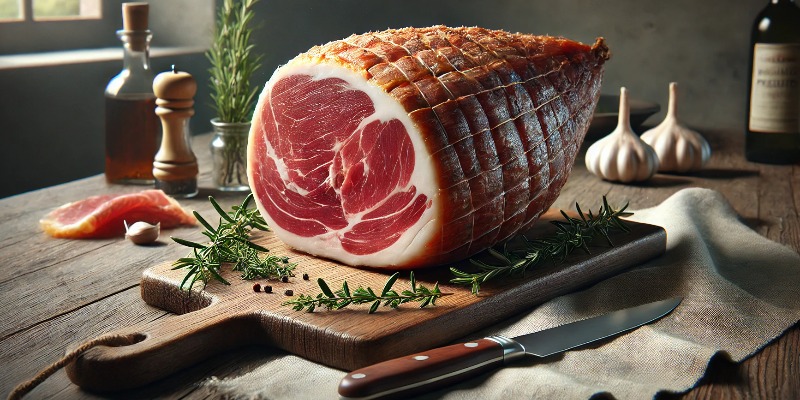
- Sustainable ham: the circular economy applied to tradition
- Sustainable Farming: Reducing Environmental Impact at the Root
- From processing to waste: how to transform waste into resources
- Eco-friendly packaging: innovative solutions to reduce plastic
- Sustainable logistics: reducing emissions in ham distribution
- Conscious consumers: the role of choices in sustainability
- Tradition and innovation: a new model for ham
- Sustainability of ham: opportunities for the environment and the market
From Responsible Supply Chains to Eco-Friendly Packaging: The Path to Low-Environmental-Impact Prosciutto
By Marco Arezio
In a world where sustainability is no longer optional but a necessity, even a symbolic product like prosciutto can become a tangible example of environmental responsibility. The challenge goes beyond maintaining its gastronomic and cultural value—it involves rethinking the entire production chain, from animal farming to final distribution. Each step can and must be reconsidered to reduce its impact on the planet.
Rethinking Farming: Sustainability at Its Roots
The sustainability of prosciutto starts with farming, a critical stage for reducing environmental impact and promoting a more balanced system. Modern farming practices focus on the intelligent and responsible use of natural resources: water savings, energy efficiency, and reducing greenhouse gas emissions are key priorities. These goals are achieved through advanced waste management technologies and the use of sustainable feed, often derived from agricultural byproducts, which help minimize the environmental footprint of food production.
A virtuous example is the adoption of circular models within farms. Here, organic waste is no longer treated as refuse but as resources to be transformed into biogas through anaerobic digestion processes or into natural fertilizers to enrich agricultural soils. This approach closes the loop, giving new life to waste and drastically reducing the overall environmental footprint of farming.
At the same time, animal welfare is not neglected: sustainable farms are also distinguished by their attention to the living conditions of pigs. Adequate space, access to quality feed, and ethical practices are fundamental elements for responsible production. This balance between production efficiency, technological innovation, and animal care demonstrates how farming can evolve into a more sustainable model without sacrificing quality and tradition.
Processing and Waste: From Refuse to Resource
Meat processing represents another crucial phase for making the prosciutto production chain sustainable, both in terms of energy use and waste management. Here, energy efficiency takes center stage: through modern and innovative industrial processes, the heat generated during processing can be recovered and reused, significantly reducing energy consumption and greenhouse gas emissions.
Another fundamental aspect is the valorization of waste, which transforms refuse into valuable resources within a circular system. Bones, rinds, and other processing byproducts can be used in various industrial applications. For instance, they can be transformed into gelatin for food or pharmaceutical use, contributing to greater economic and environmental efficiency. Other organic waste is employed in the production of natural fertilizers for organic agriculture or biofuels, reducing dependence on fossil fuels and promoting a cleaner energy system.
Advanced technologies such as anaerobic digestion and pyrolysis offer additional opportunities: through these processes, organic waste is converted into energy or biochar, a material useful for improving soil fertility and sequestering carbon. This approach not only reduces disposal costs but also actively contributes to combating climate change.
Ultimately, sustainable prosciutto processing demonstrates how each stage of production can be optimized to generate value. What was once considered a problem now becomes a strategic resource capable of supporting both the supply chain economy and environmental health.
Packaging: A Critical Challenge to Solve
Packaging plays a key role in preserving and protecting prosciutto, ensuring its freshness, safety, and presentation. However, its environmental impact is a pressing issue, particularly due to the widespread use of single-use plastic, which accumulates in natural systems and takes centuries to decompose.
While plastic has long been the ideal solution for protecting products and extending their shelf life, it is no longer sustainable in the context of responsible production.Fortunately, research in paving the way for a greener future. Biodegradable and compostable materials, such as those made from natural polymers derived from corn starch or sugarcane, represent promising alternatives. These materials not only reduce environmental impact but can also integrate into industrial or home composting systems, returning nutrients to the earth without leaving harmful residues.
Another innovation involves the use of recycled and recyclable materials, such as paper or next-generation bioplastics. Packaging designed for a circular lifecycle reduces waste production and encourages the use of existing resources, helping to close the material loop. Some companies are even experimenting with edible protective films made from proteins or plant extracts, offering a highly innovative solution.
At the same time, efforts are being made to make packaging lighter and more efficient. Designing packaging with less material and optimizing its dimensions reduces not only resource usage but also the emissions associated with transport. The introduction of smart packaging, equipped with sensors to monitor product freshness and reduce food waste, represents a further step toward more sustainable logistics.
In conclusion, prosciutto packaging is undergoing a revolution driven by the need to combine functionality and sustainability. The combination of innovative materials, circular design, and advanced technologies is transforming this element from an environmental problem into a tangible opportunity to reduce ecosystem impact.
Distribution: Reducing Distances to Save the Environment
Even prosciutto transportation and distribution can be optimized. Reducing traveled distances, promoting local markets, and using low-emission vehicles are effective solutions for cutting CO₂ emissions. Modern technologies allow for route optimization and fuel minimization, while sustainable logistics becomes a strategic asset not only for the environment but also for the market.
The Role of Consumers: Choosing with Awareness
Today's consumers are increasingly attentive: they want to know where products come from, how they are made, and their impact on the environment. Transparency has become an indispensable value. Environmental certifications and supply chain traceability offer concrete guarantees, enabling consumers to make informed and sustainable choices. This not only encourages companies to improve but also creates a virtuous cycle that rewards those who invest in sustainability.
A Sustainable Future: Tradition and Innovation
Prosciutto is a symbol of our gastronomic tradition, but it can also be a model of innovation. Rethinking farming, optimizing industrial processes, and valorizing every byproduct are examples of how a traditional product can evolve without losing its identity. This balance between past and future represents an ambitious but necessary challenge to meet the demands of a planet that can no longer wait.
Conclusion: Sustainability as an Opportunity
Looking at prosciutto through a sustainable lens means embracing a broader vision: a future in which every choice matters, every resource is valued, and every actor in the supply chain plays a vital role. It is not just about reducing environmental impact but about creating value—economic, social, and environmental—in a world that demands tangible change. Sustainability is a concrete path, built on innovation, collaboration, and awareness, and sustainable prosciutto is the most delicious proof of all.
© Reproduction Prohibited