Relics in the Dark - The noir mystery of sacred thefts in Lombardy - Chapter 1
In the heart of a Milan racing towards an economic boom, a bold shadow falls from the spires of the Duomo and disappears with the Holy Nail, a relic symbol of the city. In a single night, the sacred is violated with a precision that smacks of military training, leaving behind only silence, specks of paint and the echo of a click that no one has heard.
At dawn, the young commissioner Lucia Marini enters the cathedral with a surgical eye and a mind of steel: between naves soaked in incense and secrets kept in the medieval corridors, she immediately senses that the theft is only the prelude to a much larger project. While the press is already buzzing and the city is holding its breath, the first traces lead to informants in the Navigli and to a mysterious Swiss buyer willing to buy the soul of Milan piece by piece.
The chapter ends with a sense of impending urgency: the countdown has begun, and Lucia understands that the game she is about to play does not only concern a sacred nail, but the entire cultural heart of Lombardy.
Noir mystery set in 1960: Commissioner Lucia Marini investigates a string of relic thefts—stretching from Milan’s Duomo to Lombard abbeys and the mines of Schilpario—amid suspense, chases and betrayal
by Marco Arezio
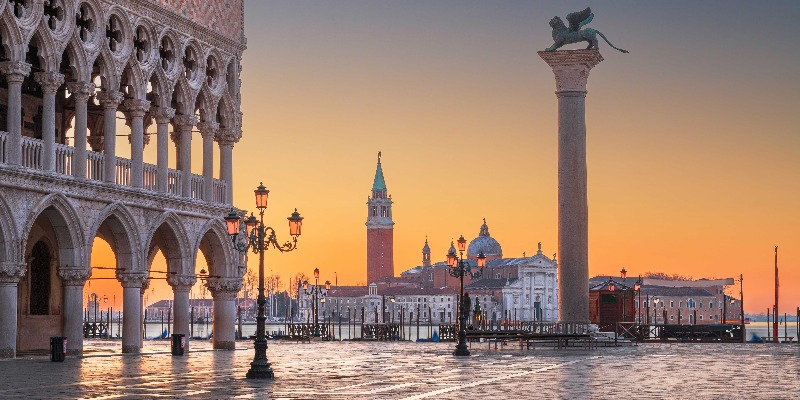
September 1960. On the spires of Milan Cathedral the first evening shadows stretched like inky fingers, and the gilded Madonnina glowed like a warm beacon in air already scented with fog. Inside, the silence felt alive: it breathed incense lodged among Gothic aisles, damp stone, and wax still soft and warm in candelabra. A dry, distant thump echoed like the steady breath of the old organ—though no one played.
At exactly 22:17 a whisper of silk slid from the north gallery. A tall figure, scarcely wider than a coat-hanger, wore a charcoal oilskin and a brimmed hat that broke up the outline. The face lay hidden behind a thin wool balaclava; only ice-cold eyes sliced the dark. With pre-calibrated movements the intruder clipped a heron-beak hook to a Kevlar braid and dropped eleven metres, using the tracery ledges as footholds. The operation made almost no sound—just a hiss and a breath—while Vibram soles muffled every step.
The Holy Nail, sealed in a silver case with leaded glass and black enamel fittings, caught the glow of a single votive candle. Bolted to its marble base by a Torx screw few people even knew existed, it surrendered when the thief applied a custom extractor, turned five times, and released it as though by sorcery. A fold of purple velvet swallowed the reliquary whole.
A faint click betrayed the breakage of the alarm photocell installed only two months earlier—the only noise of the heist. Swiftly the shadow slipped through a grated service stair, crossed a disused fifteenth-century maintenance corridor, and emerged on the lead-coloured roof. From there a steel rope led to an auxiliary skylight left open for restoration: fifteen seconds later the thief had vanished, engulfed by scaffolding that snaked down to the Capitolo courtyard.
At 6:15 a.m. Commissioner Lucia Marini—thirty-two, straight-backed, the poise of a fencer—crossed the bronze doors. Born in Fiesole, she had adopted Milan with the resolve of someone who loves a city as a challenge. A smoke-blue trench rested impeccably on an ash-grey suit; mirror-polished Oxfords whispered professionalism, pragmatism and respect for both the sacred and the crime scene.
Beside her walked Inspector Ettore Riva, forty-five, handlebar moustache, notebook bulging with scribbles. “No forced entries, Commissioner. No pry marks, no broken glass.”
Lucia brushed the now-bare marble base; back-lit, she spotted three grains of black paint, perhaps chipped from the metal support, and placed them in a sterile envelope. “Not dropped by an amateur. Run chemical tests; they’ll tell us about the roof work. I want the full list of night-shift labourers, sacristans— even the tram conductors who worked the square.”
The sacristan, a wiry man with feverish hands, murmured Hail Marys. “Stealing a nail from the Cross is a sin that cries to Heaven for vengeance.”
Lucia let the words fall into heavy silence. Italy was rushing toward prosperity; prosperity bred new temptations and collectors willing to pay a fortune for one-of-a-kind pieces. Deep down she heard an orchestra tuning for a blasphemous concert.
At 20:35 she rode a cream Moto Guzzi Isabella along the Navigli toward the abandoned workshops of Porta Genova. The September sky was deep cobalt, slashed by industrial canals and rusty tracks. Beneath a red-neon ghost sign—“Verniciature Bianchi & Figli”—waited “Spider,” an old-school informant in frayed tweed and a tartan scarf. “Word is a foreign buyer,” he rasped. “Not Russian, not American—Swiss. Big money, no chatter. Wants only relics of liturgical and historical value. One-month deadline; after that the border closes.”
Lucia stared at the pitch-black water of the Naviglio Grande. One month wasn’t long to steal a single treasure, let alone a collection. A precise plan, a seasoned crew—ex-military, maybe demolitions experts—must be in play, along with a depot hidden yet close enough for light trucks.
She rolled off on the Isabella with a knot in her stomach: the coming night would be short, and her dreams shorter still.
Three nights later Chiaravalle Abbey slept beneath a cloak of cornfields. Its bell-tower—nicknamed “Ciribiciaccola” for its melodious peal—stood against a pallid crescent moon. The Romanesque cloister smelled of linden and fresh bread: the monks still baked before dawn. Yet at 02:03, when the great bell should have tolled, it was silent—a convenient fault that kept guards and the curious away.
Two figures in dark waxed-canvas overalls crossed the rain-soaked grass. One sliced the siren’s copper wire; the other slipped through a narrow lancet window, dropping a gas mask after flooding the novices’ corridor with chloroform. They descended frescoed walls on beeswax-treated ropes, soundless.
At the chapter-house centre, on a vine-carved pedestal, gleamed a twelfth-century champlevé chalice—Saint Bernard’s gift to the Cistercians. Twenty-three centimetres tall, just over half a kilo, gold and copper in blue-and-green enamel. The shorter thief produced a custom felt-lined case from a Swiss rucksack and slid the chalice inside like a sleeping child.
At 07:22 Lucia parked a grey Fiat 1400 in the courtyard. Air smelled of cut grass, grain and fresh milk. Monks chanted lauds in wounded tones. The abbot led her to the empty pedestal. “They touched neither silver candlesticks nor illuminated codices—only the chalice.”
She noted tiny circular press marks: the cup had been rotated and slid, not lifted. Every trace spoke of professionals—perhaps a medieval-arms expert fascinated by sacred artefacts. She ordered the visitor logs, restorer rosters, even guest-chorister lists: any signature could be a cover.
That evening she gathered her team around a map: red pins at Milan and Chiaravalle, concentric circles marking radius and escape routes. “If our conductor follows geometry, the next hit moves east—maybe the Bergamo area. Timing pattern: three days, then two; the window is shrinking. Climbers who silence alarms and wear waxed suits remind me of alpine saboteurs from Resistance files.”
Riva chewed his pencil. “The abandoned Upper Seriana mines once stored explosives. Anyone with old maps could open vaults like tins.”
Before he finished, the telex clattered: “NIGHT THEFT CAPELLA COLLEONI – BERGAMO ALTA – RELIQUARY OF ST BARTHOLOMEW MISSING.” It was 18:06, Thursday 8 September. The tempo quickened; the conductor raised the baton.
Bergamo Alta sits like a stone ship on the hills: Venetian walls, steep steps, squares smelling of polenta and fresh chamois. At 01:47 a blast of nitro-gelatine sheared modern steel bolts from the bronze door of the Colleoni Chapel without cracking the altarpiece: the work of an artificer who knew pressure the way a violinist knows pitch.
The solid-gold reliquary—twenty kilos in lapis and enamel—was lashed to a ball-bearing trolley. Two men and a woman, a sleepless witness said, rolled it down the stepped paving toward a waiting vehicle; the wheels echoed like a funeral drum.
At dawn September rain turned cobbles to mirrors. Lucia, in coat and beret, knelt by brass shards and sniffed the explosive: nitroglycerine with an unfamiliar solvent. “Homemade mix. Ex-demolition men, miners or army sappers.”
Captain Angelo Simeoni, a giant on an olive-wood crutch, shook her hand. “Witnesses saw a black Balilla—lights off—plate BG-37-? heading to Seriate.”
The radio crackled: “Simultaneous hit, Brescia Cathedral: Moretto altarpiece stolen.” Two fronts, perhaps multiple cells.
Lucia drafted young agent Fausto Pagani—boyish eyes, fighter-pilot reflexes—into the Alfa 1900 TI. “Take me to Brescia. Fly.”
The asphalt of the Autostrada Serenissima echoed with a cavernous roar. Fausto drove in kid-skin gloves, his fingers light on the wheel like a pianist.
“If they hit Monza tomorrow night, Commissioner, we won’t even find the dust.”
Lucia answered without lifting her gaze from the ribbon of road.
“They’re hitting Monza tonight, Fausto. What they don’t expect is to find us there.”
They reached Monza Cathedral at 03:54, but the main door was already wide open; the guards lay on the floor, bruises on the backs of their necks.
The Iron Crown—a gold-and-silver circlet that, according to tradition, contains a nail from the Cross—had vanished. On the paving lay a black leather glove, its index and middle fingers neatly sliced off. Inspector Riva lifted it with tweezers and sealed it in a Kraft paper bag: no fingerprints, only the sharp scent of lanolin and black powder. Swaggering signature, or deliberate misdirection?
A sharp pang struck Lucia beneath the sternum: an invisible thread tied every theft, its cord vibrating under her touch. If she failed to cut it soon, the melody would turn into a requiem.
Milan erupted in noise. Corriere della Sera splashed a nine-column headline—“SACRILEGE IN LOMBARDY: HISTORY STOLEN.”
A profile shot of Lucia studying fragments in Brescia filled half a page. Seeing it on the newsstand, she bristled: the paper had turned her into the mascot of a manhunt that was still only a stalemate.
At 21:07 that Friday, in the interrogation room on Via Fatebenefratelli, an angle-poise lamp cast concentric shadows across the face of Gualtiero “The Cardinal” Migliavacca. Silk tie in burgundy, matching pocket square, white-gold signet ring—every detail screamed elegance, yet his hands trembled when Lucia set a photo of the black Balilla on the table.
“It’s yours, isn’t it? A city messenger saw it in Bergamo Alta the other night.”
The Cardinal crossed his legs as though seated at Cova with an aperitif.
“My Balilla was parked outside the Teatro Sociale, dear Commissioner. I have tickets and witnesses. I love opera more than relics—though I concede both possess immortal value,” he replied with a razor-thin smile.
Lucia brushed the coffee cup but did not drink. “And this?” She displayed a brass paperweight found in the Balilla’s trunk, engraved with a trefoil identical to the Colleoni Chapel’s emblem. “Come now, Doctor Migliavacca—who were you giving it to?”
Behind the one-way glass, Riva growled; Sergeant Giuliano Calò watched the suspect’s body language: his right heel tapped in sync with the second hand—sixty beats a minute. A man accustomed to precise appointments. But the alibi was ironclad, and without prints or eyewitnesses Lucia had to let him go.
That same night Fausto patrolled the Navigli: black water, moored boats, the smell of damp and diesel. Under the Scodellino bridge, a Slavic boy with an accordion slipped past and whispered, “If you want the Crown, talk to Black Gold. He blows up the world so the world never knows.”
“Black Gold” was Ernesto Varoli, a former miner from Lovere famed for wielding explosives the way an artist wields a brush. He ran an illicit workshop in a peeling shed on Viale Ortles: pitted sheet-metal, the reek of burnt oil, pin-ups of Gina Lollobrigida tacked between pulleys.
At 06:10 on Saturday, Lucia led a blitz: eight officers in body armour, two German shepherds, a steel battering ram. The door crashed open—but the den was cold. Only warm welding fumes, discarded gloves, and on a table a blue-pencilled topographic map of the Val di Scalve mines at Schilpario: “TUNNEL BETA – storage chamber 3 × 2 m – access via shaft 4 disused.”
Lucia ran her fingers over the rough paper, thinking of the Vivione Pass: two hours by light truck to the Swiss border—a hedge for lawmen, a wide sieve for contraband.
At 23:19 an anonymous call flayed the night:
“You will never reach Schilpario. One among you is plotting. Watch each other… and tremble.”
The voice was cavernous, toneless, forced as if through a dummy’s throat. Lucia hung up, ice of betrayal seeping into her bones.
Sunday, 11 September, 05:45. The precinct courtyard was a grey-black pre-dawn. The plan: a dummy Fiat 615 truck loaded with empty crates marked “Officine Breda – mechanical parts,” plus an Alfa 1900 TI escort. Fausto drove; Giuliano rode shotgun with a short-wave set. In the Alfa’s boot: geological gear, mine suits, gas rebreathers, two Beretta 34s, carbide lamps.
At 06:02, as Lucia handed out maps and sentry shifts, a gunshot cracked under the arches. Giuliano, arms full of documents, sprinted for a pillar; a second round from the shadows splintered the truck’s bonnet. The attacker—a wide-brimmed silhouette—cleared the side gate and vanished.
Riva arrived at a run, pistol drawn, but only the acrid smell of cordite lingered. Papers lay scattered: two pages singed, red ink blotting lines. Lucia recognised Riva’s handwriting; only he kept that copy in a safe. Suspicion clouded her eyes, but time to process it had run out.
She chose to proceed to Schilpario anyway, splitting the team into two convoys on different routes to confound any mole. She took State Road 42 via Lovere; Fausto the Provincial 294 over Clusone and the Presolana. Encrypted radios on channels 5 and 8 only, check-ins every thirty minutes.
The Seriana Valley opened like a pale canyon between limestone walls: dripping firs, sunflashes between low clouds. Driving, Lucia thought of the relics—Nail, Chalice, Reliquary, Altarpiece, Crown—five wounds bleeding culture and identity. Then she thought of the internal wound: who among her people was selling their moves? Riva perhaps, maybe quartermaster Vignati mired in gambling debt, or a corrupted radio tech. Doubt could not be allowed to paralyse her; but ignoring it would be suicide.
When the sign “Schilpario 1050 m” appeared, the clock read 11:38. The mines, abandoned since ’51, formed a web of shafts plunging nearly a kilometre. Tunnel Beta opened behind a collapsed masonry arch, then dived into cold guts, slippery stone, the stench of rotted timbers.
Lucia and Riva donned harnesses and lamps; Giuliana coordinated from outside. Ahead, Fausto planted signal torches every twenty metres. Their breath bounced off wet walls; each drip echoed like a club strike.
At 180 metres they found numbered crates marked “MB-61”, smelling of incense and tow—empty. At 240 metres a brick-vaulted side passage led to a chamber two by three metres: fresh Vibram prints, scraps of red cloth—likely lining from the Iron Crown—and a still-warm Tuscan cigar butt.
Lucia crouched, inhaled: Kentucky tobacco, the same scent she’d smelled in Migliavacca’s car.
“The Cardinal was here—or someone wants us to think so,” she murmured. Riva opened his mouth to reply, but a dull thud outside shook the ground: someone had mined the entrance. Dust filled the tunnel, radios went dead, lights turned murky; the exit was blocked.
Lucia raised her Beretta, heart pounding. Other ventilation galleries existed on the north face, but they were narrow. Another betrayal, another twist. The air thinned; and in the darkness, faint footsteps not their own suggested they were not alone.
© Reproduction Prohibited