- The Roots: Folk and Blues
- The Fusion of Traditions: From Folk Revival to Rock'n'Roll
- The British Invasion
- Psychedelia and the Hippy Movement
- Woodstock: The Culmination of an Era
- Social and Cultural Impact of Rock Music
How Folk and Blues Forged the Musical Revolution of the '60s and '70s
By Marco Arezio
Rock music, with its wide range of subgenres and cultural influences, represents one of the most revolutionary phenomena in contemporary music.
This article will explore the evolutionary path of rock music, starting from the folk and blues roots embodied by figures like Woody Guthrie, up to the culmination of the hippie movement and the legendary Woodstock festival of 1969.
The Roots: Folk and Blues
Woody Guthrie and Folk
Woody Guthrie, born in 1912 in Oklahoma, is one of the most influential figures in the history of American folk music. His songs, often centered on social and political themes, laid the foundation for modern folk music.
Guthrie traveled extensively across the United States during the Great Depression, documenting the experiences of ordinary people through his music. Songs like "This Land Is Your Land" became anthems for social justice movements and inspired generations of musicians.
The Blues: The Soul of American Music
Parallel to this, blues played a crucial role in the development of rock music. Born in the deep South of the United States, blues expressed the sufferings and hopes of African Americans. Artists like Robert Johnson, Muddy Waters, and B.B. King helped shape the sound and ethos of the blues.
The musical structure of the blues, characterized by simple chord progressions and emotional lyrics, became a fundamental component of rock.
The Fusion of Traditions: From Folk Revival to Rock'n'Roll
The Folk Revival of the '50s and '60s
In the '50s and '60s, the United States experienced a folk music renaissance, led by artists like Pete Seeger and the group The Weavers. This movement revived folk traditions and presented them to a new generation, often infusing them with a sense of social and political protest. Bob Dylan, influenced by Woody Guthrie, emerged as a key figure during this period, blending folk with poetic and political elements that broadened the genre's appeal.
The Explosion of Rock'n'Roll
In the late '50s, rock'n'roll burst onto the music scene.
This new genre combined elements of blues, country, and rhythm and blues, creating an energetic and rebellious sound. Pioneers like Elvis Presley, Chuck Berry, and Little Richard helped define rock'n'roll, attracting a young audience and ushering in a new era in popular music. Rock'n'roll represented a cultural liberation and challenged the social norms of the time.The Golden Age of Rock: The '60s and '70s
The British Invasion
In the '60s, rock underwent another significant transformation with the so-called "British Invasion." British bands like The Beatles and The Rolling Stones took rock to new levels of international popularity.
The Beatles, in particular, experimented with various musical styles, from rock to pop, from folk to psychedelia, influencing countless artists and helping elevate rock to an art form.
Psychedelia and the Hippie Movement
With the advent of the hippie counterculture in the '60s, rock embraced psychedelia. Bands like The Grateful Dead, Jefferson Airplane, and The Doors explored new musical territories, experimenting with sounds, effects, and lyrics that reflected the psychedelic experiences and utopian visions of the hippie movement. Rock music became a means to express freedom, love, and political resistance.
Woodstock: The Pinnacle of an Era
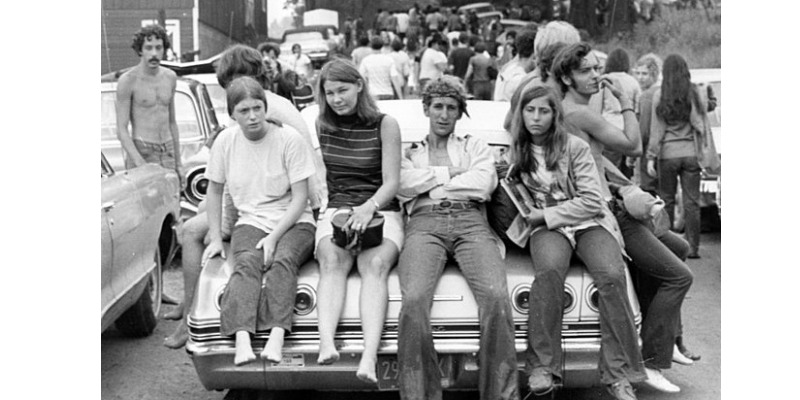
The Woodstock festival of 1969 represents the pinnacle of the fusion between rock music and hippie culture. Held in Bethel, New York, Woodstock attracted over 400,000 people and featured legendary performances by artists like Jimi Hendrix, Janis Joplin, The Who, and Crosby, Stills, Nash & Young.
The festival was not only a musical event but also a symbol of peace, love, and unity among young people worldwide. Woodstock embodied the spirit of the times, marking a milestone in the history of rock music and popular culture.
Conclusion
From Woody Guthrie to Woodstock, rock music has taken an extraordinary journey, evolving from folk and blues roots to become the soundtrack of a generation.
This journey not only transformed music but also profoundly influenced society and culture, giving voice to demands for social change and youth rebellion. Today, the legacy of this evolution continues to resonate, keeping alive the innovative and revolutionary force of rock music.