- The Plastic Tree: a work born from waste
- A hyper-realistic sculpture between art and sustainability
- The symbolic meaning of the tree in contemporary art
- Plastic as an expressive material and environmental denunciation
- Techniques and materials: how the work is born
- Collection and selection of used plastic waste
- When art tells the global ecological emergency
- An invitation to rethink consumption through the aesthetics of recycling
Scraps of Bottles, Bags, and Packaging Become a Symbolic Tree That Merges Aesthetics and Social Critique, Transforming Recycled Art into a Message of Sustainability
By Marco Arezio
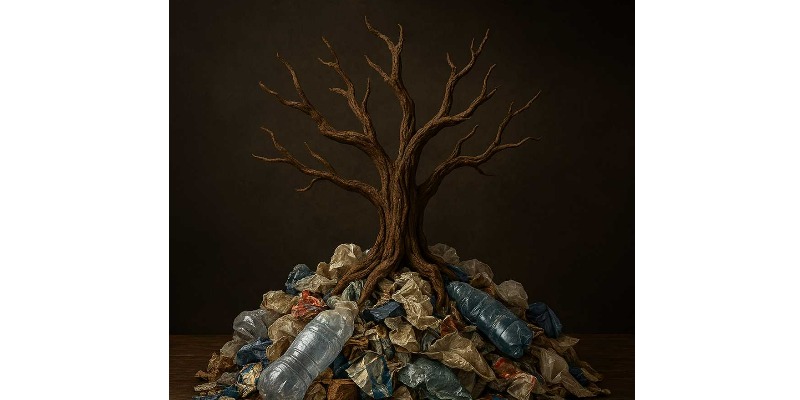
Crafted with extraordinary attention to detail and using a mixed-media technique that blends aesthetics with ecological reflection, The Plastic Tree is a work of art that depicts a tree sculpted entirely from recovered plastic waste. Crushed bottles, crumpled bags, caps, fragments of packaging, disposable utensils — each element is reassembled to give life to a tree structure that is both strong and fragile, rooted in a landscape of discarded materials.
The trunk, composed of darkened and fused plastics, rises like a column of resilience. The branches intertwine organically, built from materials that differ in hue, texture, and transparency, simulating the natural expansion of a tree’s canopy. The play of light and shadow on the surface enhances the three-dimensionality of the sculpture, creating a powerful and immersive visual impact.
The Meaning of the Work
The tree, long a symbol of life, growth, and regeneration, is here reimagined in a contemporary and provocative way. Through the exclusive use of plastic waste, the artist confronts us with a visual paradox: what represents nature is now built from what is destroying it. The tree is no longer a living organism but an “ecological ghost” made of human waste.
The message is sharp and clear: plastic — the quintessential immortal material — infiltrates the cycle of life, replacing what is natural. This artistic substitution questions our relationship with the environment, our rampant consumption, and the legacy we are leaving behind.

Materials Used
All materials used in the sculpture are post-consumer plastic waste, collected manually from beaches, urban parks, and recycling centers.
The artist deliberately selected recognizable objects — water bottles, straws, food containers — to heighten both familiarity and discomfort in the viewer. The work does not conceal the origin of its components; on the contrary, it displays them overtly, preserving original colors and shapes to emphasize the contrast between subject and substance.Conclusion
The Plastic Tree is more than a sculpture — it is a visual manifesto of our time. In an artistic landscape increasingly attentive to sustainability, this piece powerfully demonstrates how art can become a tool of environmental awareness, using waste as both language and protest.
With its hyper-realistic beauty and raw materials, it invites the viewer to reflect: can beauty save us, even when made of plastic?
To purchase the artwork in a 21x30 cm or 30x40 cm cardboard print format, contact the rMIX platform: info@rmix.it, using the code: ECPL48. SOLD
© Reproduction Prohibited